Yemen’s Ambassador to Poland Presses Warsaw Over Houthi Attacks and Red Sea Shipping
 Yemen Herald News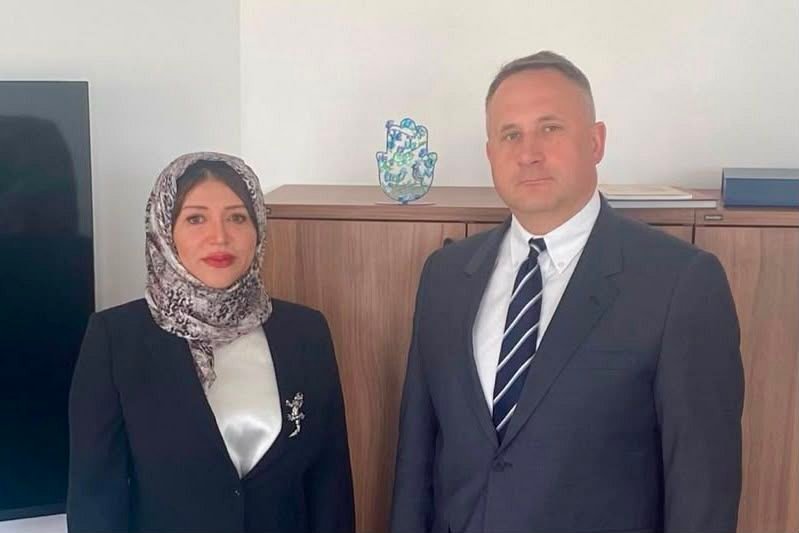
Yemen’s Ambassador to Poland, Dr Mervat Mujalli, has discussed the deteriorating security situation in Yemen and the Red Sea with Maciej Kałkowski, head of the Middle East, North Africa and Latin America Department at the Polish Ministry of Foreign Affairs. The talks concentrated on what the Yemeni government describes as escalating attacks by the Houthi movement, which it says is armed and directed with Iranian support.
According to the Yemeni foreign ministry’s account of the meeting, the two officials reviewed recent Houthi strikes on civilian and military targets in the governorates of Marib and Hadramout. The ambassador said the attacks had also reached camps sheltering displaced families in Marib, as well as the port of al-Mokha and the town of al-Khokha, on the Red Sea coast in Taiz and Hodeidah governorates respectively.
Marib has been among the most heavily contested areas of the war for several years. The city and its surrounding districts host very large populations of people displaced from elsewhere in Yemen, which is why strikes in the area carry a high risk of civilian casualties. Al-Mokha, on the Red Sea, is a working port and the base of forces aligned with the internationally recognised government; al-Khokha lies further north along the same coastline.
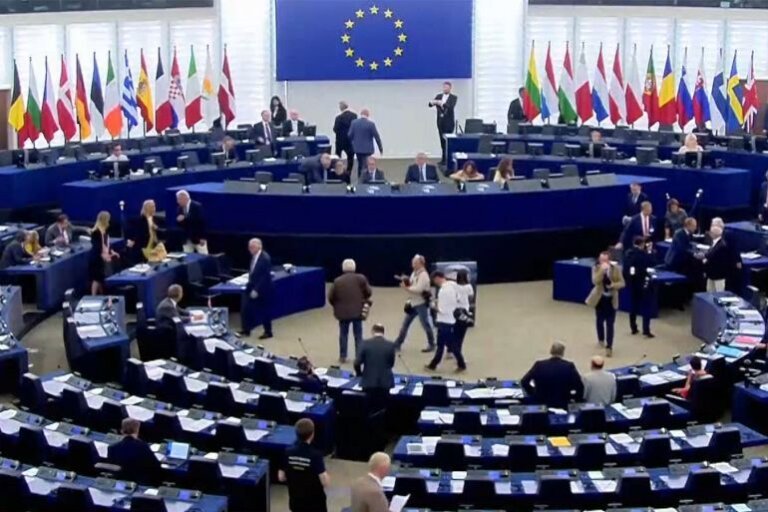
Ambassador Mujalli used the meeting to renew a request Yemeni diplomats have made repeatedly in European capitals: that the European Union designate the Houthi movement as a terrorist organisation, and that its leaders, financiers and suppliers be placed on sanctions lists. The European Union has so far imposed targeted measures on individuals and entities connected to the movement without applying a blanket designation, a distinction Yemeni officials have publicly criticised as insufficient.
Much of the discussion concerned shipping. The Red Sea and the Bab al-Mandab Strait carry a substantial share of the cargo moving between Asia and Europe, including a significant volume of oil and liquefied natural gas. Attacks on merchant vessels since late 2023 prompted many shipping lines to divert around the Cape of Good Hope, lengthening voyages by roughly ten to fourteen days and raising insurance and fuel costs across the route.
For European governments the consequences have been commercial as well as strategic. Reduced traffic through the Suez Canal has cut Egyptian transit revenues sharply and disrupted supply chains into Mediterranean ports. The European Union launched a naval mission, Operation Aspides, in February 2024 to escort and protect merchant shipping in the region, and Poland has supported the wider European effort to keep the corridor usable.
The humanitarian picture that Yemeni diplomats set out in such meetings has worsened rather than stabilised. The United Nations Office for the Coordination of Humanitarian Affairs estimates that 22.3 million people in Yemen, more than two-thirds of the population, need humanitarian assistance or protection during 2026. Some 5.2 million people are internally displaced, and acute food insecurity affects an estimated 18.3 million.
Children bear a disproportionate share of that burden. OCHA reports that more than 2.2 million children under five are acutely malnourished, including over half a million with severe acute malnutrition. Almost 40 per cent of health facilities are partly or wholly out of service, and 14.4 million people require water, sanitation and hygiene assistance. United Nations agencies and their partners have appealed for 2.16 billion dollars to reach 12 million people this year.
Yemen’s embassy in Warsaw has been active in pressing these arguments. Poland is not among the largest donors to Yemen, but as an EU member state its position carries weight in Brussels, where decisions on sanctions and designations require agreement among member governments. Yemeni ambassadors across Europe have pursued a coordinated effort over the past year to build support for tougher measures, meeting foreign ministry officials, parliamentarians and think tanks.
The claims exchanged at meetings of this kind are those of one party to a continuing conflict and are disputed. The Houthi authorities in Sanaa reject the terrorist characterisation and describe their operations in the Red Sea as pressure linked to the war in Gaza rather than piracy or terrorism. Iran acknowledges political alignment with the movement while denying that it directs its military decisions. Independent confirmation of specific incidents is often slow, and casualty figures reported by either side are frequently difficult to verify.
What is less disputed is the cumulative effect on Yemen itself. More than a decade of fighting has hollowed out public services, split the central bank between Aden and Sanaa, and left the government without the oil revenues that once funded the state, after attacks on southern export terminals halted crude shipments. Successive rounds of United Nations-brokered talks have produced periods of reduced fighting but no settlement.
Mujalli, who presented her credentials to the Polish president in January 2017, is one of a small number of women serving as Yemeni heads of mission abroad. Her embassy has also handled consular work for the Yemeni community in Poland and pursued modest openings in trade and humanitarian cooperation, including contacts with Polish relief organisations interested in operating in Yemen.
Neither government issued a joint statement after the meeting, and no new Polish commitments were announced. The exchange forms part of a steady pattern of Yemeni diplomatic activity in European capitals intended to keep the conflict, and the security of the sea lanes running past Yemen’s coastline, on the agenda of governments whose attention is largely absorbed elsewhere.
About the Author