
Al-Subaihi Urges Agricultural Investment to Boost Yemen’s Self-Sufficiency
 Yemen Herald News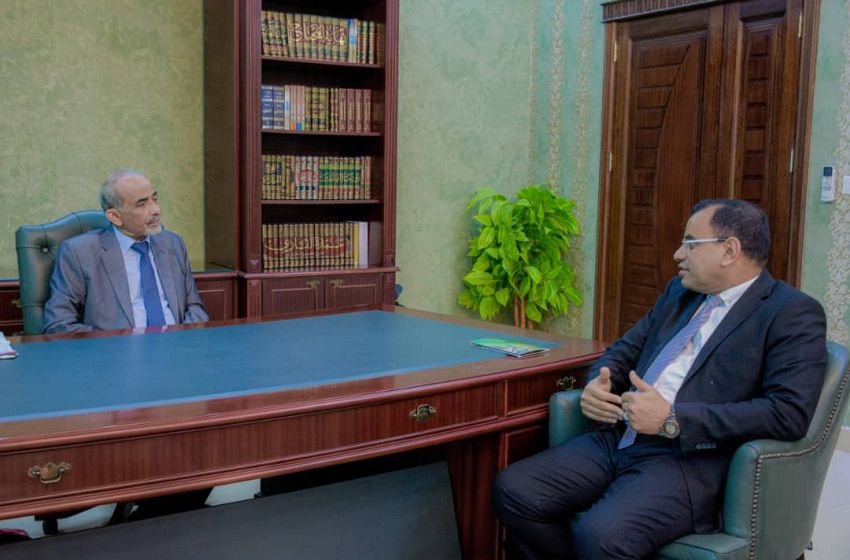
Lieutenant General Mahmoud al-Subaihi, a member of Yemen’s Presidential Leadership Council, has emphasised the critical importance of boosting agricultural production as a means of advancing self-sufficiency and stimulating economic growth. He made the remarks during a meeting with the Minister of Agriculture, Irrigation and Fisheries, Salem al-Soqtari, in which the two discussed strategies for improving investment in a sector widely regarded as central to the country’s recovery.
Al-Subaihi highlighted the need to address the obstacles that hinder investment in agriculture, calling on the relevant authorities to streamline administrative procedures and to create an environment conducive to attracting investors interested in sustainable agricultural projects. He framed the removal of such barriers as essential to unlocking the sector’s potential and to reducing the country’s heavy dependence on imported food.
The member of the Presidential Leadership Council reiterated the government’s commitment to supporting agricultural development initiatives, and he commended the Ministry of Agriculture, Irrigation and Fisheries for its efforts toward sustainable development and enhancing self-sufficiency. The exchange reflected a shared recognition of agriculture’s importance to both food security and the broader economy.
Agriculture has long been a cornerstone of Yemeni society and a source of livelihood for a large share of the population, particularly in rural areas. Despite the country’s challenging environment, farming and herding sustain millions of people, and the health of the sector has direct implications for employment, incomes and the availability of food across the country.
The emphasis on self-sufficiency reflects a strategic concern that has taken on heightened urgency during the conflict. Yemen imports the overwhelming majority of its food, leaving it acutely vulnerable to disruptions in global markets, fluctuations in prices and interruptions to shipping. Strengthening domestic production could reduce this dependence and enhance the country’s resilience to external shocks.
Yet Yemeni agriculture faces formidable challenges. Chief among them is water scarcity, as the country ranks among the most water-stressed in the world and much of its farming depends on increasingly depleted groundwater. Years of over-extraction, combined with the effects of a changing climate, have placed the sustainability of agricultural production under serious strain.
The conflict has compounded these difficulties. Fighting has damaged infrastructure, disrupted supply chains and displaced farmers, while the collapse of the economy has raised the cost of inputs such as fuel, seeds and fertiliser. Reviving the sector therefore requires addressing not only long-standing structural problems but also the specific damage wrought by the war.
The call to attract investment points to one avenue for revitalising agriculture. Investment can bring capital, technology and expertise to bear on the sector, supporting the modernisation of production, the improvement of irrigation and the development of value chains. Creating conditions that encourage such investment is thus central to the government’s stated agricultural ambitions.
Streamlining administrative procedures, as al-Subaihi urged, addresses a common obstacle to investment. Bureaucratic complexity, delays and uncertainty can deter potential investors, and simplifying the processes involved in establishing and operating agricultural projects could help make the sector more attractive to those with capital to deploy.
The emphasis on sustainability reflects an awareness that agricultural development must be pursued in ways that do not deplete the country’s already fragile resources. Sustainable practices, including efficient water use and the protection of soil and land, are essential to ensuring that gains in production can be maintained over time rather than achieved at the expense of the future.
The inclusion of fisheries within the ministry’s remit points to another dimension of Yemen’s agricultural potential. With a long coastline on the Red Sea and the Gulf of Aden, the country possesses significant fisheries resources, and the sustainable development of this sector could contribute to food security, employment and exports, complementing efforts to strengthen land-based agriculture.
Enhancing agricultural production also carries implications for the humanitarian situation. With more than 18 million Yemenis estimated to be acutely food insecure, increasing domestic food production could help ease the pressure on households and reduce reliance on imports and aid. Agriculture thus sits at the intersection of economic development and humanitarian relief.
The government’s commitment to supporting agricultural development, reaffirmed by al-Subaihi, reflects a recognition of these stakes. Yet translating commitment into results will require sustained effort, resources and coordination, as well as attention to the practical challenges that have long constrained the sector’s performance.
The involvement of a senior Presidential Leadership Council member in the discussion signals the importance the government attaches to agriculture within its broader economic strategy. Engaging figures at the highest level of leadership can help mobilise attention and resources and lend weight to efforts to advance the sector’s development.
Any serious drive to expand food production also runs up against long-standing questions about how Yemen’s scarce arable land and water are used. A substantial share of the country’s agricultural resources has historically been devoted to cultivating qat, a mild stimulant chewed widely across Yemen, which consumes large quantities of water and competes with food crops for land and labour. Encouraging a shift toward staple and cash crops that strengthen food security, while respecting the livelihoods bound up with existing patterns of farming, is among the more delicate balances that agricultural policy in the country must strike.
For now, the meeting between al-Subaihi and al-Soqtari underscored the government’s stated determination to strengthen Yemen’s agriculture as a pillar of self-sufficiency and economic recovery. Whether these intentions yield tangible gains will depend on overcoming the sector’s deep-seated challenges, but the emphasis placed on agriculture reflected its enduring significance to the country’s future.
About the Author




