Yemen’s Women’s Affairs Minister and UK Ambassador Discuss Expanding Support for Yemeni Women
 Yemen Herald News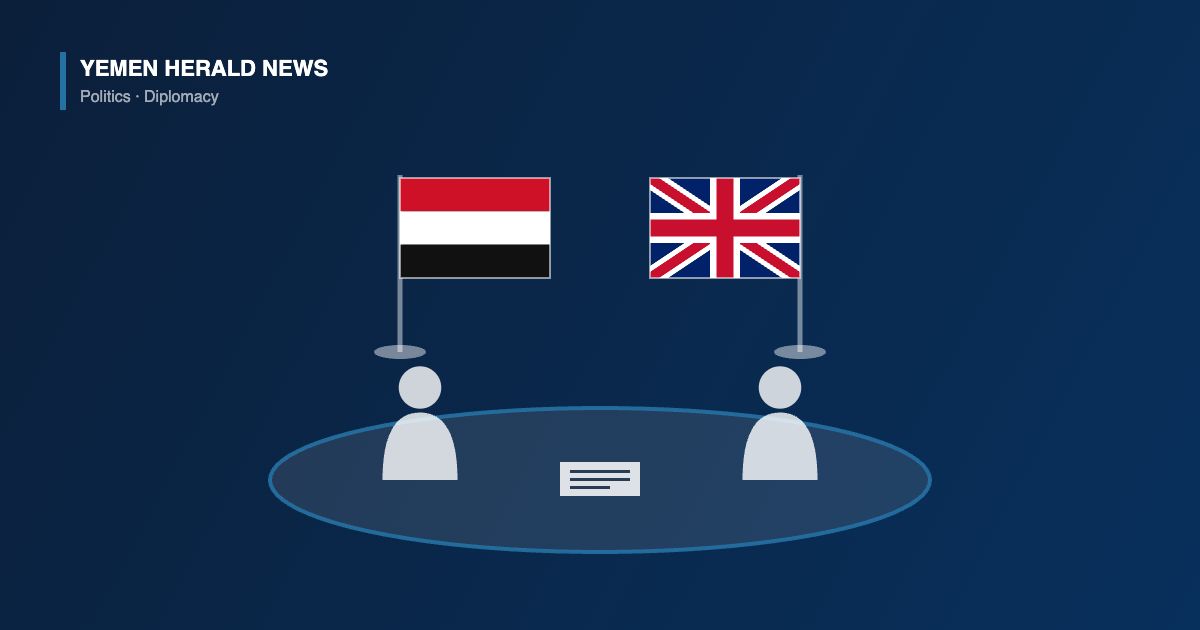
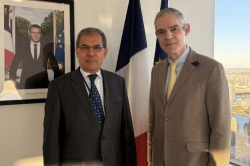
Yemen’s State Minister for Women’s Affairs, Dr. Ahd Jaassous, held talks on Wednesday with the United Kingdom’s Ambassador to Yemen, Abda Sharif, on ways to broaden cooperation in support of Yemeni women. The two met by video conference and reviewed recent developments alongside the humanitarian and economic pressures shaping women’s lives across the country, the state news agency Saba reported on 19 August 2026.
According to the agency’s account of the meeting, Jaassous pressed the case for greater female participation in public affairs, in peacebuilding processes and in decision-making. She said the government is working to strengthen women’s presence in leadership positions and in policymaking, and to create an environment that allows them to contribute to development and stability. She also argued that cooperation with international partners needs to widen if programmes to build women’s capacities and support them economically and socially are to operate at any meaningful scale.
Sharif, for her part, affirmed the United Kingdom’s commitment to supporting women’s issues in Yemen and to continuing projects aimed at women’s economic and social empowerment, Saba said. Such work, the ambassador noted, would widen the range of sectors in which women can take part and strengthen their contribution to development and peacebuilding. The readout named no specific programmes, cited no funding figures and set out no timetable.
Saba is the news agency of the internationally recognised government, and its readouts of ministerial meetings are typically brief summaries rather than verbatim accounts. The version of the exchange available publicly is therefore the government’s own, and no corresponding statement had been published by the British side at the time of writing.
Sharif is a lawyer and career diplomat who was named Britain’s ambassador to Yemen in 2023. She came to the post from the Foreign, Commonwealth and Development Office, where she led the Iraq and Arabian Peninsula Department within the Middle East and North Africa directorate. Earlier in her career she served as deputy ambassador to Lebanon between 2012 and 2016, and in 2011 she headed the British office in Benghazi during the Libyan uprising. Contacts of the kind held on Wednesday are frequently conducted by video link.
The backdrop to the talks is a relief operation under severe strain. The United Nations Humanitarian Needs and Response Plan for Yemen for 2026, issued in March, estimates that more than 22 million people need humanitarian assistance and protection this year, among them 10.95 million women and girls. The plan counts 5.2 million internally displaced people, 329,000 migrants and 63,000 refugees and asylum seekers, and asks donors for 2.16 billion dollars to reach 12 million people, with 9.4 million prioritised by severity of need.
Food insecurity remains the sharpest measure of that strain. The plan records 18.3 million people as acutely food insecure, with the most recent Integrated Food Security Phase Classification analysis pointing to further deterioration and several districts moving from crisis to emergency levels. More than 2.2 million children under five are acutely malnourished, including 516,157 assessed with severe acute malnutrition. Those pressures do not fall evenly, and the response plan counts women and girls as roughly half of the population in need.
Political inclusion has advanced more slowly than the language around it. Yemeni women have had little representation in the most consequential negotiations of the war, and have been largely absent from the technical committees convened under United Nations auspices, including those handling prisoner exchanges, security and military questions, and the situation in Taiz. The gap has been raised repeatedly in Security Council settings, where advocates point to Resolution 1325 and the wider women, peace and security agenda as the standard the process is failing to meet.
The Office of the UN Special Envoy for Yemen has tried to narrow that distance by holding consultations with women in Taiz and Aden to gather their views on peace, justice and inclusion and to feed them into the process. Analysts who follow the file, among them the International Crisis Group, have argued that a durable settlement requires space not only for a broader range of armed and political factions but for the women and civil society groups that have carried much of the local peacemaking.
The Ministry of State for Women’s Affairs is a comparatively young portfolio within the Aden-based government, and its leverage depends heavily on external funding and on the cooperation of line ministries that control budgets and appointments. Wednesday’s meeting fits a pattern of contacts the ministry has maintained with Western missions this year; Saba has reported similar discussions with United States diplomats on women’s empowerment, and the ministry has signed cooperation agreements with non-governmental bodies working on the same brief. Such contacts sustain visibility for the portfolio, but they rarely produce announcements that can be measured against a budget line or a delivery date.
Neither side announced new commitments on Wednesday. What the meeting registers instead is continuity: a ministry seeking to convert declared support into funded programmes, and a donor government restating an interest it has held throughout the conflict. Whether that translates into measurable gains for Yemeni women will depend less on the language of readouts than on the funding decisions taken over the rest of 2026, and on whether the political process makes room for women at the tables where terms are actually settled.
About the Author