Houthi missile salvo at Bab al-Mandab follows strikes that shut Yemen’s Mokha port
 Yemen Herald News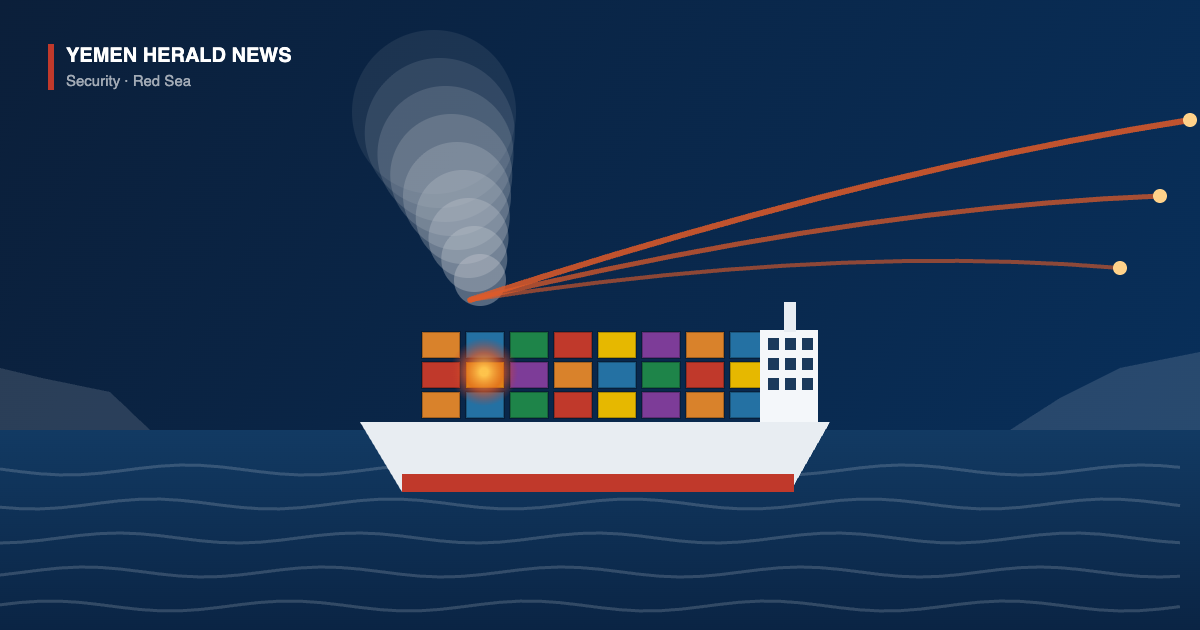
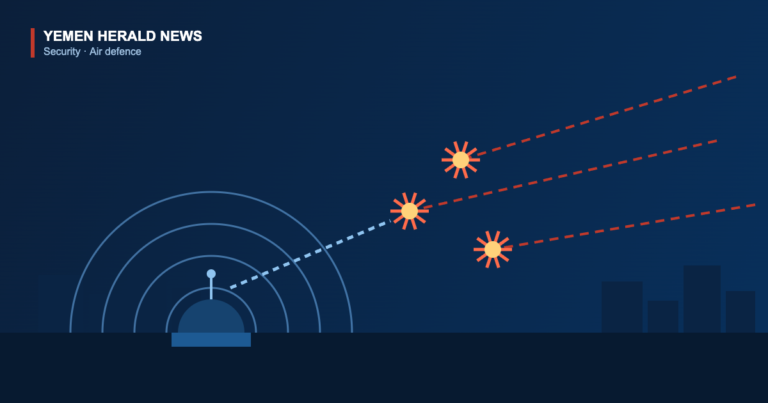
Houthi forces fired five ballistic missiles toward the Bab al-Mandab Strait on Monday 17 August 2026, days after a sustained bombardment that took Yemen’s Red Sea port of Mokha out of service. The launches marked a further widening of a campaign that had, until recently, been concentrated on the port itself.
Media aligned with the internationally recognised government said two of the missiles were fired from an area near the al-Hamza camp in Ibb province and three from east of Taiz city, both districts under Houthi control. Government forces said they continued to counter Houthi attacks on several fronts.
The salvo followed days of strikes on Mokha city, in Taiz province, using rockets and drones. The head of Mokha port, Abdul Malik al-Sharabi, said the militants had fired more than 25 missiles at the facility, causing extensive damage to vessels, the pier and vital infrastructure. He said the attacks killed four members of the security forces and three port staff.
Commercial and maritime operations at the port were suspended as a result. Al-Sharabi warned of the humanitarian and economic consequences of the halt in navigation, saying some 1,300 workers had lost their source of income. Port authorities have put the financial losses at around 16 million US dollars, a figure that reflects damaged infrastructure and lost trade rather than a full assessment, which officials say is still under way.
In Mokha, dozens of sailors staged a protest against the attacks, calling on the international community to intervene urgently and to provide effective protection for maritime routes and for workers in the marine sector.
The escalation has not been confined to the coast. In Taiz, government forces said they repelled Houthi advances north of the city, and a statement from the armed forces reported clashes that left casualties among the attacking force. Houthi artillery strikes on north-western Taiz caused material damage but no reported casualties, according to military sources, and the national resistance returned fire.
The civilian toll has been documented separately. The Yemeni Network for Victims Associations recorded 18 civilians killed or injured in ballistic missile and drone attacks on Taiz, Marib, Hodeidah and Dhale between 4 and 15 August. At a press conference the association said the attacks had struck homes, displacement camps and civilian infrastructure, and it called on the United Nations and the Security Council to act to protect civilians and hold those responsible to account. It also called for an independent international investigation into the use of ballistic missiles and drones.
Mokha’s significance explains why it has drawn such concentrated fire. The port sits on Yemen’s Red Sea coast a short distance north of the Bab al-Mandab Strait, in territory held by government-aligned forces, and it had been handling a growing share of commercial traffic as an alternative to ports elsewhere on the coast. Taking it out of service removes that alternative and concentrates leverage over Yemen’s Red Sea trade.
The strait itself is among the world’s most heavily used maritime chokepoints. Roughly 30 kilometres wide at its narrowest point, it separates Yemen from Djibouti and Eritrea and forms the southern gateway between the Gulf of Aden and the Red Sea, and from there to the Suez Canal. Attacks on and near commercial shipping since late 2023 have already pushed many operators to route vessels around the Cape of Good Hope instead, adding thousands of miles and considerable cost to voyages between Asia and Europe.
Firing ballistic missiles at the strait rather than at a specific vessel carries a distinct signal. It threatens the corridor as a whole rather than any single ship, and it does so from launch sites well inland, which are harder to suppress than coastal positions.
The wider trajectory has alarmed the United Nations. The Special Envoy for Yemen, Hans Grundberg, told the Security Council on 13 August that Yemen faces a more serious risk of a return to large-scale conflict than at any point since the UN-mediated truce of 2022, and warned that attacks on critical waterways were imperilling global trade and threatening to draw the country into the wider regional war. He cited a series of incidents in July, including missile attacks on Saudi targets and a Houthi missile strike on a commercial vessel in which several crew members were killed. Several council members condemned the escalation.
The government describes the Houthis as an Iran-backed force whose maritime campaign is directed from outside Yemen. The movement rejects that account and presents its operations as a response to events in the wider region. UN reporting has documented transfers of Iranian-origin weapons components to Houthi-held areas, though the extent of Iranian operational direction remains disputed among analysts.
Yemen’s government has said it will respond to the attacks on Mokha, and Presidential Leadership Council members have used recent meetings with Western envoys to press for sustained international pressure on the group, including measures to cut off its funding and weapons supplies. No major counter-offensive had been announced at the time of writing.
What happens next at Mokha is the immediate question. Reopening the port will require damage assessment, repairs to the pier and infrastructure, and some assurance that traffic will not simply be struck again. Until that happens, 1,300 port workers remain without income, and a country that imports the overwhelming majority of its food and fuel has one fewer working entry point on its Red Sea coast.
About the Author