Aden’s “Mattress Revolution” protests resume after month-long pause over power cuts and unpaid salaries
 Yemen Herald News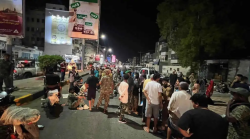
Protests have returned to the streets of Aden after a pause of more than a month, with residents of Yemen’s interim capital reviving the demonstrations known locally as the “Mattress Revolution.” The name comes from the bedding that families carry into the road when power cuts leave their homes too hot to sleep in. Demonstrators have gathered again in several districts to demand an end to prolonged electricity outages and the payment of public-sector wages that many say have gone undelivered for months.
The imagery that gave the movement its name has become one of the most recognisable expressions of civic anger in southern Yemen. In the districts of Al-Mualla, Crater and Al-Mansoura, residents have been filmed dragging mattresses, blankets and pillows onto pavements and traffic islands, then bedding down in the open. It is both a practical response to airless rooms and a deliberate piece of political theatre.
The demands are consistent with earlier rounds of protest. Participants want a reliable electricity supply, restored water and fuel deliveries, affordable household gas, and the regular disbursement of salaries to public employees. Teachers, pensioners and security personnel have featured prominently, and some protesters have told local media they have received no pay for several months and that food assistance has also been reduced.
Electricity remains the immediate trigger. During the wave of demonstrations that swept Aden and Hadramout earlier in the summer, residents and Yemeni outlets described outages lasting 17 hours or more each day, and in some neighbourhoods closer to 20, at a time when daytime temperatures were passing 40 degrees Celsius. Aden’s generation capacity depends heavily on ageing diesel and fuel-oil plants and on fuel consignments the government has struggled to finance. When a shipment is delayed or a generating unit fails, the effect reaches households within hours.
The salary question is harder to resolve than the power supply and, for many families, more corrosive. The government seated in Aden pays its wage bill in a currency that has lost much of its purchasing power, and arrears have accumulated across ministries, schools and municipal services. Even where salaries arrive, recipients say the amounts no longer cover a month of food, transport and cooking gas. Pensioners have blocked roads over unpaid entitlements, and teachers have staged repeated strikes.
The protests that spread in June set the pattern that has now resumed. Demonstrators blocked main roads in Aden and in Mukalla, the capital of Hadramout, with stones and burning tyres, and activists circulated calls for larger sit-ins close to the Maashiq presidential palace, the seat of the internationally recognised government in Aden. That round subsided without a durable settlement of the underlying grievances, which is why organisers describe the current demonstrations as a continuation rather than a new campaign.
Authorities have responded with a mixture of acknowledgement and warning. Aden’s Security Committee has said it recognises the hardship residents face and regards their service-related demands as legitimate, while cautioning against attempts to push the demonstrations away from peaceful expression or to damage public and private property. Officials have periodically announced incoming fuel shipments intended to raise generation hours, though residents have generally reserved judgement until an improvement is visible on their own meters.
The protests unfold against Yemen’s wider political division. The country has been at war since 2015, with the Houthi movement controlling Sanaa and much of the northern highlands while the internationally recognised government, restructured in 2022 under the Presidential Leadership Council, administers Aden and areas of the south and east. The split has produced parallel institutions, including rival central banks, and has fragmented the currency, customs revenue and the fuel trade on which the electricity grid depends.
Aden’s status as the interim capital gives the demonstrations a significance beyond municipal service delivery. The city is where the recognised government must show that it can govern, and repeated failures on electricity and pay are read by residents as evidence of its limits. The Southern Transitional Council, which holds substantial influence in Aden and sits within the leadership council, faces the same scrutiny, because its own constituency is among those sleeping in the street.
The government’s fiscal position constrains what it can promise. Crude exports, once the main source of hard currency, have been suspended since attacks on southern export terminals in late 2022, removing a large share of state revenue and leaving Aden dependent on external deposits and grants to buy fuel and pay wages. Officials have argued that this shortfall is the principal obstacle to a stable power supply, while critics in the city counter that mismanagement and procurement failures have compounded it.
Aid agencies have warned that the erosion of basic services compounds an already severe humanitarian situation, with millions of Yemenis dependent on assistance for food, water and health care. In Aden, where families displaced from other governorates have settled alongside long-term residents, interruptions to water pumping and refuse collection carry health risks that extend beyond discomfort.
For now the pattern is familiar to anyone who has spent a summer in the city. Protesters say they intend to keep the demonstrations going until services improve and salaries are paid on schedule, and organisers have signalled that further gatherings are planned. Whether the movement grows or subsides again is likely to be decided by the same measure residents have used all summer, which is how many hours the lights stay on after dark.
About the Author