Thailand’s Non-Resident Ambassador Presents Copy of Credentials to Yemen’s Deputy Foreign Minister
 Yemen Herald News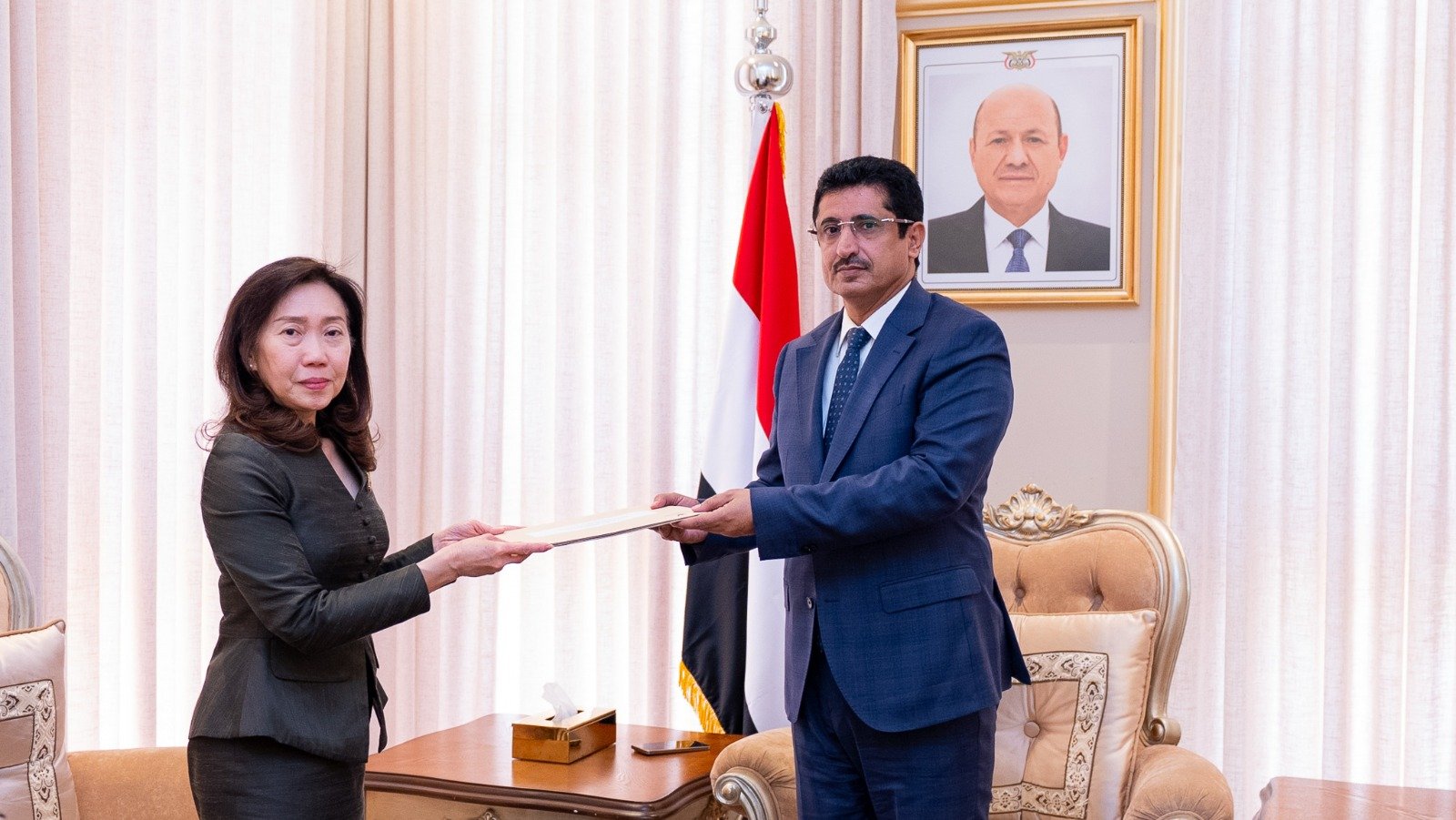
Yemen’s Deputy Foreign Minister for Political Affairs, Dr. Mansour Bagash, received a copy of the credentials of Warunee the ambassador, Thailand’s newly appointed non-resident ambassador to Yemen, the state news agency Saba reported on Thursday. The exchange took place in Riyadh, where the Yemeni foreign ministry maintains offices, and marks the formal opening of the ambassador’s tenure, during which she will represent Bangkok’s interests in a country where Thailand maintains no resident mission.
The distinction between a copy of credentials and the credentials themselves matters procedurally. Presenting a copy to a senior foreign ministry official is the preliminary step in the accreditation process and allows an envoy to begin work, while the original letters of credence are formally presented to the head of state at a later date. The step confirms that Bangkok’s nominee has been accepted and that ordinary diplomatic business between the two governments can resume through her.
According to the agency’s account, the ambassador expressed her pleasure at beginning her duties and affirmed her country’s support for Yemen’s political leadership and government, along with a desire to develop bilateral relations further. Bagash, for his part, welcomed the ambassador, wished her success in her assignment and offered the ministry’s assistance in strengthening ties between the two states.
Neither side announced specific agreements, projects or areas of prospective cooperation, and the readout carried no reference to trade figures, development assistance or consular arrangements. Meetings of this kind are largely procedural, and the substance of any relationship generally emerges afterwards rather than at the point of accreditation.
Thailand’s decision to accredit a non-resident ambassador rather than open an embassy in Yemen reflects a pattern common among states with limited direct interests in the country. Non-resident envoys are typically based in a neighbouring capital and cover several countries at once, travelling for formal occasions and conducting routine business remotely. The arrangement preserves formal diplomatic relations at modest cost, and it has become the predominant model for representation in Yemen since the security situation deteriorated.
Most foreign missions suspended operations in Sanaa after 2014 and 2015, when the Houthi movement took control of the capital and the conflict escalated. A number have since relocated to Aden, the internationally recognised government’s interim capital, or have run Yemen files from Riyadh, Amman or Cairo. Rebuilding that diplomatic presence, even in non-resident form, has been a consistent objective of the Aden government, which treats each accreditation as evidence of its standing as the state’s legitimate representative.
The Thai accreditation was not the only one handled that week. Saba reported that the deputy foreign minister also received the credentials of Nigeria’s ambassador, indicating a cluster of appointments moving through the ministry at the same time. The ministry has processed a steady sequence of such presentations over the past year, covering European, Asian and African states.
Relations between Yemen and Thailand have historically been limited in scope. The two countries have no significant bilateral trade relationship, and contact has centred largely on multilateral forums and on consular questions affecting Yemeni nationals in Southeast Asia. Thailand is, however, a substantial rice exporter, and food imports are of considerable consequence to Yemen, which depends on imported staples for the large majority of its consumption.
That dependence gives routine diplomacy a practical dimension that is easy to overlook. Yemen imports the overwhelming share of its food, and disruption to shipping routes or to the financing of commercial imports translates quickly into price increases in local markets. Any expansion of commercial contact with major agricultural exporters therefore carries a relevance beyond the formal language of accreditation ceremonies.
The diplomatic exchange takes place against a humanitarian emergency that remains among the largest in the world. The United Nations Office for the Coordination of Humanitarian Affairs estimated in its March 2026 response plan that more than 22 million people in Yemen require assistance, that 18.3 million are acutely food insecure and that more than 2.2 million children under five are acutely malnourished, of whom 516,157 are severely malnourished. Roughly 5.2 million people remain internally displaced.
The foreign ministry falls under Dr. Afrah al-Zouba, appointed minister of foreign affairs and expatriates in July 2026 and the first woman to hold the post in Yemen. Her ministry has maintained an active schedule of contacts since the appointment, combining accreditation ceremonies of this kind with telephone consultations aimed at consolidating international recognition of the Aden-based government.
Yemen has itself maintained non-resident representation in Bangkok in the past, and the reciprocal arrangement is the practical form the relationship has taken for years. Formal ties between the two states date back several decades, but they have never been dense, and the interruption caused by the war left even routine contact difficult to sustain. Restoring an accredited channel at ambassadorial level at least gives each government an identified counterpart for consular matters and for coordination in international organisations, which is a modest but real improvement on the arrangements of recent years.
What the Thai appointment amounts to in practice will depend on activity that follows rather than on the ceremony itself. A non-resident ambassador covering Yemen from another capital faces obvious constraints, and the readout gave no indication of planned visits or of any intention to establish a permanent presence. For the government in Aden, the immediate value lies in the accreditation itself: another state has formally recognised its authority to receive foreign envoys.
About the Author