Yemen’s Foreign Minister Discusses Cooperation and Policy Coordination with Mauritanian Counterpart
 Yemen Herald News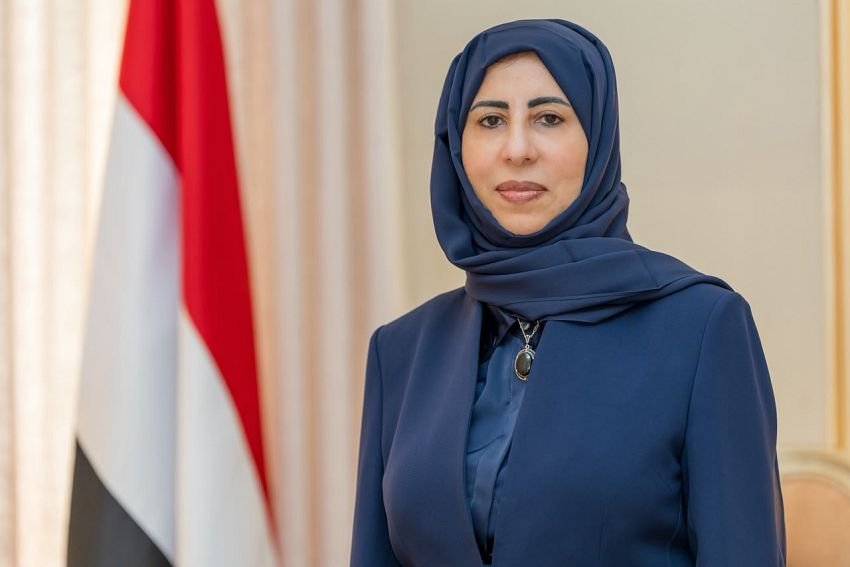
Yemen’s Minister of Foreign Affairs and Expatriates, Dr. Afrah al-Zouba, held a telephone call on Thursday with Mauritania’s Minister of Foreign Affairs, African Cooperation and Mauritanians Abroad, Dr. Mohamed Salem Ould Merzoug, in a conversation that covered bilateral relations between the two countries alongside the latest developments in Yemen and the surrounding region. The state news agency Saba said the two ministers reviewed ways to strengthen and develop ties and exchanged views on a number of regional and international questions of mutual interest.
According to the agency’s readout, both sides affirmed what it described as the depth of the fraternal relations between the two countries and their peoples, and expressed a commitment to expanding areas of cooperation, continuing consultations and coordinating positions in a manner that serves shared interests. The account identified no specific agreement, project or timetable arising from the call, and neither ministry issued a joint statement afterwards.
Al-Zouba used the call to brief her Mauritanian counterpart on the security situation, and in particular on what the Yemeni government characterises as a recent escalation by the Houthi movement. Saba, which is controlled by the internationally recognised government, described the group as an Iran-backed terrorist militia and said the escalation carried consequences for security, stability and the safety of international maritime navigation. The Houthis reject that characterisation and present their operations as a response to actions by the government and its regional backers.
The Mauritanian minister, for his part, expressed his country’s pride in its relations with Yemen and said Nouakchott intended to continue developing bilateral cooperation and to strengthen consultation and coordination between the two governments, according to the same readout.
The exchange ranks among the early diplomatic engagements of al-Zouba’s tenure. She was appointed Minister of Foreign Affairs and Expatriates on 23 July 2026 by a presidential decree issued by Rashad al-Alimi, chairman of the Presidential Leadership Council, as part of a limited cabinet reshuffle. Her appointment made her the first woman to hold the foreign affairs portfolio in Yemen, and the first to occupy any of the country’s most senior cabinet positions.
Al-Zouba brings more than two decades of experience in public administration, institutional governance and international development to the post. She previously served as minister of planning and international cooperation, and earlier as first deputy secretary-general of the National Dialogue Conference, the transitional body established to steer Yemen away from the rule of former president Ali Abdullah Saleh and to draft a new constitution. She holds a pharmacy degree from Sanaa University along with qualifications in business administration and health economics.
Her move to the foreign ministry followed a broader reordering of the government. Dr. Shaya al-Zindani, who had himself served as foreign minister, became prime minister in January 2026, leaving the portfolio to be filled in the July reshuffle. The cabinet continues to operate primarily from Aden, the country’s interim capital, while Sanaa remains under Houthi control.
Mauritania is a comparatively distant partner in commercial terms, and Ould Merzoug has held the foreign affairs portfolio in Nouakchott since 2022. Both states belong to the Arab League and the Organisation of Islamic Cooperation, and for the Yemeni government the practical value of contacts of this kind lies less in trade than in securing support within multilateral bodies where resolutions on Yemen are debated and where recognition and voting alignments carry weight.
The reference to maritime navigation reflects one of the most internationally visible dimensions of the conflict. The Bab al-Mandab strait, at the southern entrance to the Red Sea, ranks among the world’s principal shipping chokepoints, and attacks on commercial vessels in those waters have pushed many operators to route cargo around southern Africa instead, lengthening voyages and raising insurance costs. Yemeni officials have repeatedly raised the issue with foreign counterparts over the past two years.
The diplomatic activity unfolds against a humanitarian emergency that remains among the world’s largest. The United Nations Office for the Coordination of Humanitarian Affairs estimated in its March 2026 response plan that more than 22 million people in Yemen require assistance, with 18.3 million acutely food insecure and more than 2.2 million children under five acutely malnourished, of whom 516,157 are severely malnourished. Some 5.2 million people remain internally displaced within the country. The plan seeks 2.16 billion US dollars to reach 12 million of those in greatest need.
The Mauritania call was not an isolated contact. Saba reported that al-Zouba spoke the same day with her Djiboutian counterpart, with that conversation focused on strengthening cooperation and on security in the Red Sea. Djibouti sits directly across the strait from Yemen and hosts several foreign military installations, which gives it a more immediate stake in the waterway than most of Yemen’s Arab League partners and makes it a natural interlocutor on shipping security.
Telephone consultations of this kind rarely produce immediate results, and the readout gave no indication that the two governments discussed concrete measures. Their significance lies instead in the pattern they form: a newly appointed foreign minister working steadily through a list of counterparts to shore up recognition and sympathy for her government’s position at a moment when fighting inside Yemen has intensified and the formal diplomatic track remains stalled.
About the Author