Yemen’s prime minister praises British support in video talks with Stephen Doughty
 Yemen Herald News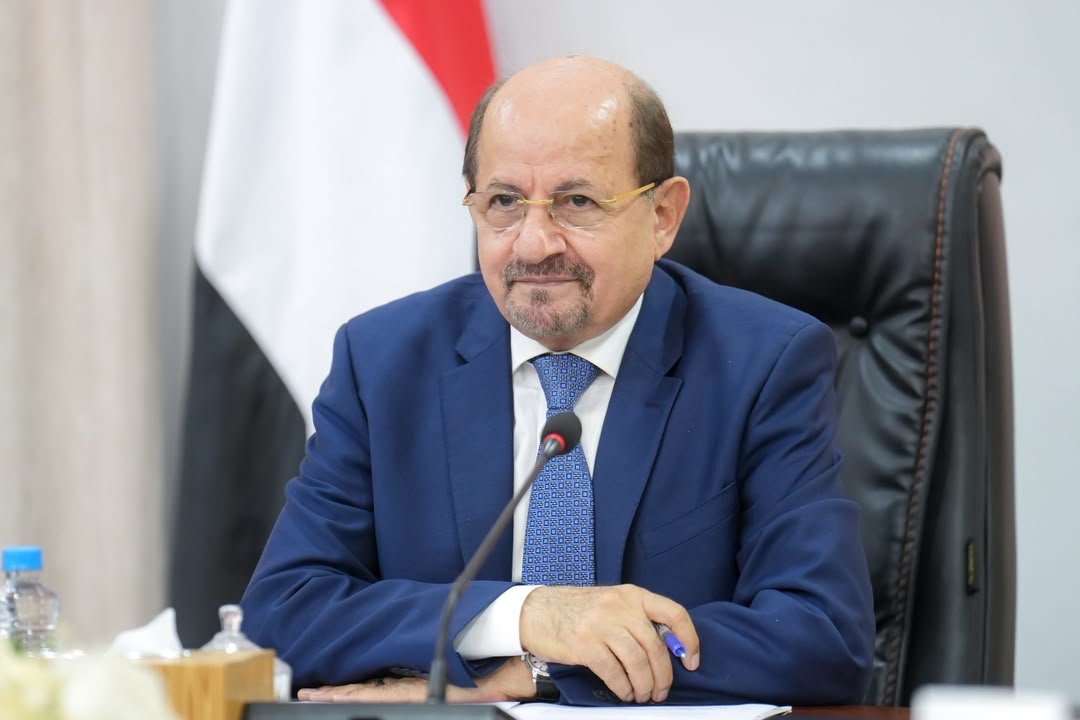
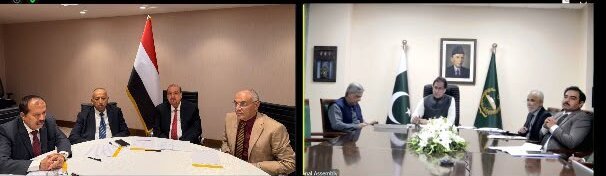
ADEN, Yemen — Yemen’s prime minister, Shaya Zindani, held video talks on Wednesday with Stephen Doughty, Britain’s minister of state for the Middle East, the state news agency Saba said.
The two discussed bilateral relations, developments in Yemen and the region, and what Saba called the military escalation of the Houthi movement, the agency reported.
Zindani praised what he described as British support for Yemen, particularly at the United Nations Security Council, according to Saba. He said he hoped to raise the relationship to a broader level of partnership.
He warned of the consequences of continued Houthi escalation for regional and international security, Saba said, including attacks on shipping in the Red Sea and the Bab al-Mandab strait.
Those attacks threaten global trade, energy security and freedom of navigation, the prime minister said, according to the agency.
The talks also covered the government’s efforts on institutional, financial, administrative and economic reform, Saba reported.
Doughty said London was interested in supporting the Yemeni government and in strengthening cooperation between the two countries, according to the same report.
Yemen Herald could not independently verify the account, which rests on the Yemeni state agency’s summary of a closed video call. The British foreign office had published no readout of the meeting at the time of writing.
Doughty’s brief is wider than Saba described it. He was appointed a minister of state at the Foreign, Commonwealth and Development Office on 21 July, with responsibility for the Middle East, North Africa, Afghanistan and Pakistan.
Zindani came to the prime minister’s office in January. The Presidential Leadership Council named him on 15 January 2026, moving him from the foreign ministry.
His predecessor, Salem Saleh bin Braik, a former finance minister, had led the government since May 2025 and was appointed an adviser to council chairman Rashad al-Alimi on financial and economic affairs.
The foreign ministry passed on 23 July to Afrah al-Zouba, the first woman to hold the post.
The meeting took place during a sharp escalation in the conflict. A United Nations-brokered truce agreed in 2022 has broken down, and international news organisations reported that the collapse followed a Saudi air strike on the runway at Sanaa airport on 13 July.
International reporting dates the start of the wider regional war to 28 February. A naval monitoring group reported on 22 July that Houthi forces had deployed missiles and drones against ships in the southern Red Sea.
Yemen’s transport ministry said a Houthi strike on the Egyptian-owned, Tanzania-flagged cargo ship Tihamah in the Bab al-Mandab strait on 12 August killed four crew members, three of them Pakistani and one Indonesian, and two rescuers.
Al Jazeera, NBC News and CNBC reported those deaths, citing the ministry and the United States military. NBC News described them as the first deaths in a Houthi strike on shipping since the regional war began in February.
The United States military said it struck a container ship the same day as it attempted to sail toward an Iranian port, according to the same reporting. It did not identify the vessel.
The Houthi authorities in Sanaa had issued no response to the meeting at the time of writing.
Britain has been among the larger bilateral donors to the humanitarian response. In a statement to the UN Security Council on 16 June, the United Kingdom said it had provided more than 190 million dollars towards the response in Yemen. The Foreign, Commonwealth and Development Office added that Britain remained committed to working with partners to reach those most in need.
The government announced 144 million pounds for Yemen in January 2025, covering the 2024-25 financial year. It said the money would give 864,000 people cash to buy food and supply more than 700 health facilities with medicines, vaccines and nutritional supplements.
The Foreign, Commonwealth and Development Office also joined Saudi Arabia’s KSrelief in providing 10 million dollars to the World Food Programme for its hunger response in Yemen.
The reform agenda Zindani raised with Doughty runs alongside a divided monetary system. Yemen has operated two separate rial zones since January 2020, when the Houthi-run central bank in Sanaa banned circulation of new banknotes issued by the Aden-based Central Bank of Yemen.
The rial reached a record low at the start of last year, when the dollar traded at about 2,150 rials in Aden. Rate monitors put it at about fifteen hundred to the dollar in early August.
Published estimates put Yemen’s nominal gross domestic product for the year at a little over seventeen billion dollars.
The UN Office for the Coordination of Humanitarian Affairs said in its March 2026 response plan that more than 22 million Yemenis need assistance and 18.3 million are acutely food insecure.
OCHA put the number of young children with acute malnutrition above two million, of whom more than half a million are severely malnourished, and the number of people displaced inside the country at above five million. Its appeal sought just over two billion dollars to reach twelve million people.
Saba filed the report from Aden. It named no other participants in the call, gave no length for the meeting, and set no date for further contacts between the two governments.
The agency described Doughty by the shorter title of minister of state for the Middle East and North Africa, omitting the Afghanistan and Pakistan portions of his brief.
About the Author