Yemen’s ambassador to the US urges Washington to back government forces against the Houthis
 Yemen Herald News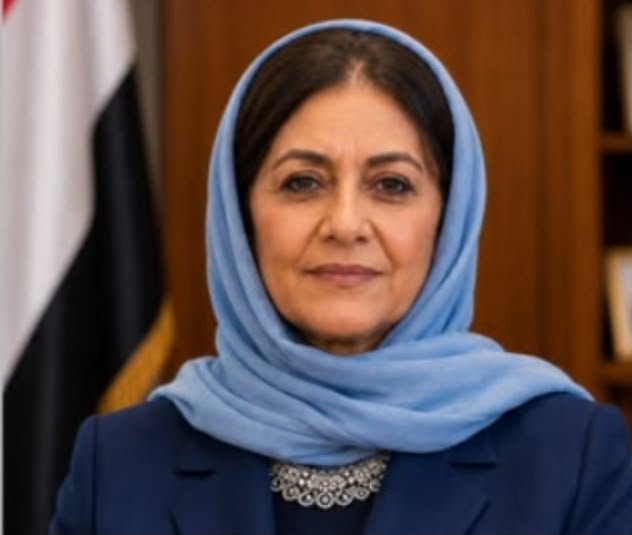
WASHINGTON, United States — Yemen’s ambassador to the United States said her government can defeat the Houthis and secure Red Sea shipping lanes if Washington backs it directly.
Jamila Ali Raja made the argument in an opinion article published in The Wall Street Journal last week under the title “A Strong Yemen Can Defeat the Houthi Threat.”
The state news agency Saba reported her remarks on Aug. 25. The independent outlet Yemen Monitor published its own account the same day.
Raja said the internationally recognised government now has the operational readiness and the military capability to confront the group, according to those reports.
She asked Washington for three things.
First, tougher sanctions and legal action against the shipping networks, financial intermediaries and weapons-smuggling operations she said sustain the Houthis, Yemen Monitor reported.
Second, more support for the Yemeni armed forces and the Coast Guard, with closer intelligence coordination and the interception of Iranian arms shipments.
Third, a resumption of development and humanitarian assistance, and backing for the government’s economic recovery programmes.
Raja said the Bab al-Mandab Strait had become a venue for coercion by an armed group she described as supported and directed by Tehran.
Houthi attacks on merchant shipping have pushed carriers to route vessels around the Cape of Good Hope, she said, raising insurance premiums, freight costs and commodity prices as far as the United States.
The Bab al-Mandab Strait links the Red Sea to the Gulf of Aden. With the Suez Canal it forms one of the shortest sea routes between Europe and Asia, carrying crude oil, liquefied natural gas and container cargo.
She rejected the description of Yemen as a near-failed state. “That is not the Yemen we know today,” she said, in remarks carried by Saba.
She listed steps the government says it has taken: moving banking oversight to the interim capital Aden, unifying the money-transfer network, tightening supervision of import financing, consolidating the intelligence services and creating a specialised counterterrorism agency.
Raja also cited Yemen’s place in a new maritime coalition. That grouping is on the record.
Saudi Arabia announced the Multinational Maritime Defense Alliance on July 31 after a conference in Riyadh attended by delegations from 43 countries and the European Union.
Fourteen governments joined: Bahrain, Bangladesh, the Comoros, Djibouti, Egypt, Jordan, Kuwait, Pakistan, Qatar, Saudi Arabia, Somalia, Sudan, Turkey and Yemen’s internationally recognised government.
Saudi Arabia is the founding leader and hosts the permanent headquarters. The alliance’s stated purpose is to keep the Gulf of Aden, the Bab al-Mandab Strait and the Red Sea open to traffic.
The Houthis vowed “full escalation” when the coalition was launched.
Raja said the government was not asking others to take over its defence responsibilities, but to join it in protecting Yemen, the region and international shipping routes.
She said US assistance to the Yemeni Coast Guard had already contributed to intercepting Iranian weapons shipments bound for the group. Yemen Herald could not independently confirm that.
The ambassador set out what she called the Houthis’ record: the recruitment of children, the obstruction of vaccination campaigns, the laying of landmines, and the detention of United Nations staff, aid workers and diplomatic mission personnel.
Yemen Monitor reported her citing more than 1,800 child-recruitment cases documented by the United Nations, 5 million children denied routine vaccinations, and more than 70 UN and aid workers held along with staff of the US Embassy in Sanaa.
She also accused the group of attacking commercial vessels and holding seafarers.
The Houthis reject those characterisations and describe their maritime operations as action in support of Palestinians in Gaza.
Raja said fighting around Marib, Hadramout, Mokha and Shabwa reflected Houthi concern at the growing capability of government forces, and an attempt to draw attention from conditions in areas the group controls. The Houthis dispute that account.
This account of the article rests on Saba and Yemen Monitor, which relay the same opinion piece. Yemen Herald has not obtained the original text, and no independent confirmation of the ambassador’s assessment of government military capability has been published.
Raja is the first Yemeni woman to serve as Yemen’s ambassador to the United States.
She took the constitutional oath before Rashad al-Alimi, chairman of the Presidential Leadership Council, at Yemen’s embassy in Riyadh on April 5.
She presented her credentials to President Donald Trump at the White House on May 23.
Before the posting she served as deputy head of Yemen’s Consultation and Reconciliation Commission.
Her third request concerns humanitarian funding. The United Nations Office for the Coordination of Humanitarian Affairs said in its March 2026 plan that more than 22 million people in Yemen need assistance.
The same plan put 18.3 million people in acute food insecurity and more than 2.2 million children under five in acute malnutrition, 516,157 of them severely.
It counted 5.2 million internally displaced people, and sought 2.16 billion dollars to reach 12 million of those in need.
“A stable Yemen, free from the Houthi threat, can be a strong and reliable partner to the United States,” Raja wrote, according to Saba.
She holds a master’s degree in journalism from the American University in Cairo and a bachelor’s degree in English literature from Cairo University.
About the Author