Yemen’s al-Zindani says the country will not be an open arena for a cross-border project
 Yemen Herald News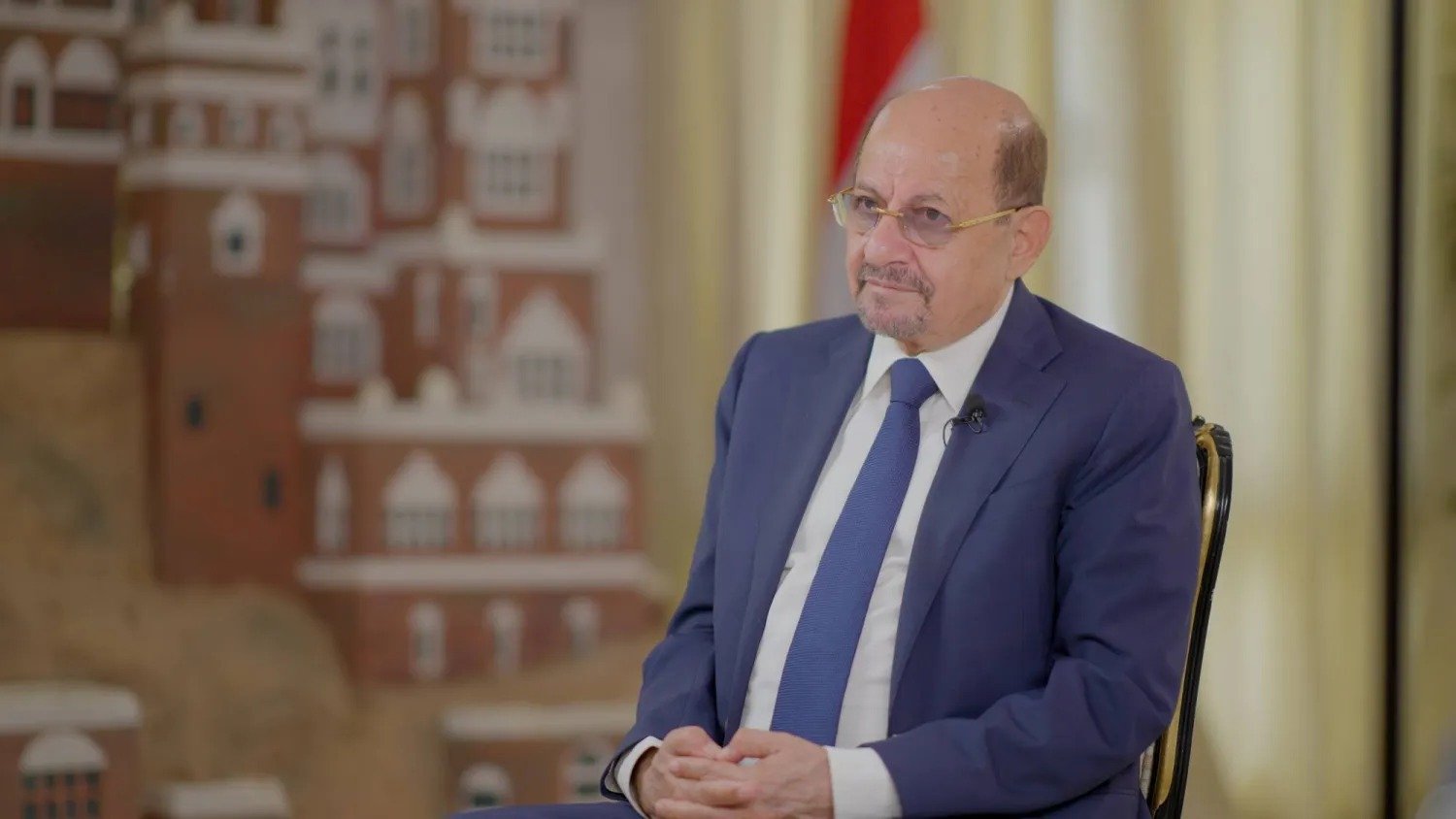
RIYADH, Saudi Arabia — Yemeni Prime Minister Shaya al-Zindani said his government will not let the country remain an open arena for a cross-border project.
He spoke in an interview with the Saudi newspaper Asharq Al-Awsat published Aug. 25.
Al-Zindani said peace cannot substitute for the state. It follows from the state’s restoration, he said.
He said the recent Houthi escalation targets civilians, daily life and the national economy, and that the group is trying to turn Yemeni land, ports and sea lanes into instruments of a regional project reaching beyond the country’s borders.
The Houthis reject that account. The group has said its August operations were a response to what it calls a Saudi military build-up.
Al-Zindani singled out the strikes on the Red Sea port of Mokha, calling them a dangerous development. Hitting a civilian and economic facility sends a threatening message to trade and navigation in a leading shipping corridor, he said.
Mokha port halted commercial and maritime operations in mid-August after more than 25 missiles struck it, its director told Al Arabiya, putting losses at about $16 million.
Al Jazeera reported on Aug. 10 that Houthi missile and drone attacks on the town killed at least seven people, less than a day after earlier attacks killed at least 11. Yemen Herald could not independently verify those figures.
The prime minister said his government has moved from containment to deterrence. He said the militia had used past truces to rebuild its capabilities, then returned to escalation.
Deterrence is not only a military act, he said. It takes in readiness, protecting facilities, securing ports and border crossings, pursuing financing and smuggling networks, and diplomatic work to mobilise international support.
Al-Zindani said the National Defence Council had directed that readiness be held at its highest level, protection of vital facilities strengthened and deterrence tools widened.
“We are not looking for a war for the sake of war, nor do we want to expand the circle of Yemeni suffering,” he said, adding that the state would not accept ports, cities and civilian sites becoming open targets.
“Sustainable peace cannot be built in Yemen unless the state has the power to make decisions, possess sovereignty, and control weapons,” he said.
He said preparedness had been raised at ports and border crossings and across the transport, energy, communications and basic services sectors, and contingency plans drawn up. The account of those measures rests on al-Zindani’s own statements to Asharq Al-Awsat, and no independent confirmation of them has been published.
The government is working on two tracks, he said. One is protecting facilities and closer coordination between military, security and civilian bodies. The other is keeping services and economic activity running if a facility is attacked.
He said the aim of the attacks is not only material damage but fear, disrupted commerce and confusion in the movement of citizens and goods. The answer, he said, is to keep state institutions working.
The government is also strengthening emergency response, securing supply chains and stocks of basic goods, and coordinating with local authorities, he said.
Al-Zindani described holding stability in areas outside Houthi control as “the government’s main battle”. He listed raising revenue, controlling spending, oversight of public funds, action against corruption and smuggling, support for the banking sector and currency stability.
“We are working in extremely difficult circumstances, but the difficulty of the circumstances does not absolve the government of its responsibilities,” he said.
On Saudi Arabia, he described coordination between the two governments as a standing strategic partnership, not a response to the current fighting. He thanked King Salman, Crown Prince Mohammed bin Salman and Defence Minister Prince Khalid bin Salman.
He cited the Saudi Development and Reconstruction Program for Yemen, which funds electricity, water, health, education and transport work, and the King Salman relief centre’s humanitarian programmes.
Al-Zindani called for a firmer international position, saying the security of the Red Sea and the Bab al-Mandab strait is tied to global trade, energy and supply chains.
He set out four needs: political and diplomatic backing; support for state military, security and economic institutions; help protecting facilities and restoring resource production and exports; and an international position that addresses the causes of the war rather than managing the division.
Yemen does not want the international community to fight on behalf of Yemenis, he said, but to help them end the war and to act against the financing, arming and smuggling networks the government says sustain the group.
He framed the conflict as a state facing what he called a terrorist coup militia, with institutions, armed forces, security services and an economy that can recover.
Al-Zindani has been prime minister since February and also holds the foreign affairs portfolio. He moved to Aden in July to work from inside the country.
In a letter dated July 6 he asked the UN Security Council to meet over what he described as Houthi violations of its resolutions, backed by Iran. Tehran denies arming the group.
The war began after the Houthis took Sanaa in September 2014 and widened the following year.
The UN humanitarian plan for 2026 puts more than 22 million people in Yemen in need of assistance and 18.3 million as acutely food insecure. It seeks $2.16 billion to reach 12 million of them.
The plan also records 5.2 million people displaced inside the country.
About the Author