Yemen’s chargé d’affaires in Cairo raises student, prisoner and Gaza cases with Egyptian ministry
 Yemen Herald News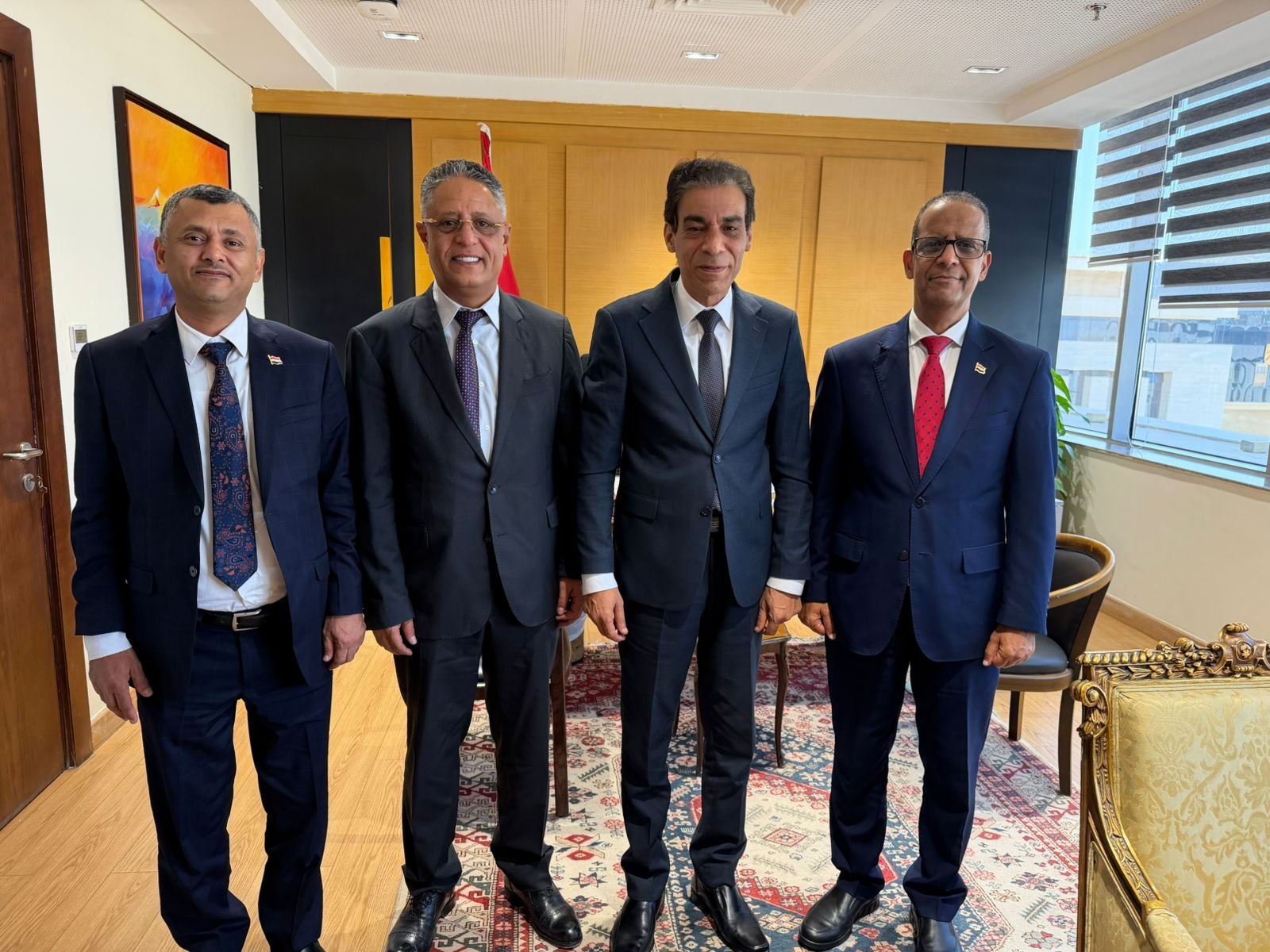
CAIRO, Egypt — Yemen’s senior diplomat in Egypt raised the cases of Yemeni students, prisoners and nationals stranded in Gaza with an Egyptian foreign ministry official on Tuesday.
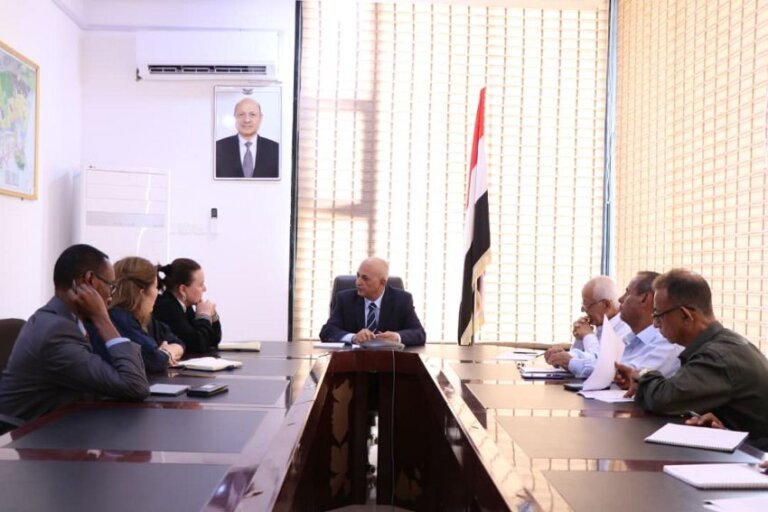
Yaseen al-Suwaie, minister plenipotentiary and chargé d’affaires at the Yemeni embassy in Cairo, met Ambassador Haddad al-Gohary, Egypt’s assistant foreign minister for protocol and Egyptians abroad, the Yemeni state news agency Saba reported.
Al-Suwaie raised difficulties over security clearance procedures required of Yemeni students studying in Egypt, according to Saba.
He also asked about the situation of Yemeni prisoners in Egyptian jails and the possibility of easing sentences for some of them.
The two discussed Yemenis stranded in the Gaza Strip, the agency said. It gave no number.
Al-Suwaie thanked Egypt for the facilities it extends to members of the Yemeni community, Saba reported.
Al-Gohary said Egypt supported the Yemeni people and what Saba described as Yemen’s constitutional legitimacy, and was committed to resolving the issues raised.
Yemen Herald could not independently confirm the account of the meeting. It rests on the Saba report alone, and Egypt’s foreign ministry published no readout of its own.
Saba attributed the pressures on Yemenis abroad to what it called the Houthi militia coup and the years of conflict that followed. The Houthis reject that characterisation of their seizure of Sanaa.
The Houthis took the capital in September 2014 and the Yemeni government moved its seat to Aden. Several ministries and the central bank operate from the southern port city; others work from Riyadh.
Egypt has been among the main destinations for Yemenis who left the country during the war, along with Saudi Arabia, Jordan, Malaysia and Turkey.
Cairo has kept its embassy accredited to Yemen and has hosted Yemeni students, patients and businesses through the conflict.
Egypt also has a direct economic stake in the Red Sea corridor that runs along Yemen’s western coast.
Suez Canal revenue fell to about USD 4 billion in 2024 from a record USD 10.3 billion in 2023, according to the Suez Canal Authority, after Houthi attacks pushed carriers onto the longer route around southern Africa.
President Abdel Fattah al-Sisi said in May that instability at the Bab al-Mandab Strait had cost Egypt roughly USD 10 billion in lost canal revenue. He put the figure at about USD 9 billion over two years in January.
The Houthis targeted more than 100 merchant vessels with missiles and drones between November 2023 and January 2024, saying the campaign was intended to pressure Israel over the war in Gaza.
Traffic began returning in the final quarter of 2025 after the Sharm el-Sheikh summit helped secure a ceasefire in Gaza.
Yemen’s foreign ministry condemned Iranian missile and drone attacks on Kuwait, Bahrain, Jordan and Iraq on Wednesday, describing them as a violation of those countries’ sovereignty.
Yemen’s cabinet is led by Prime Minister Shaya Zindani, who took office in February after Salem Saleh bin Braik resigned. Afrah al-Zouba was appointed foreign minister on July 23, the first woman to hold the post.
The Presidential Leadership Council, chaired by Rashad al-Alimi, has governed the internationally recognised side of the conflict since April 2022.
A UN-brokered truce took effect that month and lapsed in October 2022. Formal negotiations have not resumed.
Yemen’s humanitarian position remains among the worst tracked by the United Nations.
The UN Office for the Coordination of Humanitarian Affairs said in its March 2026 response plan that more than 22 million people need assistance and that 18.3 million are acutely food insecure.
More than 2.2 million children under five are acutely malnourished, 516,157 of them severely, the plan said. It recorded 5.2 million internally displaced people.
The plan seeks USD 2.16 billion to reach 12 million people this year.
Consular work is a recurring item in Yemen’s dealings with host states. Yemeni passports issued by the two rival administrations are not accepted uniformly abroad, and renewals often require travel.
Saba did not say whether the two officials agreed any specific measure on the student clearance procedures, or set a date for further talks.
The agency named no Yemeni prisoner and gave no figure for how many are held in Egypt.
Bab al-Mandab, the 18-mile strait between Yemen and Djibouti, is the southern gate to the Suez route.
Saba identified al-Suwaie as chargé d’affaires, the rank used when a mission is not headed by a resident ambassador.
Egypt has not opened an embassy in Sanaa since the Houthi takeover, and deals with the internationally recognised government.
The Yemeni community in Egypt includes students enrolled at Egyptian universities, medical patients and families who left during the fighting.
Egypt is a member of the Arab League, whose Cairo headquarters has hosted Yemeni delegations throughout the war.
Yemen joined an Arab Economic Council preparatory meeting this week, Saba reported.
Al-Zouba has made regional outreach an early priority, holding contacts with counterparts in Egypt, Sudan and Djibouti in her first weeks in office.
She trained as a pharmacist at Sanaa University and spent more than 25 years in development and peacebuilding work before entering government.
She was in Kuwait on Monday, where she met her Kuwaiti counterpart, Sheikh Jarrah Jaber al-Ahmad al-Sabah, Saba reported.
About the Author