Water Minister Tawfiq al-Sharjabi says fourth environment report will guide Yemen’s priorities
 Yemen Herald News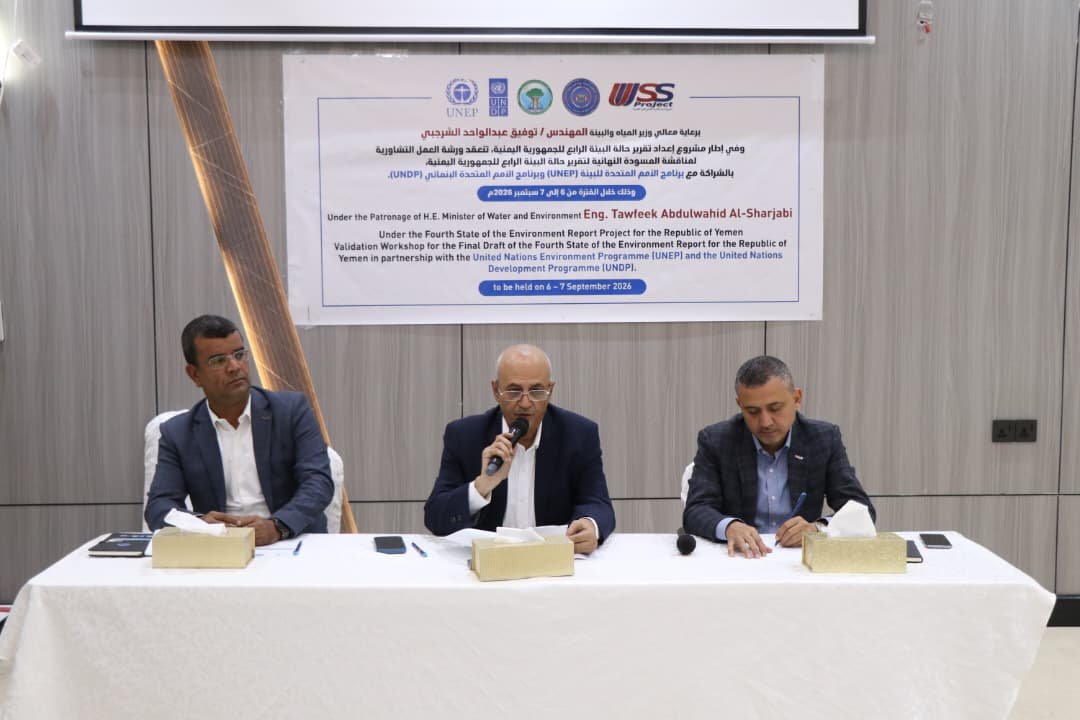
ADEN, Yemen — Yemen’s water and environment minister said the country’s fourth environmental status report will serve as a national reference for setting environmental priorities, the state news agency Saba reported.
Tawfiq al-Sharjabi spoke at a consultative workshop convened to discuss the final draft of the Fourth Environmental Status Report for the Republic of Yemen 2026, the agency said.
He described the document as a national strategic paper and a scientific reference for assessing the state of the environment, monitoring its challenges and determining the interventions needed to protect natural resources.
Al-Sharjabi said the report comes amid mounting environmental pressures. He listed the deterioration of water resources, desertification and soil erosion, the decline of biodiversity, pressures on the marine and coastal environment, difficulties in waste management and worsening air quality.
He also cited the effects of climate change, including droughts, floods and extreme weather, according to Saba.
The account of the workshop rests on Saba, which is run by the internationally recognised government. The ministry has not published the draft report, and Yemen Herald found no independent confirmation of the minister’s remarks.
Saba did not say when the report will be issued, who prepared it or which agencies took part in the workshop.
Yemen is among the most water-scarce countries in the world. UN agencies put renewable water resources at about 80 cubic metres a person a year, against the 1,000 cubic metre figure commonly used to define water stress and the 500 cubic metre absolute scarcity line.
Groundwater is being drawn down faster than it is replenished, according to UNDP assessments. Aquifers around Sanaa and in the Tihama plain have fallen for decades.
Agriculture takes the bulk of the water that is used. Qat cultivation accounts for a large share of irrigation demand in the highlands.
The war has added to the strain. Pumping stations and treatment plants have been damaged, fuel shortages have interrupted supply, and displacement has concentrated demand in host communities.
Cholera and other water-borne diseases have circulated in Yemen since 2016, when an outbreak spread across most governorates. Case numbers have risen again in recent years, according to the World Health Organization.
The coastline is a further concern. The UN completed the transfer of about 1.1 million barrels of oil from the decaying tanker FSO Safer off Hodeidah in 2023, ending a spill risk that had hung over the Red Sea for years.
Socotra, a Yemeni archipelago in the Arabian Sea, is listed by UNESCO as a World Heritage site for its endemic plants and animals. Conservation bodies have warned about invasive species, grazing pressure and cyclone damage there.
Cyclones struck Socotra and the mainland coast in 2015 and 2018, and heavy seasonal flooding has hit Hadramawt, Marib and Hodeidah in recent years.
Yemen is a party to the Paris Agreement and has submitted a nationally determined contribution setting out adaptation priorities. Climate vulnerability indices place it among the countries least ready to adapt.
Environmental status reports of this kind are usually compiled by a national environment authority and set out indicators on air, water, land, waste and biodiversity. Yemen’s earlier editions were produced before the war.
The Environment Protection Authority sits under the Ministry of Water and Environment and is the body normally responsible for such reporting.
Institutional capacity has been split since 2015. Ministries operate from Aden while parallel bodies function in Sanaa under the Houthi administration, complicating national data collection.
Solid waste has become a visible problem in the larger cities. Municipal collection has been interrupted by fuel costs and unpaid salaries, and open dumping and burning are common.
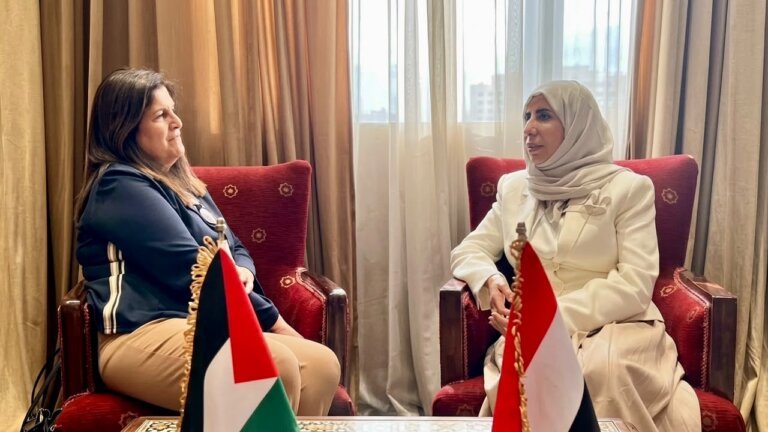
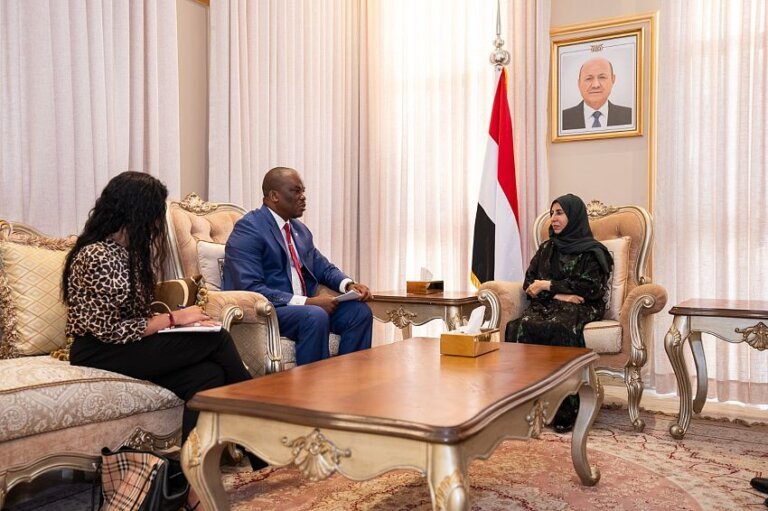
Al-Sharjabi has held a run of meetings on water and environment files this month. Saba reported that he reviewed projects and preparations for the next UN climate conference with the incoming UN Development Programme representative, Noura Hamladji, on 2 September.
The agency reported the following day that he called for a shift towards anticipatory action in dealing with climate shocks.
On Sunday it reported that he discussed water, sanitation and hygiene cooperation with Save the Children’s country director, Rishana Haniffa, including an update of the National Water Strategy.
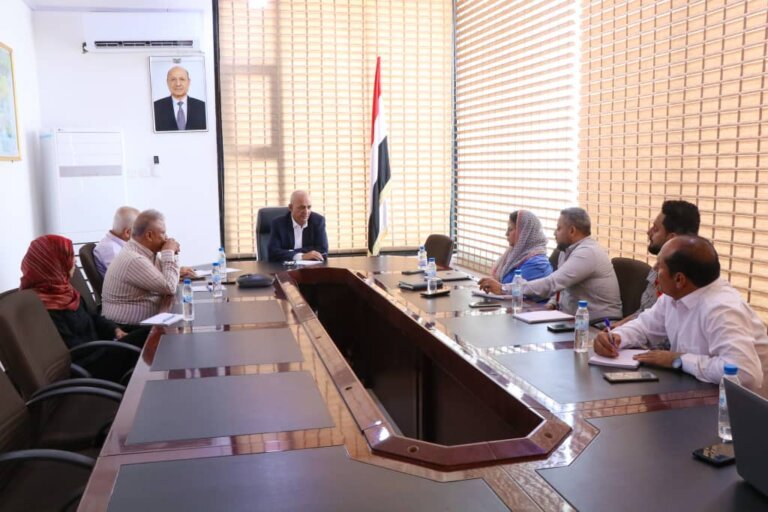
The ministry has also been reviewing sanitation projects in Hadramawt. Saba reported on Monday that al-Sharjabi discussed the state of sewerage works in Sayun and Tarim.
Yemen’s humanitarian needs remain among the largest anywhere. The United Nations plan for 2026 counts more than 22 million people needing assistance and 18.3 million who are acutely food insecure.
The same plan records more than 2.2 million children under five as acutely malnourished, including 516,157 severe cases, and 5.2 million people displaced inside the country. It seeks 2.16 billion dollars to reach 12 million people.
Water, sanitation and hygiene work is one of the plan’s largest components, alongside food security and health.
Fighting resumed on the western fronts in the past week. Houthi forces launched simultaneous ground assaults in southern Hodeidah and in three districts west of Taiz on Thursday, according to Al Jazeera and Arab News.
The UN Office for the Coordination of Humanitarian Affairs said nearly 1,800 families fled in less than 48 hours and that emergency stocks were severely depleted.
Saba did not say where the workshop was held.
About the Author