Water Minister Tawfiq al-Sharjabi and Save the Children discuss updating Yemen’s water strategy
 Yemen Herald News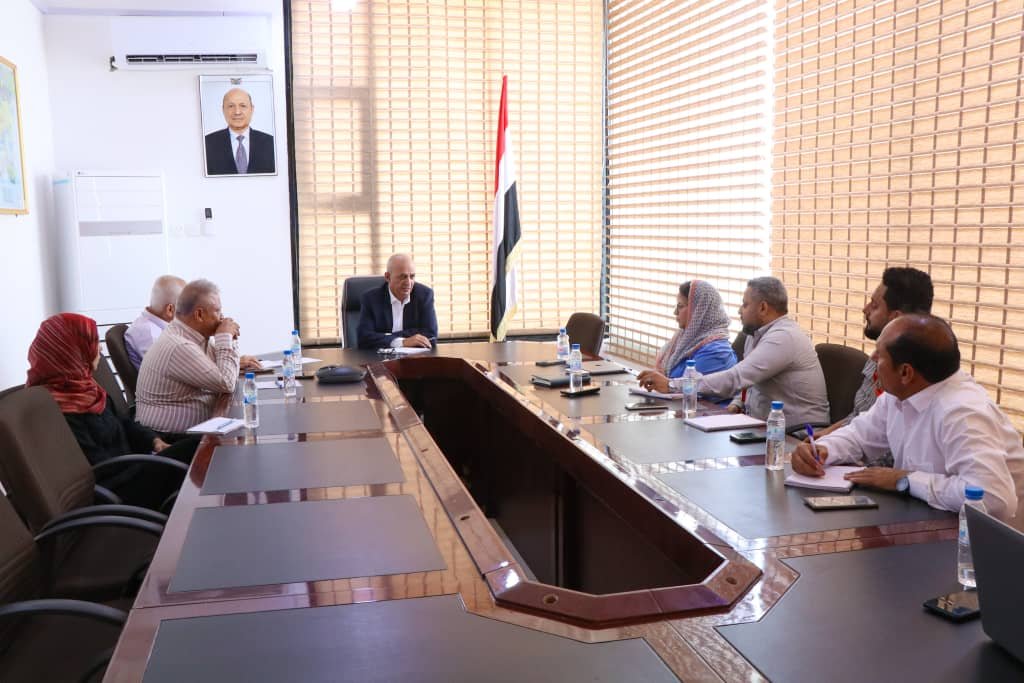
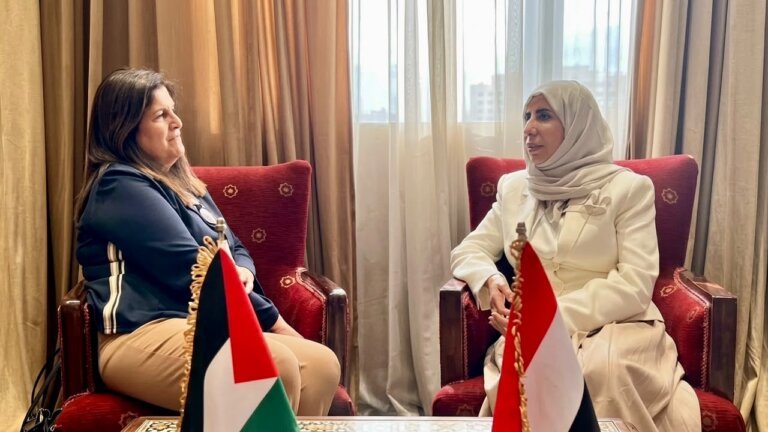
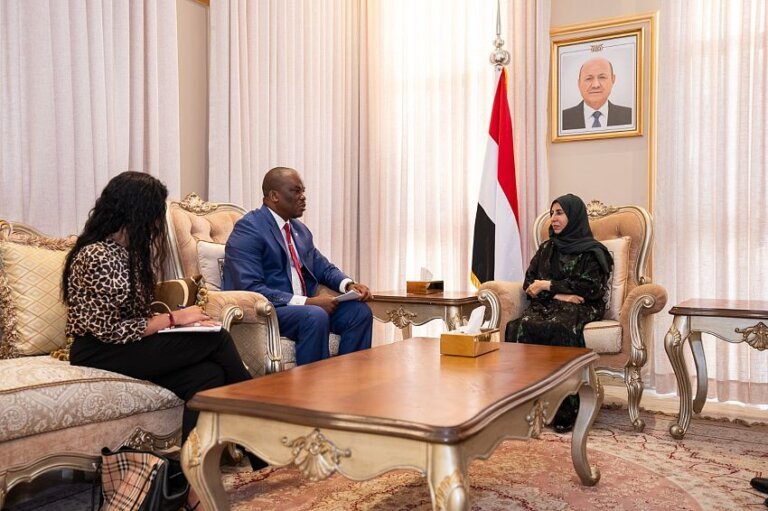
ADEN, Yemen — Yemen’s water and environment minister and Save the Children discussed updating the country’s national water strategy at a meeting in Aden, the state news agency Saba reported.
Tawfiq al-Sharjabi met the organisation’s country director, Rishana Haniffa, to review cooperation on water, sanitation and hygiene work, the agency said.
The meeting went over Save the Children’s completed and planned projects in the sector.
The two sides discussed revising the National Water Strategy to reflect current needs, including the requirements of people with disabilities, according to Saba.
Al-Sharjabi said interventions should be directed at priority needs so that water and sanitation services can be improved and sustained.
Haniffa said the organisation was ready to work with the ministry on updating the strategy and on developing the sector, the agency reported.
The account of the meeting rests on Saba, which is run by the internationally recognised government. Save the Children has not published its own readout, and Yemen Herald found no independent confirmation of what was said.
Saba did not say when the strategy was last revised or when a new version is expected.
Save the Children says it has worked in Yemen since 1963. Its programmes cover health, nutrition, education, child protection and water and sanitation.
Water and sanitation is one of the larger components of the international response in Yemen, alongside food security, health and nutrition.
A national water strategy sets out how a government intends to allocate supply between drinking water, agriculture and industry, and how it plans to regulate drilling and tariffs.
Yemen’s water administration has been split since 2015. Ministries operate from Aden while parallel bodies function in Sanaa under the Houthi administration, which complicates national planning and data collection.
Agriculture takes the bulk of the water that is used, and qat cultivation accounts for a large share of irrigation demand in the highlands.
Rural supply depends heavily on wells and on rainwater harvesting. Diesel prices determine whether pumps run, so fuel supply and water supply move together.
Aid agencies have shifted some spending from trucking water towards repairing networks, on the argument that trucking is costly and cannot be sustained year after year.
Save the Children is one of several international organisations in the water and sanitation cluster, which coordinates the response under UNICEF’s lead.
Yemen is among the most water-scarce countries in the world. UN agencies put renewable water resources at about 80 cubic metres a person a year, against the 1,000 cubic metre figure commonly used to define water stress.
Groundwater is being drawn down faster than it is replenished, according to UNDP assessments. Aquifers around Sanaa and in the Tihama plain have fallen for decades.
The war has compounded the shortage. Pumping stations and treatment plants have been damaged, fuel costs have interrupted supply, and public utilities have struggled to pay staff.
Displacement has concentrated demand. Camps and host communities in Marib, Taiz and Hodeidah rely on trucked water in places where networks do not reach.
Cholera followed. The outbreak that began in 2016 became one of the largest recorded anywhere, with more than a million suspected cases reported by the World Health Organization, and acute watery diarrhoea has circulated since.
Disability inclusion has moved up the agenda in the sector. Latrines, water points and distribution sites are often inaccessible to people who use wheelchairs or crutches.
Amputations, spinal injuries and untreated illness have added to the number of Yemenis living with a disability since 2015.
Al-Sharjabi has held a series of meetings on the water and environment files this month. Saba reported that he reviewed projects and preparations for the next UN climate conference with the incoming UN Development Programme representative, Noura Hamladji, on 2 September.
The agency reported the following day that he called for a shift towards anticipatory action in dealing with climate shocks, and on Sunday that he told a workshop the country’s fourth environmental status report would set national priorities.
On Monday it reported that he discussed the state of sewerage works in Sayun and Tarim in Hadramawt.
Fighting has resumed on the western fronts. Houthi forces launched simultaneous ground assaults in southern Hodeidah and in three districts west of Taiz on Thursday, according to Al Jazeera and Arab News, which described the attack as the largest since the UN-brokered truce of April 2022.
The UN Office for the Coordination of Humanitarian Affairs said nearly 1,800 families fled in less than 48 hours and that several displacement camps in Maqbanah and Jabal Habashi emptied under shelling. It said emergency stocks were severely depleted.
Hans Grundberg, the UN special envoy for Yemen, called the escalation extremely alarming and urged the parties to halt hostilities, his office said.
The United Nations humanitarian plan for 2026 counts more than 22 million people in Yemen needing assistance, of whom 18.3 million are acutely food insecure. It records more than 2.2 million children under five as acutely malnourished, including 516,157 severe cases.
The plan counts 5.2 million people displaced inside the country and seeks 2.16 billion dollars to reach 12 million of them.
Saba reported on 4 September that the appeal stood at 18 per cent funded.
The agency did not say whether the two sides agreed a timetable for the strategy review.
About the Author