Strike sets Taiz paints and chemicals factory on fire as rival parties trade blame
 Yemen Herald News
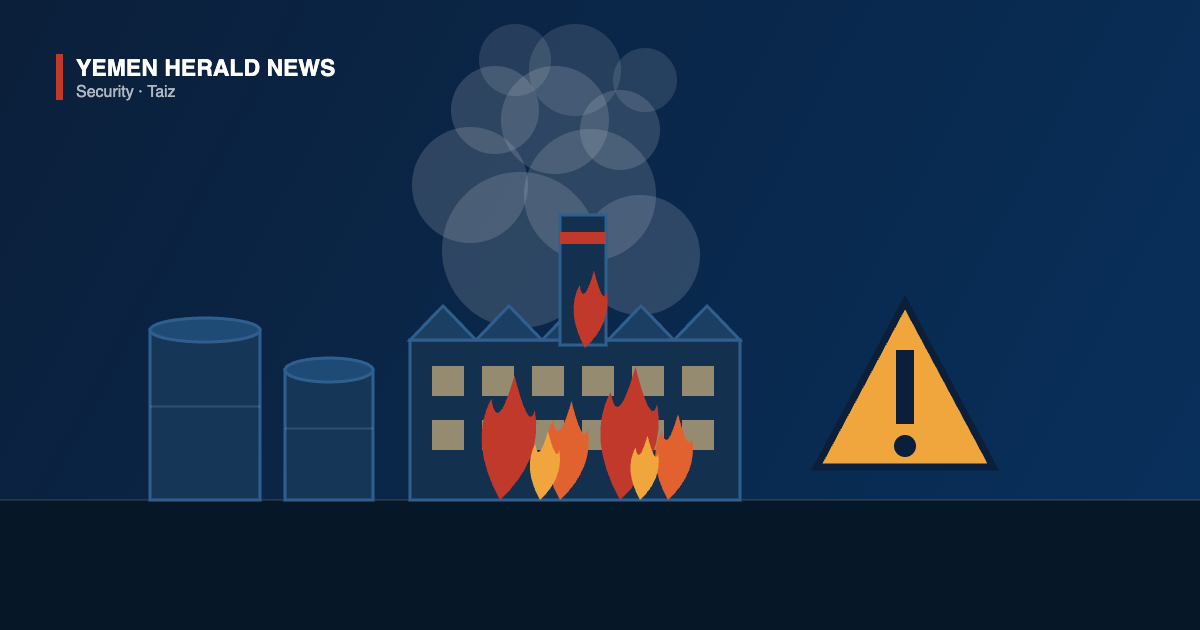
TAIZ, Yemen — A fire broke out at a paints and chemicals factory west of Taiz city after a strike late Wednesday, and rival parties blamed each other.
The fire hit the al-Shaibani Paints and Chemicals Factory, known commercially as Kemico, in the al-Rubaie area of the Taiziyah district, according to local reports.
The plant produces paints and chemical products for local markets.
The plant was struck late on Wednesday, The Associated Press reported. Accounts of the blaze spread through Thursday.
The Associated Press reported no casualties at the factory.
Emergency and civil defence crews reached the site and worked to stop the fire spreading to neighbouring buildings, according to local sources cited in the first reports.
Witnesses quoted in those reports said firefighters tried to keep the flames away from chemical storage inside the compound.
Who struck the plant is disputed, and the accounts do not reconcile.
The economy ministry of the Houthi-run authorities in Sanaa said Saudi aircraft hit the factory. In a statement carried by Yemeni outlets, it said destroying a chemical plant threatened an environmental and health disaster and the livelihoods of about 500 families. It held Saudi Arabia responsible.
The Houthi-run Yemen Press Agency said one person was wounded. It quoted Anis al-Asbahi, spokesman for the health ministry in Sanaa, as confirming the strike.
Local sources cited by that agency said the strike hit production units and fuel storage areas.
The same agency reported four further strikes on Mocha city and its Red Sea port, west of Taiz, on the same day.
A second Houthi-run body gave a different attribution. The National Human Rights Authority blamed government forces for the strike, according to The Associated Press.
That authority also warned the fire could release toxic gases and contaminate soil and groundwater, the AP reported.
Outlets and social media accounts opposed to the Houthis reported the reverse. Several said Houthi forces shelled the factory, in some versions after airstrikes on Houthi positions.
Yemen Herald could not independently verify any of these accounts. No independent wire service, international outlet or multilateral body has published its own reporting on who struck the plant.
Each of the competing claims rests on a statement by a party to the conflict, or on outlets aligned with one of them.
No response from the Yemeni government or the Saudi-led coalition to the Sanaa ministry statement has been reported.
Authorities have not announced a cause for the fire. Local reports said an investigation was expected.
Reports also differed on where the plant sits, placing it variously west and north of the governorate seat.
The fire came during a week of exchanges across Taiz governorate.
Local authorities in Taiz called this week for a technical investigation into reports that artillery shells and rockets fired at front-line areas carried prohibited gases or other toxic materials, according to the Taiz Governorate Media Office. The office named al-Aqrud and Kahlan as the most recent locations and said no test results had been published.
The health ministry run by the Houthi authorities said strikes on two homes in al-Barah, in Maqbana district, killed 12 people and critically wounded three others. It described the figure as an initial toll and blamed Saudi Arabia.
The AP said it could not independently verify that account. The two homes belonged to one family, the ministry said.
The Houthis said at least 14 people were killed on Wednesday in strikes on a petrol station and a market. They also said their forces had attacked the airport in Aden, the government seat, wounding civilians.
Agence France-Presse correspondents reported hearing at least eight explosions in Riyadh on Thursday. Saudi authorities sent a telephone alert saying the city was under what they called a hostile aerial threat.
Saudi civil defence issued warnings for Riyadh, Kharj and Najran and lifted them a short time later, AFP reported.
The Houthis and the Saudi-backed government have traded attacks daily since a truce collapsed in the summer.
A 2022 truce broke down in July after the Houthis allowed an Iranian aircraft to land in Sanaa, AFP reported. The group then declared a maritime blockade of Saudi Arabia and began striking its shipping, territory and oil facilities.
Houthi attacks closed Riyadh airport for two weeks.
United Nations figures cited by AFP put the number of people killed in Yemen since the fighting resumed at more than 1,600, with more than 275,000 displaced.
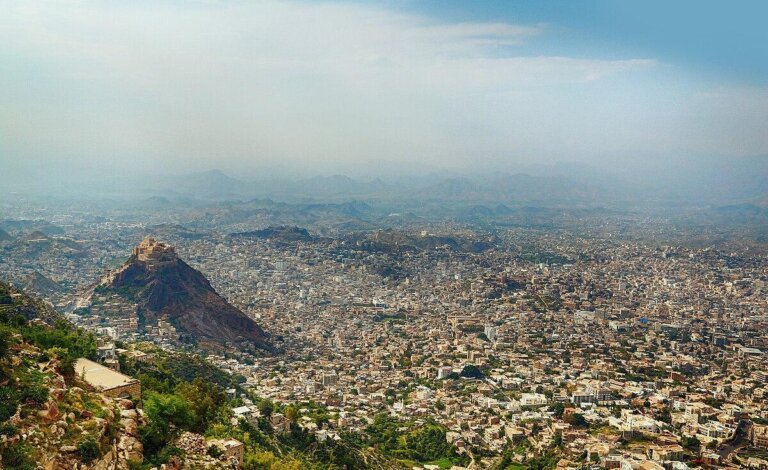
The U.N. Office for the Coordination of Humanitarian Affairs said time was running out to deliver aid to 800,000 people trapped inside Taiz city.
The agency said access had become harder after damage to a road linking Taiz to the southern governorates.
Hans Grundberg, the U.N. special envoy for Yemen, told the Security Council that the country had slid back into full-scale war.
The UN humanitarian plan for Yemen published in March said more than 22 million people needed assistance and 18.3 million were acutely food insecure.
The plan recorded more than 2.2 million children under five as acutely malnourished, 516,157 of them severely, and 5.2 million people as internally displaced. It sought 2.16 billion dollars to reach 12 million people.
Local reports said no official figure for material losses at the factory had been issued.
About the Author