Arab League permanent delegates adopt resolution backing Yemen’s sovereignty over its airspace
 Yemen Herald News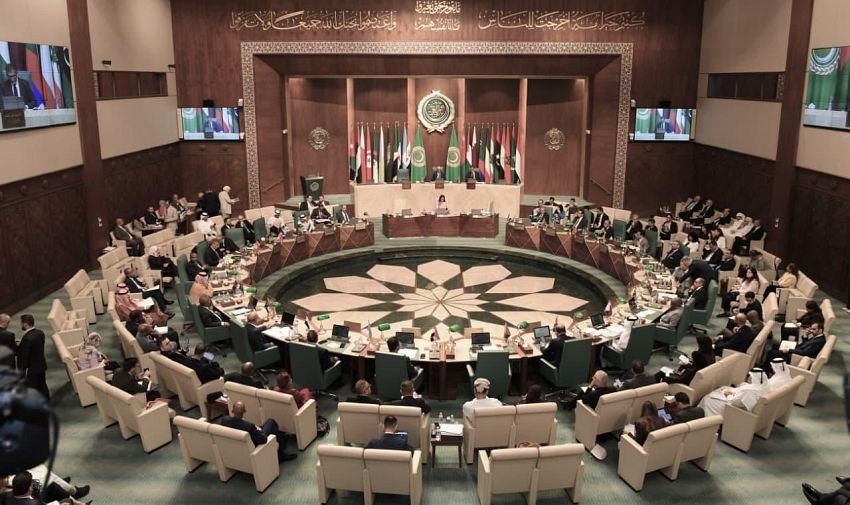
CAIRO, Egypt — Arab League permanent delegates adopted a draft resolution backing Yemen’s sovereignty over its territory and airspace and condemning what it called Iranian violations, the state news agency Saba reported.
The text was agreed at a preparatory meeting of the Arab League Council at the level of permanent delegates, the agency said.
The resolution affirmed solidarity with Yemen and support for its sovereignty, independence and territorial unity.
It rejected practices that violate international law and the principles of good neighbourliness, and called on Iran to stop immediately any activity that infringes Yemen’s sovereignty or the integrity of its airspace.
The text called on Tehran to abide by international law and the United Nations Charter, according to Saba.
It stressed Yemen’s inherent right to exercise sovereignty fully and exclusively over its territory, territorial waters and airspace, and to take lawful measures to protect it.
The resolution asked the international community, and the Security Council and the United Nations in particular, to ensure respect for Yemen’s sovereignty, prevent a repetition of the violations and hold those responsible to account.
It also called on states and international and regional organisations not to deal with flights, air operations or arrangements concerning Yemen outside coordination with, and explicit approval from, the internationally recognised government.
Iran has not responded publicly to the text. It rejects accusations that it violates Yemeni sovereignty and says its dealings in Yemen are political rather than military.
Yemen Monitor, an independent Yemeni outlet, also reported the adoption of the resolution. It said the text followed an Iranian Revolutionary Guard flight that carried a Houthi delegation to Tehran without coordination with the government in Aden.
Saba did not say when the resolution would go to ministers or give the vote.
The account of the meeting’s proceedings rests on Saba and on that Yemeni reporting. The Arab League has not published the text, and Yemen Herald could not review it.
Permanent delegates prepare the ground for the Arab League Council’s ministerial sessions. Saba reported that Yemen was taking part in the council’s 166th session.
Aden has raised the airspace question repeatedly. The Presidential Leadership Council has said it will act to protect control of Yemeni airspace, and the government says any flight to Sanaa requires its approval.
Sanaa international airport lies in territory held by the Houthi movement, which took the capital in September 2014. Flights from the airport were suspended for years and resumed on a limited basis under the 2022 truce.
The government controls the civil aviation authority’s internationally recognised functions, including the allocation of overflight and landing permissions.
Arab League resolutions are not binding on member states. They set out a collective position and are used by governments to press their case in other forums.
Yemen has sought such language for years as it works to keep diplomatic recognition and support behind the government seated in Aden.
The Presidential Leadership Council was formed in April 2022, when Abd Rabbu Mansour Hadi transferred his powers to the eight-member body. Rashad al-Alimi chairs it.
Airspace control is also a commercial question. Overflight fees and landing rights are a source of revenue for civil aviation authorities, and Yemen’s has been split by the war.
Yemenia, the national carrier, has operated a reduced network from Aden and Sanaa and has had aircraft grounded over funding disputes.
Yemen has also accused Iran of arming the Houthi movement. Successive reports by the UN Panel of Experts on Yemen have described weapons and components of Iranian origin reaching Houthi-held areas, findings Tehran has rejected.
The Houthi movement says its weapons are locally produced.
The resolution came during a period of wider regional tension. Saba reported that Yemen condemned Iranian missile and drone attacks on Jordan and the United Arab Emirates on 2 September, and further attacks on Kuwait, Bahrain and Jordan the following day.
Yemen has also asked Arab states to agree a joint strategy to protect trade routes, the agency reported on 4 September.
Fighting inside Yemen has intensified. Houthi forces launched simultaneous ground assaults in southern Hodeidah and in three districts west of Taiz on Thursday, according to Al Jazeera and Arab News, which described the attack as the largest since the UN-brokered truce of April 2022.
The National reported that government forces counted 14 ballistic missiles fired at rural areas of the two governorates. Government troops recaptured a hilltop in Jabal Habashi the following day, Arab News reported.
Hans Grundberg, the UN special envoy for Yemen, called the escalation extremely alarming and warned that it risked widening the conflict, his office said. He urged the parties to halt hostilities and to use the Military Coordination Committee.
The UN Office for the Coordination of Humanitarian Affairs said nearly 1,800 families fled in less than 48 hours and that several displacement camps in Maqbanah and Jabal Habashi emptied under shelling. It said emergency stocks were severely depleted.
The United Nations humanitarian plan for 2026 counts more than 22 million people in Yemen needing assistance, of whom 18.3 million are acutely food insecure. It records 5.2 million people displaced inside the country.
The plan seeks 2.16 billion dollars to reach 12 million people, and stood at 18 per cent funded on 4 September, according to Saba.
Saba did not say which delegations spoke during the preparatory meeting.
About the Author