Saudi and French programmes launch $7.4m water projects in Taiz
 Yemen Herald News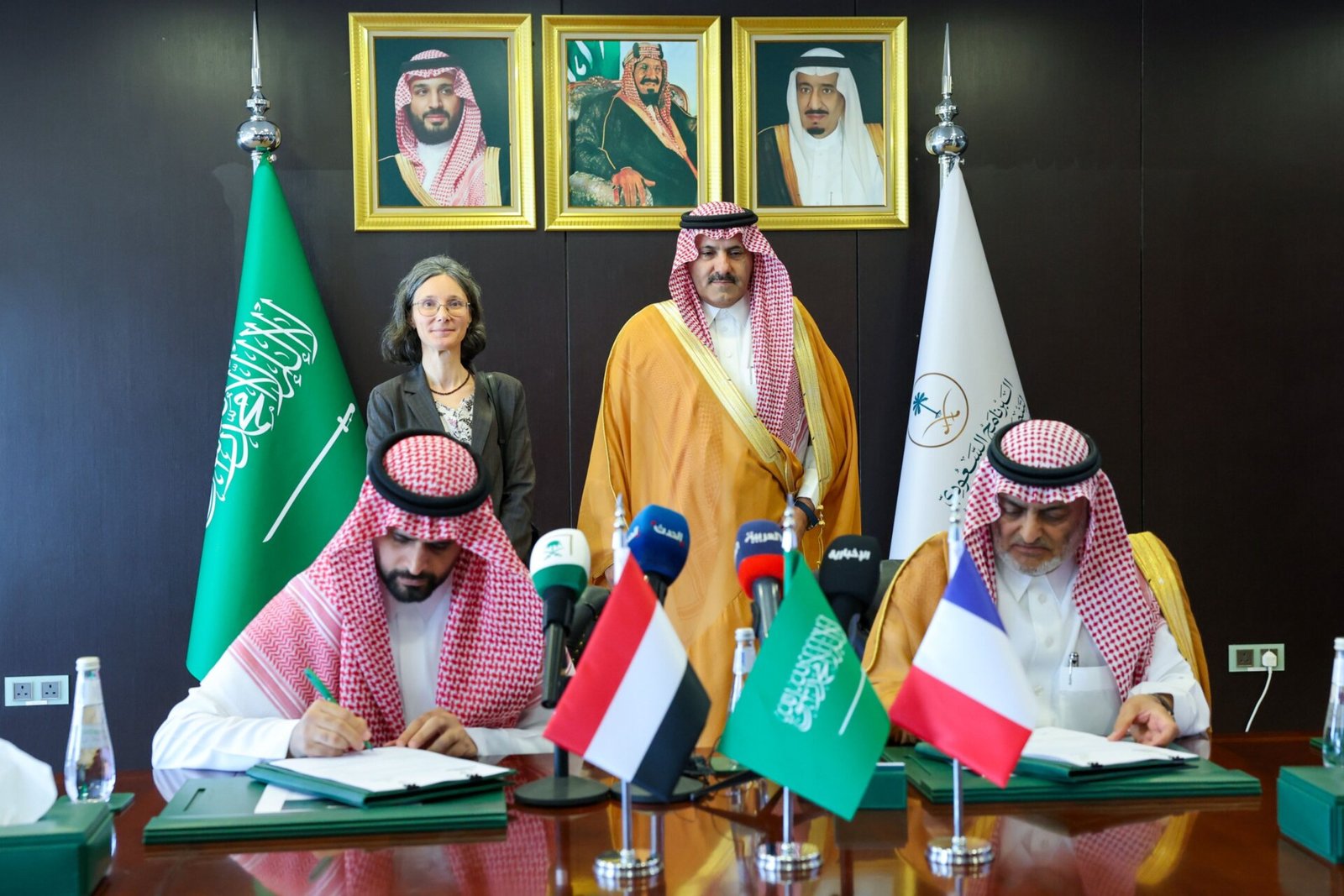
TAIZ, Yemen — The Saudi Program for the Development and Reconstruction of Yemen has launched a $3.5m project to strengthen urban water systems in Taiz, the Yemeni state news agency Saba reported.
The Saudi programme is working with Sela for Development on the scheme.
A separate French project is running alongside it to improve the efficiency and sustainability of water and sanitation services in the governorate.
Saba put the combined value of the two projects at $7.4m.
They are being implemented in cooperation between the Saudi programme and the Crisis and Support Centre of the French Ministry for Europe and Foreign Affairs.
The projects are expected to benefit more than 139,000 people directly and over 242,000 indirectly, according to the agency.
The account of the launch rests on Saba, and no independent confirmation of the figures has been published.
The stated aim is to strengthen urban infrastructure against climate-related impacts.
That includes building the institutional and technical capacities of Taiz’s local water and sanitation corporation.
Saba said the work also covers asset management and maintenance, reducing water losses, and widening access to safe and reliable water and sanitation services.
The Saudi programme has implemented 62 water-sector projects and development initiatives across Yemen, according to the agency.
Taiz is Yemen’s third city and one of the places worst served by piped water. Households in much of the governorate rely on tanker deliveries and private wells.
The city has been divided by front lines for most of the war, which has cut supply lines and left pumping stations and mains without repair.
Only 21 of the 88 wells linked to Taiz’s public water network are operational, according to Human Rights Watch, which examined the city’s supply in a 2023 report.
The rights group attributed the failures to war damage, salinisation and repeated power cuts that stop pumps when fuel runs short.
It found that the price of water delivered by tanker truck had tripled, and that trucks needed four or five days to work their way across the city.
Residents also rely on rainwater harvesting, on private wells and on supplies distributed by aid organisations.
UNICEF classifies water and sanitation needs in parts of Taiz governorate, including Mocha, as extreme on the severity scale used by the humanitarian response plan.
The agency completed clean water schemes in Mocha in January that put water points within walking distance of homes, cutting journeys that had taken children hours.
The IOM has trucked water to conflict-affected communities in the governorate.
Water losses through damaged and ageing networks are a recurring problem for Yemeni utilities, which have also struggled to pay staff and buy fuel.
The launch comes as fighting has returned to the governorate.
Combat between the Houthis and the internationally recognised government resumed on 3 September, when a Houthi offensive opened in Taiz.
The Presidential Leadership Council answered with a counter-offensive in al-Jawf and al-Bayda.
Front lines have run through Taiz since 2015, and the governorate has been among the most heavily contested in the war.
Aid agencies have repeatedly warned that fuel shortages, rather than the wells themselves, are what stop water reaching households in the city.
The Yemeni riyal’s fall in government-held areas has added to the cost of running pumps and of buying trucked water.
It is the heaviest fighting in Yemen since the 2022 truce lapsed.
On Thursday the Houthis seized the Red Sea port city of Mocha, west of Taiz, as government forces withdrew, sources told Al Jazeera and the Reuters news agency.
The UN Population Fund said its emergency teams had reached 8,365 newly displaced people in Taiz governorate.
Yemen’s Executive Unit for internally displaced people counted 2,183 families displaced in Taiz and Hodeidah.
The International Organization for Migration has recorded 30,378 people displaced inside Yemen this year.
Water and sanitation work is closely tied to disease control in Yemen. Cholera has returned repeatedly since 2016, and aid agencies link outbreaks to damaged networks and to households drawing on unsafe sources.
Other donors have moved on the same sector in recent days.
Water Minister Tawfiq al-Sharjabi signed a €1.2m water and sanitation agreement this week, and a further project to improve drinking water in Lahj and Hadramawt with Kuwaiti funding, according to Saba.
Al-Sharjabi also held talks with Save the Children on updates to joint programmes.
The UN Office for the Coordination of Humanitarian Affairs said in its March 2026 plan that more than 22 million people in Yemen need aid.
The plan puts the number who are acutely food insecure at 18.3 million.
It records 5.2 million internally displaced people and more than 2.2 million children under five who are acutely malnourished, 516,157 of them severely.
OCHA sought $2.16bn this year to reach 12 million people.
Humanitarian funding has fallen well short of that target in recent years, and agencies have cut programmes in response.
The Saudi programme was set up in 2018 and works across electricity, health, education, transport, water and agriculture.
Taiz’s local water and sanitation corporation is the counterpart body for the new work.
Sela for Development is the implementing partner named by Saba for the Saudi-funded component. The agency gave no timetable for completion of either project.
About the Author