Rubio says Houthis are acting as agents and proxies of Iran
 Yemen Herald News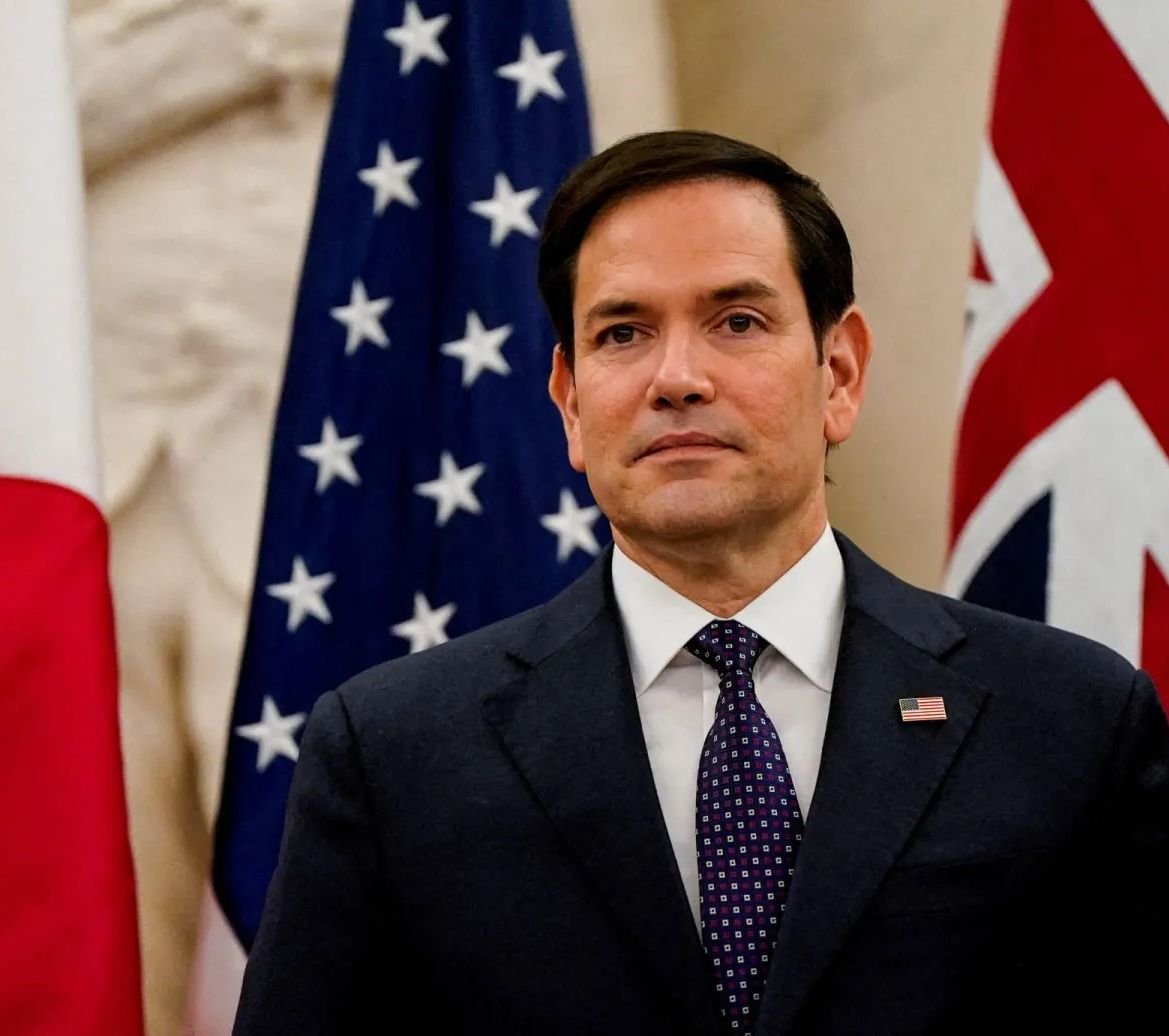
WASHINGTON, United States — US Secretary of State Marco Rubio said the Houthis are acting as agents of Iran, after the group struck civilian and energy sites in southern Saudi Arabia.
“The Houthis, in many ways, are agents and proxies of the Iranians,” Rubio told reporters on 8 September.
He said Washington believes “behind some of this is clearly the Iranian hand.”
Rubio said the United States was monitoring developments closely and pointed to its “very strong defensive military relationship” with Saudi Arabia.
He declined to say whether Washington was weighing further military action, referring questions on possible defence announcements to the Pentagon.
The attacks that day hit areas including Abha, Najran, Jizan and Khamis Mushait.
At least 73 people were injured and operations at several energy facilities were disrupted, according to reports from the kingdom.
Saudi authorities said fires broke out at energy sites.
The Houthis said the attacks were retaliation for Saudi military operations in Yemen.
Fighting between the group and Yemen’s internationally recognised government resumed on 3 September, when a Houthi offensive opened in Taiz governorate.
The Presidential Leadership Council answered with a counter-offensive in al-Jawf and al-Bayda.
It is the heaviest fighting in Yemen since the 2022 truce lapsed.
On Thursday the Houthis seized the Red Sea port city of Mocha as government forces withdrew, sources told Al Jazeera and the Reuters news agency.
Mocha overlooks Bab al-Mandab, the channel linking the Red Sea to the Gulf of Aden. Al Jazeera put the share of global trade passing through the strait at 10 to 12 percent.
Rajeh Badi, Yemen’s ambassador to Qatar, accused Iran of reigniting the war after a lull of about five years.
Badi said the relationship between Tehran and the group was “no longer a secret,” describing it as one of Iran’s regional arms alongside Hezbollah in Lebanon and the Popular Mobilisation Forces in Iraq.
Not every analyst accepts the proxy framing in full.
Wolfgang Pusztai, a defence analyst, told Al Jazeera that Iran holds “a huge influence” over the Houthis but that its fighters “are not only proxies of Iran. They are fighting also their own war.”
The European Union called the attacks on Saudi Arabia a dangerous escalation and said they violate international law.
The bloc urged the Houthis to halt all attacks inside and outside Yemen, including strikes on commercial shipping in the Red Sea, and to comply with UN Security Council resolutions 2722 and 2826.
Russian Foreign Minister Sergei Lavrov called the strikes on Saudi territory unacceptable.
The US embassy for Yemen said Yemen and Saudi Arabia have the right to defend themselves.
Pakistan has urged Iran to restrain the group.
Islamabad said a defence pact it finalised last month with Saudi Arabia and Turkiye, the Mecca Defence Alliance, could be activated if attacks on Saudi territory persist.
Hans Grundberg, the UN special envoy for Yemen, said this week that the attacks risked widening the war.
An AFP tally put the death toll from fighting in southwest Yemen above 300 by 8 September.
The International Organization for Migration has recorded 30,378 people displaced inside Yemen this year.
The UN Population Fund said its emergency teams had reached 8,365 newly displaced people in Taiz governorate.
The United Kingdom said it stands with Yemen and Saudi Arabia and backs their right to defend their security and sovereignty, according to the Yemeni state news agency Saba.
Yemen’s foreign ministry condemned the attacks on the kingdom and called for international pressure on the group.
Foreign Minister Afrah al-Zouba told the Arab League Council in Cairo this week that Red Sea security is a shared strategic concern for Arab states.
Arab League permanent delegates adopted a resolution backing Yemen’s sovereignty and territorial integrity.
The Yemeni government said its warplanes struck Houthi positions in Marib and Hodeidah. The group disputes the government’s account of those raids.
Brent crude held above $100 a barrel on Thursday as traders weighed the risk of further disruption to supply, Saba reported.
Rashad al-Alimi, chairman of the Presidential Leadership Council, said Yemen’s defence of Bab al-Mandab was a defence of global shipping lanes and of life-saving supply routes.
The Houthi-run Saba agency said Saudi forces carried out 40 further air strikes on Taiz, Hodeidah, al-Jawf and Marib on Thursday. Saudi authorities did not confirm that account.
Yemen’s coast guard said it stopped the tanker Nereida after a delivery at the Houthi-held Ras Isa terminal.
The Executive Unit for internally displaced people counted 2,183 families displaced in Taiz and Hodeidah.
The Houthis have held Sanaa since 2014. The internationally recognised government operates from Aden.
Washington has designated the group a foreign terrorist organisation, a step it has applied, lifted and reapplied over successive administrations.
The UN Office for the Coordination of Humanitarian Affairs said in its March 2026 plan that more than 22 million people in Yemen need aid.
The plan puts the number who are acutely food insecure at 18.3 million.
It records 5.2 million internally displaced people and more than 2.2 million children under five who are acutely malnourished, 516,157 of them severely.
OCHA sought $2.16bn this year to reach 12 million people.
About the Author