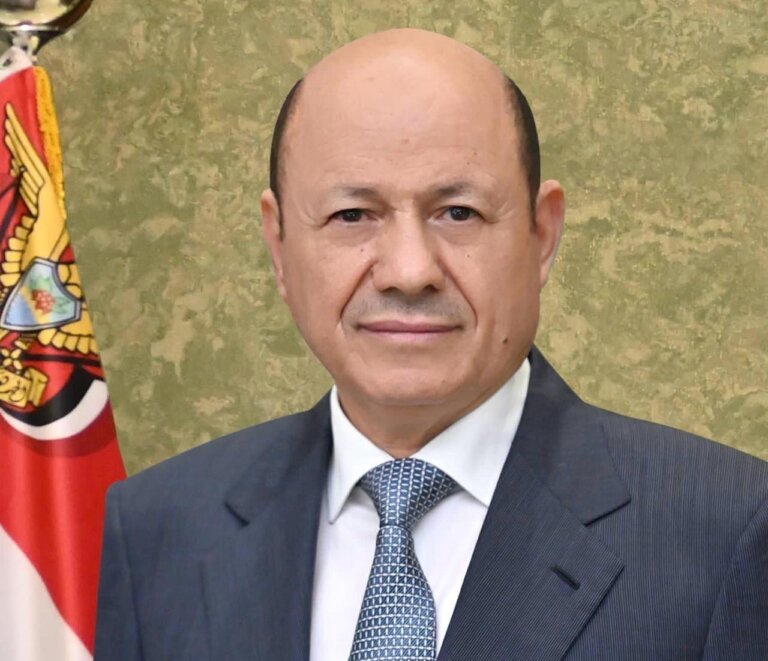
Mukhtar al-Yafei and Hassan Raddad discuss vocational training and a joint employment committee in Cairo
 Yemen Herald News
CAIRO, Egypt — Yemen’s minister of social affairs and labour met his Egyptian counterpart in Cairo on Monday to discuss vocational training and a joint committee on employment.
Mukhtar al-Yafei and Egypt’s labour minister, Hassan Raddad, talked about cooperation in employment, workforce development and the exchange of expertise, the Yemeni state news agency Saba reported.
The two sides discussed forming a joint committee to help prepare Yemen’s national employment strategy, Saba said. The committee would draw on Egypt’s own national employment plan.
Saba is the only outlet to have reported the meeting. Yemen Herald found no independent confirmation of it, and the account below rests on the agency’s report.
Al-Yafei reviewed Egypt’s mobile training units, which run under a project the agency named Mahara 2030.
The units provide practical training in air-conditioning, computer and mobile phone maintenance, programming and electrical work, Saba said. They are aimed at remote and rural districts.
Al-Yafei praised Egypt’s record in vocational training, according to the agency. Raddad said he was ready to share expertise on workforce skills and on tying training courses to what employers ask for.
Neither minister set a date for the committee to meet. Saba gave no cost for the work and named no donor.
Al-Yafei was appointed under Republican Decree No. 3 of 2026, issued in February by Rashad al-Alimi, chairman of the Presidential Leadership Council. He is also deputy chairman of the board of the Social Fund for Development.
He has held a series of meetings with foreign partners this year. Saba reported talks with the European Union’s ambassador to Yemen on the Social Fund for Development, with the United Nations Population Fund on programmes for women and young people, and with the Swiss ambassador on social protection.
The Social Fund for Development is one of the main channels for livelihood spending in Yemen. It is working with the United Nations Children’s Fund on a cash-for-nutrition-and-livelihoods project that the World Bank approved in June.
The World Bank put that grant at 100 million dollars from the International Development Association and said it runs to June 2029. It is expected to reach about 1.8 million people in 15 governorates.
Around 55,000 people, drawn first from households already receiving cash for nutrition, are to join village savings and loan associations under the project, according to the bank.
The bank approved a country partnership framework for Yemen covering the 2026 to 2030 financial years on June 4, alongside four operations worth 285 million dollars. It described its active portfolio in the country as 2.4 billion dollars across 12 projects.
Yemen’s labour market has narrowed through more than a decade of war. The World Bank put the unemployment rate at 17.09 percent in 2024, using a modelled International Labour Organization estimate.
Unemployment among young Yemenis ran higher. The same series recorded 32.6 percent for those aged 15 to 24 in 2025.
The wider relief picture is set out in the United Nations humanitarian needs and response plan published in March. It counted more than 22 million people in need of assistance.
The plan recorded 18.3 million people as acutely food insecure. It put more than 2.2 million children under five in acute malnutrition, 516,157 of them severely.
It listed 5.2 million internally displaced people and sought 2.16 billion dollars to reach 12 million of those in need.
On the Egyptian side, Raddad has placed training at the top of his ministry’s agenda. He told the Nile News channel on Aug. 30 that the aim was to prepare Egyptian workers for jobs in Arab and European markets.
The mobile units al-Yafei asked about are part of a wider push. Raddad said on Labour Day in April that his ministry had expanded its training centres and added mobile units to reach governorates and underserved districts.
He said at the same event that preparations were under way for a digital labour platform to connect job seekers with employers directly.
Raddad said more than one million jobs had been created at home and abroad over the previous year. He put support paid to irregular workers at about 2 billion Egyptian pounds, and spending by the Emergency Workers Fund at 2.5 billion pounds since it was set up.
He also announced a national occupational safety and health strategy drawn up with the International Labour Organization, and said work was advancing on a domestic workers law.
Raddad said in the same interview that Egypt’s unemployment rate had stood above 13 percent in 2013 and 2014, against about 8 percent now.
He said the state had introduced measures to support investors, and that a committee had been set up at the ministry’s headquarters to handle obstacles they run into.
Raddad also described new rules on workplace regulations at private companies. Establishments employing 10 or more workers must issue labour regulations and have them approved by labour offices, he said.
Establishments with fewer than 10 workers may adopt simplified rules covering working hours and weekly rest periods, according to the minister.
Egypt has pursued similar labour agreements elsewhere in the region. Its ministry agreed with Sudan in April to reactivate memoranda of understanding on labour cooperation.
Saba did not say how long al-Yafei would stay in Cairo, or whether he was due to meet other Egyptian officials during the visit.
About the Author