HALO Trust suspends mine clearance in Taiz and Mokha and warns of risk to displaced Yemenis
 Yemen Herald News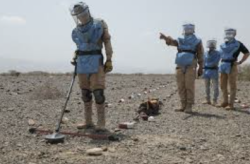
ADEN, Yemen — The HALO Trust has suspended landmine clearance in Taiz and Mokha and moved staff to Aden, the demining group said in a report released on Sept. 30.
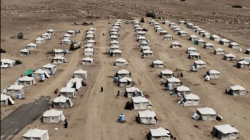
It warned that renewed fighting risks more casualties from mines and unexploded ordnance among civilians fleeing the front lines.
The warning covers communities around Taiz, where the group has worked since 2022.
Mara van der Kamp, HALO’s country director for Yemen, said renewed fighting threatened to worsen an already critical situation.
“Mass displacement may force families into areas they do not realize are contaminated, increasing the likelihood of accidents and fatalities,” van der Kamp said.
HALO said it had relocated staff and equipment from Taiz and Mokha to Aden, and that clearance work in those areas had stopped. It said the decision followed renewed fighting around Taiz and on Yemen’s west coast.
The group said it planned to deploy new teams in Lahj and Al-Dhale governorates when security allowed.
Yemen Herald could not independently confirm the account. It rests on HALO’s own report, released on Wednesday, and on outlets that have relayed it. No second organisation has published an independent description of the suspension.
HALO said landmines and unexploded ordnance killed 260 civilians in Yemen in 2024. It said 44 of them were children.
The group said Yemen ranked third in the world for landmine casualties recorded over the past decade.
It said children were often hurt while farming or herding livestock, or after mistaking devices for toys.
HALO began work in Aden in 2019 and opened in Taiz city in 2022.
The group says it has made 2,135,167 square metres of land safe in Yemen.
It says 58,591 people have been given instruction on how to stay safe around explosive remnants.
HALO has said it finished training new mechanical clearance and survey teams for work on Yemen’s west coast, with funding from the Dutch foreign ministry. The group said those teams were intended for communities on the west coast.
HALO works alongside YEMAC, Yemen’s national mine action body, and carries out land and community surveys to measure contamination.
It describes front-line areas as badly contaminated, with a mix of unexploded ordnance, improvised devices and traditional landmines.
The suspension follows two months of fighting on Yemen’s west coast and around Taiz.
Houthi forces took Mocha port and Mayyun Island earlier in September, Al Jazeera reported. Government units and Houthi fighters were contesting the Kahboub Mountains in Taiz and Lahj.
Four ballistic missiles fell near Al-Turbah in southern Taiz on Sept. 30, the Palestinian daily Al-Quds reported, citing field sources. It said one struck near the Motherhood and Childhood Hospital.
Al-Quds reported no casualty figures from those strikes.
The International Organization for Migration counted 145,308 people displaced in Yemen since insecurity escalated in June. That is about 24,218 households across eight governorates.
IOM said three districts of Taiz had emptied: Maqbanah, Jabal Habashi and Al Ma’afer.
Displaced families moved into Lahj and Aden, and northward into Ibb, according to the agency.
Abdusattor Esoev, IOM’s chief of mission in Yemen, said on Sept. 29 that the agency was counting thousands more people each week who had left everything behind.
Amy Pope, IOM’s director general, said in September that families were fleeing for the second or third time since the start of the conflict.
Yemen’s Executive Unit for the Management of Displaced Persons Camps put the movement at 23,550 families since Aug. 6, counting from a later date than IOM.
The World Health Organization recorded 67 deaths and 288 injuries across seven governorates between Aug. 6 and Aug. 24.
The UN Office for the Coordination of Humanitarian Affairs recorded at least 14 civilians killed or wounded in the first days of September, among them two children.
By late September the WHO count had risen to 674 killed and close to 3,000 wounded since Aug. 6.
The United Nations said 60 percent of Yemen’s health facilities were fully operational.
Marib General Hospital suspended maternity services to take trauma cases, according to the same UN account.
Government forces and the Houthis have fought along the west coast since early August. Each side disputes the other’s account of territorial gains.
Mine clearance has continued elsewhere. The Saudi-funded Masam project reported destroying 299 mines and explosive remnants in Al-Dhale, according to its own account.
The new displacement adds to a caseload recorded before the escalation. The United Nations humanitarian plan for 2026 counted 5.2 million people already displaced inside Yemen.
That plan put the number needing aid at more than 22 million, with 18.3 million acutely food insecure.
It recorded more than 2.2 million children under five as acutely malnourished, 516,157 of them severely.
The plan sought 2.16 billion dollars to reach 12 million people.
Tom Fletcher, the UN emergency relief coordinator, released 9 million dollars from the Central Emergency Response Fund for the response in Yemen.
Stephane Dujarric, the UN spokesman, said humanitarian supplies were running low and called on the parties to allow aid access.
IOM listed shelter, food, water, household items, health care and protection among the needs of those displaced.
More than 2,400 people crossed into Djibouti over four days in September, according to the UN refugee agency.
Sandrine Desamours, UNHCR’s representative in Djibouti, said further support was needed before the response there was overwhelmed.
HALO is a British-based demining organisation that works in more than 30 countries and territories.
About the Author