Yemeni envoy and Jordanian official discuss cooperation and Red Sea escalation in Amman
 Yemen Herald News
AMMAN, Jordan — Yemen’s ambassador to Jordan met a Jordanian foreign ministry official on Thursday to discuss bilateral cooperation and the conflict at home.
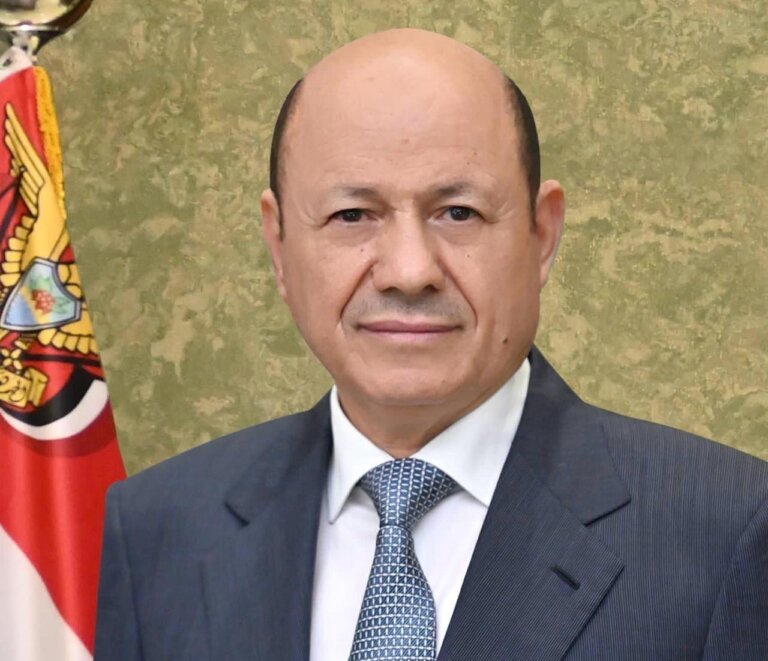
Jalal Faqirah held talks with Mohammad Al-Tarawneh, director of the Arab and Middle Eastern Affairs Department at Jordan’s Ministry of Foreign Affairs and Expatriates, the Yemeni news agency Saba reported.
Saba said the two discussed ways to strengthen cooperation and coordination on issues of common interest.
The meeting also covered political developments in Yemen and the region, according to the agency.
Saba said the talks addressed what it described as military escalation by Houthi forces, aimed at destabilising Yemen and the region and threatening shipping routes in the Red Sea.
That characterisation is the Yemeni government’s. The Houthis reject it.
Hazem al-Assad, a member of the Houthi politburo, told Al Jazeera last month that navigation in the region remained “safe and orderly”.
This account of the meeting rests on Saba, Yemen’s state news agency. No independent confirmation has been published, and Jordan’s foreign ministry had issued no readout of its own at the time of writing.
Faqirah has been Yemen’s ambassador in Amman since April 2023. He was appointed by presidential decree on April 3 that year, succeeding Ali Al-Imrani.
He was born in Hodeidah in 1967 and works as a political scientist at Sanaa University.
Faqirah resigned from a central committee post in 2011, during the uprising of that year.
The embassy’s work in Amman runs beyond political coordination.
In July, Faqirah met Nathir Obeidat, president of the University of Jordan, to discuss academic cooperation, Saba reported at the time.
The ambassador said the university had trained hundreds of Yemeni professionals, particularly in medicine, engineering and information technology.
Obeidat said the university would expand exchanges of expertise, capacity building and curriculum work, according to the same report.
The two discussed a memorandum of understanding on scientific and academic cooperation.
Faqirah met Jordan’s health minister, Firas al-Hawari, in November 2024, according to a Yemeni foreign ministry readout.
The ambassador said at that meeting that Jordan provided facilities for Yemeni patients, along with physician training and therapeutic grants under an existing health protocol.
Al-Hawari said his ministry was ready to help Yemen facilitate treatment for Yemeni patients travelling to Jordan, the readout said.
Days later, Faqirah met Sami Smeirat, Jordan’s minister of digital economy and entrepreneurship, the ministry reported.
Faqirah said Yemen wanted to draw on Jordan’s experience in the digital economy, entrepreneurship, and postal and communications technology.
Smeirat said he was willing to revive the two countries’ joint cooperation pacts, according to the same readout.
Jordan also hosts a Yemeni civilian population that has grown through the war.
The Sana’a Center for Strategic Studies reported that the UN refugee agency had registered 13,727 Yemeni asylum-seekers in Jordan as of March 2021.
A 2015 national census put the number of Yemeni nationals in the country at about 32,000, according to the same study.
It said 762 Yemenis were granted refugee status in 2020, while 13,881 were waiting for status determination interviews.
Jordan stopped accepting new applications for asylum from Yemenis through the UN agency in late 2019, the study said.
It put the cost of a residency or work permit at between 600 and 1,000 dollars a year.
Fewer than 20 Yemenis had been resettled from Jordan since 2018, according to the same report.
The Red Sea escalation the two diplomats discussed has reshaped traffic through the strait at Yemen’s south-western approach.
Houthi forces took Mocha port and Mayyun Island, also known as Perim, in September. Al Jazeera reported that their units were positioned about 20 kilometres from the African coast.
Bab al-Mandab handles roughly 12 percent of global trade, including 11 percent of seaborne oil and 8 percent of liquefied natural gas, according to the same report.
Shipping volume and tonnage through the Red Sea fell by between 50 and 55 percent from 2023 to 2025, Al Jazeera reported, citing IMF PortWatch data.
Vessels routed around the Cape of Good Hope add more than 20 days to a voyage.
Egypt lost about 7 billion dollars between 2023 and 2024, around 60 percent of Suez Canal revenues, according to official figures cited in the report.
The fighting has displaced Yemenis in large numbers. The International Organization for Migration counted 145,308 people displaced since insecurity escalated in June, about 24,218 households across eight governorates.
The agency recorded 15,870 of those movements between Sept. 21 and Sept. 28, a rise of 12 percent in a week.
The World Health Organization put the toll since Aug. 6 at 674 killed and close to 3,000 wounded by late September.
More than 2,400 people crossed into Djibouti over four days in September, the UN refugee agency said. It said more than 60 percent were women, children and elderly people.
The United Nations humanitarian plan for 2026 counted 5.2 million people already displaced inside Yemen before the current escalation.
The plan put the number needing aid at more than 22 million, with 18.3 million acutely food insecure.
It recorded more than 2.2 million children under five as acutely malnourished, 516,157 of them severely.
The plan sought 2.16 billion dollars to reach 12 million people.
Al-Tarawneh’s department covers Arab and Middle Eastern affairs within the Jordanian ministry.
About the Author