TEHRAN, Iran — Iran is demanding that the lifting of the blockade
 Yemen Herald News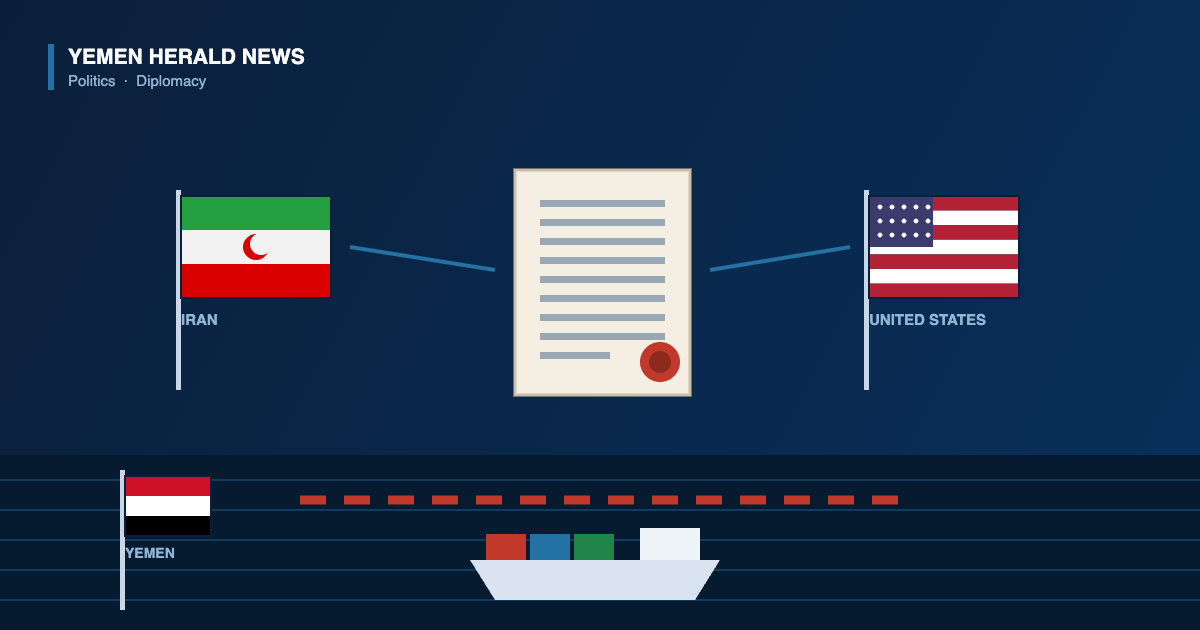
TEHRAN, Iran — Iran is demanding that the lifting of the blockade on Yemen be part of any ceasefire agreement with the United States, an Islamic Revolutionary Guard Corps spokesman said.
Hossein Mohebi, spokesman for the Guard, set out the demand in an interview with Agence France-Presse on Tuesday.
“The issue of Yemen was not on the agenda of the previous agreement,” Mohebi said. “We are now demanding that the lifting of the blockade on Yemen be included in the agreement.”
He was referring to the restrictions the Saudi-led coalition has placed on ports and airports in areas of Yemen run by the Houthis.
The account of the demand rests on that interview with the Guard’s spokesman. Yemen Herald found no independent confirmation that it has been put to Washington in writing, and the United States has not responded to it publicly.
Mohebi also said Iran wants the full $24 billion in frozen Iranian assets released before talks begin, rather than in stages.
The comments came on the same day that Iranian Foreign Minister Abbas Araghchi met the US special envoy, Steve Witkoff, in New York.
The two met on the sidelines of the 81st session of the United Nations General Assembly. It was the first public meeting between the two governments in months.
Qatar took the lead among Gulf states in arranging it, a Gulf official told Middle East Eye.
Gulf officials told Middle East Eye that their governments had tried to arrange an encounter between Trump and Iranian President Masoud Pezeshkian, and that the logistics proved difficult. Qatar and the United Arab Emirates had both called for de-escalation over the weekend.
Iranian state media confirmed the meeting later in the day. It said Araghchi had handed over Iran’s terms for reopening the Strait of Hormuz.
Those terms were the lifting of the US naval blockade, the release of frozen assets and an end to the war on all fronts, according to the same reports.
Direct talks between the two governments had been frozen since a ceasefire extension agreed in June collapsed in July. Both have since struck vessels in the Strait of Hormuz.
The June memorandum of understanding covered the lifting of US oil sanctions, the removal of the naval blockade on Iranian ports, the unfreezing of Iranian assets abroad and an end to fighting on all fronts, including Lebanon. Yemen was not in it.
Trump drew criticism from pro-Israel lawmakers and commentators in June when Washington agreed to return some frozen Iranian assets. It is not clear whether that money was transferred before the arrangement broke down.
President Donald Trump told reporters the New York talks had been “a very productive meeting” and said another was scheduled. In his address to the assembly the same day he threatened to “annihilate” Iran.
Mohebi had ruled out contact with Washington earlier on Tuesday. “The Americans have tried to contact us, but we refuse any such contact,” he said. “Our dealings with the enemy, as long as they remain hostile, are conducted solely through arms.”
Those remarks and the meeting in New York were hours apart. Neither the Guard nor Iran’s foreign ministry has commented on the difference between them.
The Yemen demand arrives after a month of rapid change on the ground. Houthi forces took the country’s western coast in September, along with the Bab al-Mandab strait and the islands of Perim and Zuqar.
Saudi Arabia is the world’s largest oil exporter. The Houthi hold on Bab al-Mandab came while Iran was pressing on the Strait of Hormuz, leaving two of the region’s shipping chokepoints contested at once.
Houthi drones and missiles have struck Saudi sites, including the capital Riyadh, for the first time in years. The group says Saudi Arabia has carried out hundreds of strikes inside Yemen since fighting resumed in July, ending a four-year truce.
Saudi Arabia has asked the United States for military help against the group, according to US media reports. The New York Times reported that Trump called off planned airstrikes on Houthi targets on Sunday.
Yemen’s government has also asked Washington for help, a source told Agence France-Presse. CNN reported this month that US personnel were in Saudi Arabia providing intelligence for strikes without taking part in them.
The UN refugee agency said on Tuesday that the number of people displaced inside Yemen by the current fighting could rise from more than 130,000 to more than 230,000.
The wider picture was set out in the United Nations humanitarian plan for Yemen published in March. It counted more than 22 million people in need of aid and 18.3 million who are acutely food insecure.
The plan recorded 5.2 million people displaced before the current round of fighting, and more than 2.2 million children under five who are acutely malnourished. Of those, 516,157 were severely malnourished.
It sought $2.16 billion to reach 12 million people this year.
The Saudi-led coalition entered the Yemen war in March 2015. A truce agreed in 2022 held in varying form until fighting resumed in July.
The United States has designated the Houthis a foreign terrorist organisation since March 2025.
Mohebi did not say what Iran would accept in place of a full lifting of the restrictions. He did not give a timetable.
About the Author