Al-Alimi tells British ambassador Yemen’s armed forces can lead the fight against the Houthis
 Yemen Herald News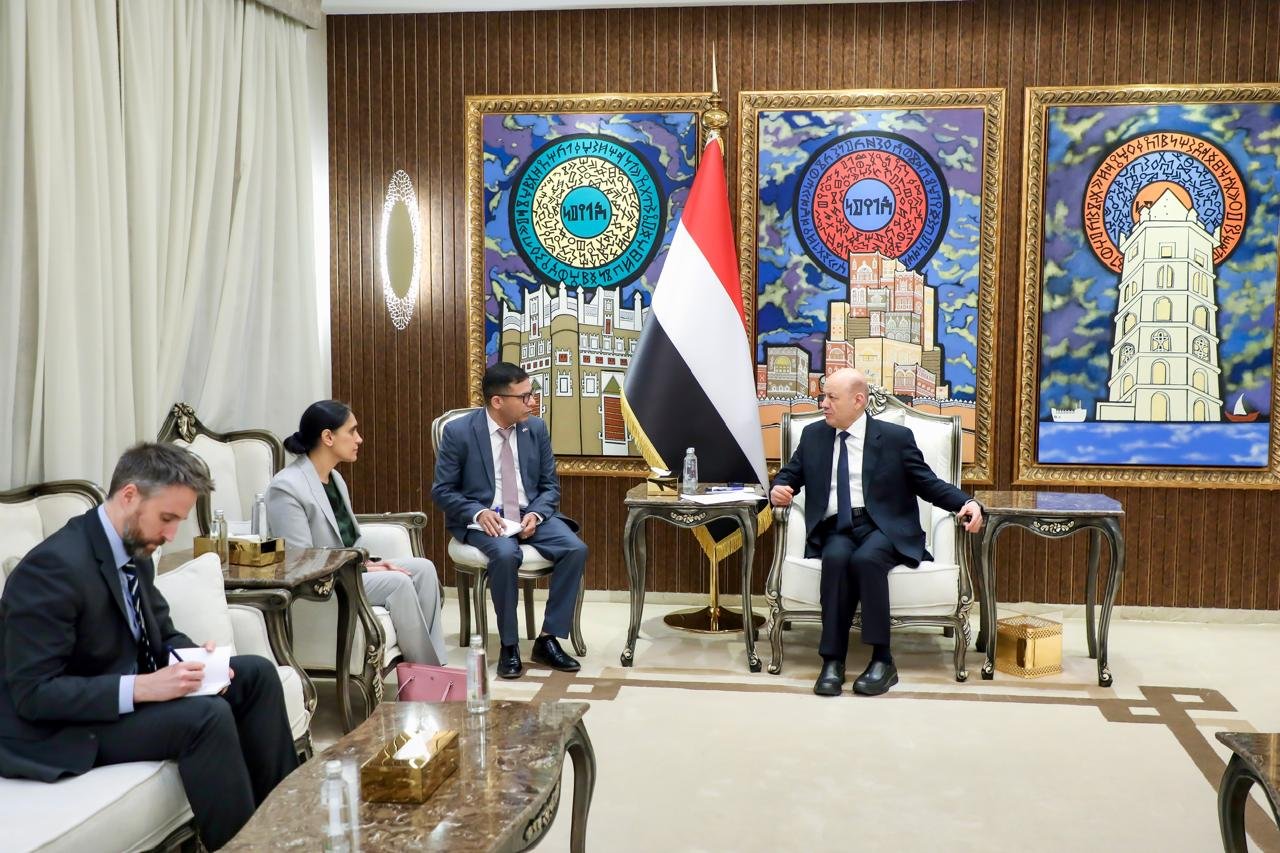
RIYADH, Saudi Arabia — Yemen’s Presidential Leadership Council chairman Rashad al-Alimi told Britain’s ambassador on Thursday that Yemeni forces can lead the fight against the Houthis.
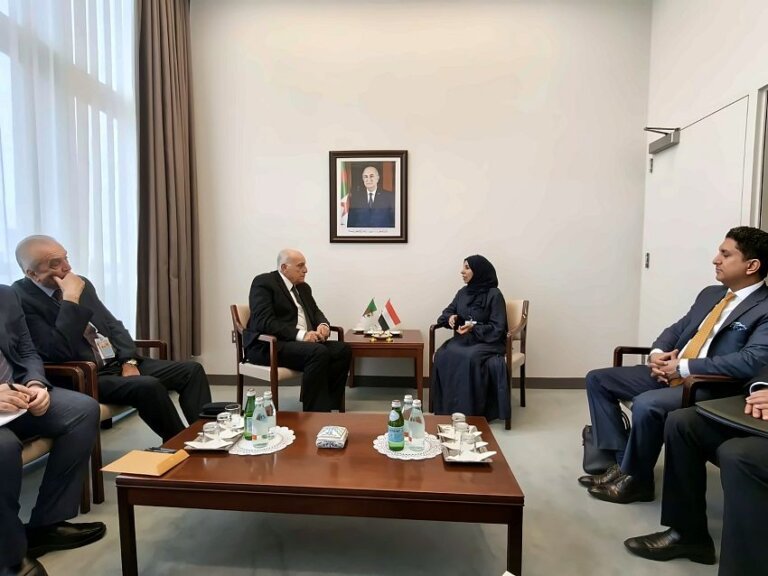
He made the remarks in a meeting with Abda Sharif, the United Kingdom’s ambassador to Yemen, in the Saudi capital.
The state news agency Saba reported the meeting. This account rests on that agency’s report, and no independent confirmation of the exchange has been published.
Al-Alimi said Yemenis have confidence in their armed forces. He said those forces can take the lead in the fighting and extend state control over the whole country.
He described international backing for the government, the armed forces and what he called the public resistance as the most sustainable route to ending the Houthi threat.
Al-Alimi said military formations had moved from containing attacks to leading the fighting. He said they had shown deterrence.
He named Taiz, Marib and al-Dhale among the fronts. He said Taiz had become a graveyard for the group.
The Houthis dispute government accounts of front-line movement. They have not responded to al-Alimi’s remarks.
Al-Alimi warned against treating the group with what he called a logic of containment. He said a ceasefire that does not stop rearmament turns into new rounds of violence.
He linked security in the Red Sea and Bab al-Mandab to a Yemeni state that controls its land, coasts and territorial waters.
Supporting the armed forces is not only an investment in Yemen’s security but in the security of trade, energy and global interests, he said.
Al-Alimi asked the international community to build on recent positions taken by the UN Security Council and the Group of Seven. He said those bodies should move beyond condemning Iran’s support for the group.
The Security Council condemned Houthi attacks on Saudi Arabia on 20 September and urged a halt to the escalation.
G7 foreign ministers issued a similar statement on 23 September. They called on Iran to stop supplying the group.
Sharif has served as Britain’s ambassador to Yemen since 2023. She is a lawyer by training.
Before the posting she headed the Iraq and Arabian Peninsula Department in the Middle East and North Africa Directorate at the Foreign, Commonwealth and Development Office.
She was deputy ambassador to Lebanon between 2012 and 2016. In 2011 she led the UK Office in Benghazi, Libya.
She succeeded Richard Oppenheim, who moved to another diplomatic post.
The meeting took place in Riyadh rather than Aden. The Presidential Leadership Council is seated in Aden, and al-Alimi has operated from the Saudi capital for extended periods.
Britain closed its embassy in Sanaa in 2015. It runs its Yemen mission from outside the country.
The talks follow weeks of fighting along Yemen’s Red Sea coast.
Houthi forces took control of the coastline in early September, Al Jazeera reported on 11 September. The advance gave the group Perim Island and the Hanish Islands.
The group also seized the port city of Mokha during that push, according to the same report.
The positions sit astride Bab al-Mandab, the strait linking the Red Sea to the Gulf of Aden.
Government forces have since claimed gains inland. Al Jazeera reported on 23 September that they said they had taken Mount Qarfan in Taiz.
Those claims come from the government side. The Houthis have not confirmed them.
Yemen’s war began in 2014, when the Houthis seized Sanaa.
The Presidential Leadership Council was formed in April 2022, when President Abed Rabbo Mansour Hadi transferred his powers to it. Al-Alimi has chaired it since.
Britain is a permanent member of the Security Council and holds the pen on Yemen at the body, drafting its resolutions and statements on the conflict.
The United Nations humanitarian plan for Yemen published in March 2026 lists more than 22 million people in need.
It records 18.3 million people as acutely food insecure and 5.2 million as internally displaced.
The plan seeks 2.16 billion dollars to reach 12 million people.
Britain has taken part in military action against the group before. UK aircraft joined US strikes on Houthi targets in Yemen in 2024, after attacks on shipping in the Red Sea.
The Security Council imposed an arms embargo on Houthi leaders in 2015 under Resolution 2216. The resolution also demanded the group withdraw from Sanaa.
The European Union naval mission Aspides raised its alert level in the Red Sea this month. The bloc’s foreign policy chief Kaja Kallas announced the change on 20 September.
The United Nations refugee agency said this week that nearly 100,000 more Yemenis could be displaced within three months if the fighting continues.
UN agencies recorded 112,000 people displaced during two weeks of fighting earlier in September.
Aid access has narrowed alongside the fighting. Yemen’s health ministry said this month that looting at aid facilities in Khokha was depriving patients of supplies.
The World Health Organization said in September that nearly 20 million people in Yemen need health assistance.
Foreign Minister Afrah al-Zouba called for disarming the group at a UN ministerial meeting this month.
The Presidential Leadership Council has eight members. Al-Alimi chairs it, and the other seven hold equal standing on the body.
Saba did not say how long Thursday’s meeting lasted. It did not report any remarks by Sharif.
About the Author