Germany announces new environmental aid for Yemen at Berlin cooperation conference
 Yemen Herald News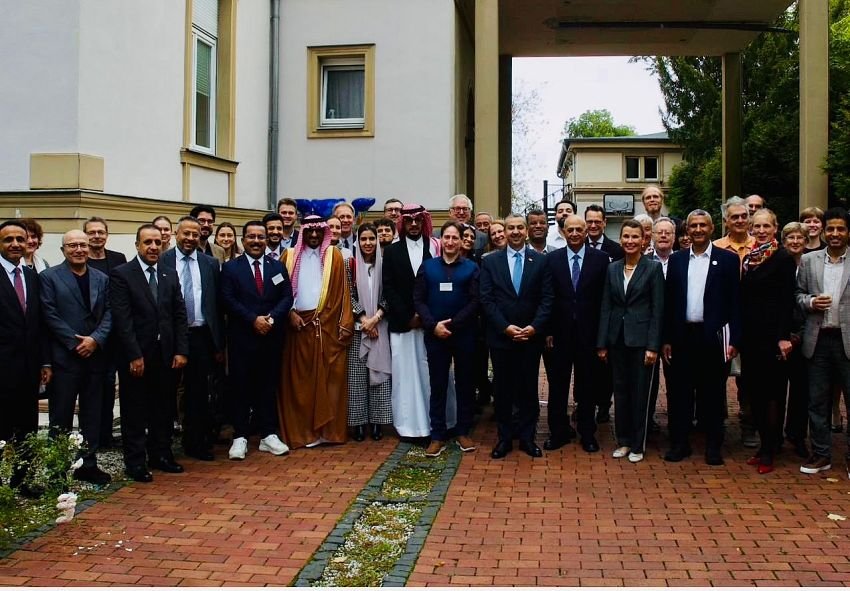
BERLIN, Germany — Germany announced a new package of environmental aid for Yemen at a bilateral cooperation conference in the capital on Thursday, the Yemeni state news agency said.
The announcement came from Rita Schwarzelühr-Sutter, whom Saba identified as a state minister at Germany’s federal environment ministry.
She said Germany intended to continue supporting Yemen, according to the agency. Saba gave no figure for the package and no timetable for it.
The Yemeni-German Cooperation conference was organised by Yemen’s embassy in Berlin.
Its sessions covered environmental priorities and challenges in Yemen, the country’s economic and development position, and Yemeni heritage, Saba said.
The programme also carried the annual meeting of the Friends of Socotra Association.
That session included scientific lectures on the Socotra Archipelago, its environment and ways to protect it.
Socotra lies about 350 kilometres southeast of mainland Yemen, in the north-western Indian Ocean.
UNESCO inscribed the archipelago on its World Heritage list in 2008. It cited the islands’ isolation and the share of plant species found nowhere else.
The dragon’s blood tree, named for its red resin, is the best known of them.
The archipelago forms its own governorate, separated from Hadramout in 2013.
Yemen holds three other sites on the UNESCO World Heritage list.
They are the Old City of Sanaa, inscribed in 1986, the old walled city of Shibam in Hadramout, inscribed in 1982, and the historic town of Zabid, inscribed in 1993.
All three sit on the List of World Heritage in Danger.
Yemen’s minister of water and environment, Tawfiq al-Sharajabi, attended. He praised German support across several fields, Saba said.
Representatives of the Yemeni government and the German Foreign Ministry took part.
So did the Saudi Program for the Development and Reconstruction of Yemen, which Riyadh established in 2018 to fund projects in government-held areas.
The Friedrich Ebert Foundation also sent representatives. The foundation is affiliated with Germany’s Social Democratic Party.
The Arab-German Chamber of Commerce and Industry, the German-Yemeni Friendship Association, the Friends of Socotra Association and the organisation Vision Hope were represented as well.
The chamber is based in Berlin and promotes trade between Germany and Arab states.
The account of the conference rests on Saba, Yemen’s state news agency. No independent account of the proceedings has been published.
Environmental pressure on Yemen has grown alongside the war.
The rainy season began earlier than usual this year, with low-intensity rainfall from 20 March, according to the International Federation of Red Cross and Red Crescent Societies.
Rain intensified from 27 March and triggered flooding across more than ten governorates, the federation said in its operation report.
It listed Taiz, al-Jawf, Ibb, Abyan, al-Bayda, Lahj, Marib, Hodeidah, Hadramout, Aden and al-Dhale among the areas affected.
The Yemen Red Crescent Society estimated that 83,713 people, or 11,959 households, were affected. It logged 254 incidents across its branches.
The federation said many of those affected live in sites for displaced people or in flood-prone areas.
It said critical infrastructure took damage, including electricity networks, water supply, communications and transport.
The UN Food and Agriculture Organization issued a bulletin on 31 March warning of flash flood risk to more than 400,000 hectares of farmland.
It said the period from March to May could bring heavy rainfall, with floods forming in the highlands and running into valleys and low-lying areas.
The agency also warned of possible losses of livestock.
Some of the flood-affected areas sit near front lines, which raises the risk from landmines and unexploded ordnance, the federation said.
On the development side, the European Union’s mission in Yemen signed three projects worth 24 million euros this month for the country’s farming and fishing sectors.
Yemen’s planning minister, Mohammed al-Faqmi, chaired a first meeting this week on a development plan covering 2027 to 2029.
The UN Office for the Coordination of Humanitarian Affairs said in its March 2026 plan that more than 22 million people in Yemen need assistance.
It put the number of acutely food insecure at 18.3 million and recorded 5.2 million internally displaced people.
More than 2.2 million children under five are acutely malnourished, the office said. It classed 516,157 of those cases as severe.
The office asked for 2.16 billion dollars this year to reach 12 million people.
Aid agencies reached 10.83 million people in Yemen between January and July, according to the same office.
The UN refugee agency said this week that nearly 100,000 more Yemenis could be displaced within three months.
A Yemeni government unit recorded nearly 147,000 people displaced over 18 days this month.
Germany has kept a diplomatic track with the Yemeni government through the war.
Yemen’s ambassador to Germany discussed Red Sea security with the analyst Michael Lüders last week, Saba reported at the time.
That exchange followed a Houthi advance along Yemen’s Red Sea coastline in early September.
Al Jazeera reported on 11 September that the group had taken the port city of Mokha, Perim Island and the Hanish Islands.
The Socotra Archipelago sits far from that fighting, in the Arabian Sea approaches to the Gulf of Aden.
Saba did not say whether the conference agreed any follow-up meeting.
It gave no attendance figure for the day.
About the Author