Yemen’s UNESCO envoy warns conflict and antiquities smuggling threaten heritage sites
 Yemen Herald News
PARIS, France — Yemen’s ambassador to UNESCO has warned that the country’s World Heritage sites remain at risk from the conflict and from the smuggling of antiquities.
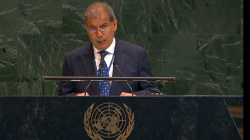
Mohammed Jumeh, Yemen’s ambassador and permanent delegate to the United Nations Educational, Scientific and Cultural Organization, made the remarks in a press statement.
Yemen Herald could not establish the date of the statement. The account rests on the agency report that carried it, and no independent confirmation of the remarks has been published.
Jumeh said the sites Yemen has inscribed on the World Heritage List are endangered by the war, which he said had damaged cultural and historical sites across the country.
He said hundreds of further archaeological and heritage sites that are not on the list face growing threats. He named the smuggling of antiquities as the main one.
Jumeh described the trade in cultural objects as a “national problem.” He linked its growth to Yemen’s economic conditions.
He asked for wider international cooperation to protect the country’s heritage and to work against the illegal trade.
UNESCO’s own record sets out what is on the list and what condition it is in. Yemen has five inscribed properties.
The Old Walled City of Shibam was inscribed in 1982 and placed on the List of World Heritage in Danger in 2015. The Old City of Sana’a was inscribed in 1986 and added to the danger list in the same year as Shibam.
The Historic Town of Zabid was inscribed in 1993 and has been on the danger list since 2000, the longest of any Yemeni property.
The Landmarks of the Ancient Kingdom of Saba, in Marib, were inscribed in 2023 and placed on the danger list at the same session. The property covers monuments of the Sabaean kingdom spanning the first millennium BCE to the early Islamic period.
The Socotra Archipelago, inscribed in 2008, is Yemen’s only natural World Heritage site and is not on the danger list.
Four of Yemen’s five World Heritage properties are therefore listed as in danger. Yemen also maintains 35 properties on its tentative list, the register of sites a state may later nominate.
UNESCO opened an emergency response for Yemen’s cultural heritage on 13 May 2015. It followed reported damage to the Old City of Sana’a in air strikes two days earlier.
The plan covered three areas: assessment, technical assistance and monitoring. UNESCO produced assessment forms for heritage buildings, archaeological sites and museum collections.
It developed those with partners including the Arab Regional Centre for World Heritage and Yemeni preservation bodies. The agency also revised a geographic information system database for the old city of Sana’a to track damage to the urban landscape.
Training was delivered with ICCROM-ATHAR and covered risk management, rapid documentation and disaster preparedness, according to UNESCO.
Irina Bokova, then UNESCO’s director-general, asked the parties to observe the 1954 convention on the protection of cultural property in the event of armed conflict.
War is not the only threat the agency records at Sana’a. Yemen’s 2022 report to UNESCO said about 380 earthen structures were threatened by heavy rainfall and that the sewage system had collapsed.
Damage from flooding in 2020 had been only partly repaired at that point, according to the same report.
UNESCO’s 2023 assessment of the property listed armed conflict, heavy rain, failures in the rainwater drainage network, the decay of residential quarters and new building in modern materials as the hazards facing it.
Repair work has been done. A cash-for-work project run by UNESCO with European Union funding between 2018 and 2022 rehabilitated 210 houses and restored 58 façades in the old city.
The same project repaired the al-Falihi and Khudair squares and trained more than 880 people in traditional building techniques. It provided work to 6,263 young people across four Yemeni historic cities.
The European Union contributed 9.78 million euros between 2018 and 2021. The Heritage Emergency Fund provided 1.02 million dollars in 2019 and 2020, and Japan gave 925,925 dollars in 2023 for climate-resilient community work.
UNESCO has recorded that no corrective measures or target conservation state have been formally set for Sana’a, and that Yemen’s national preservation strategy has not been finalised.
The illicit trade Jumeh described has been tracked separately. The International Council of Museums published an emergency red list of Yemeni cultural objects at risk in January 2018.
Red lists are circulated to police forces, customs services, auction houses and dealers so that categories of object likely to be trafficked can be identified at borders.
Yemeni officials have raised the same issue with UNESCO before. Muammar al-Eryani, Yemen’s minister of information, culture and tourism, asked the organisation to help recover stolen and smuggled items.
Al-Eryani also asked UNESCO to run legal training courses for the national team charged with pursuing smugglers and dealers, according to Asharq al-Awsat. He accused the Houthis of destroying archaeological and cultural sites.
Neither Jumeh nor al-Eryani gave a figure for the number of objects removed from Yemen since the war began. Yemen Herald found no published count.
Jumeh has represented Yemen at UNESCO headquarters in Paris. He was received by the mayor of Baiona, in north-western Spain, in September, the town council said.
About the Author