Djibouti tells UN General Assembly it cannot absorb Yemeni arrivals alone
 Yemen Herald News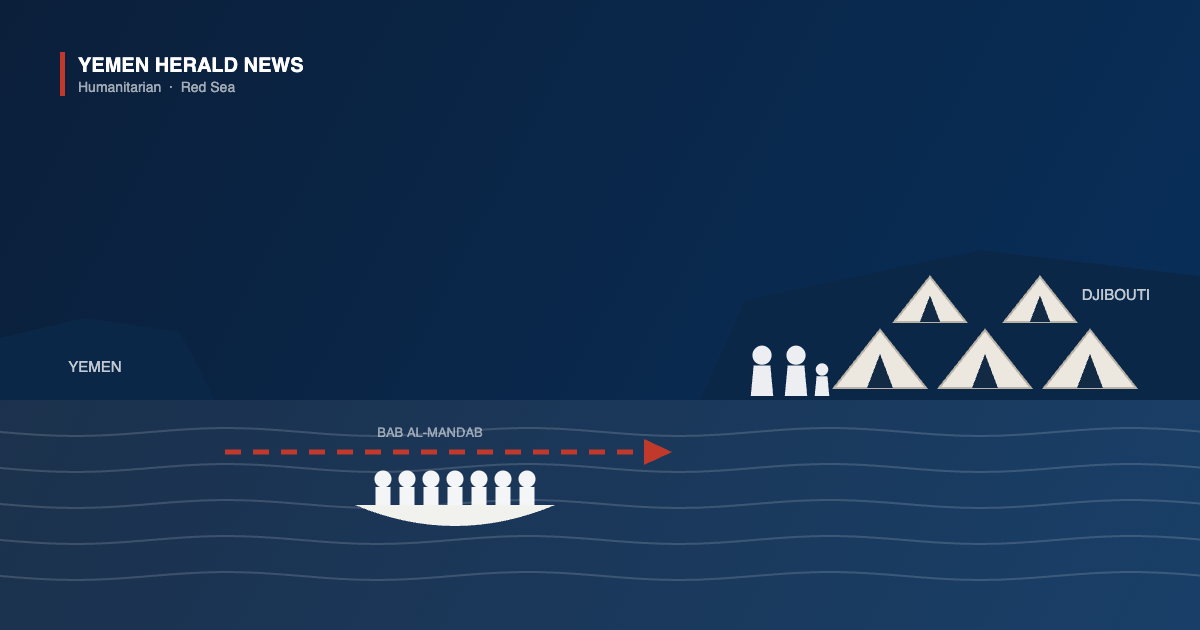
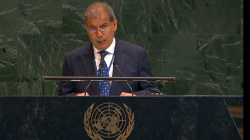
NEW YORK, United States — Djibouti cannot meet the needs of people fleeing Yemen without more international help, its foreign minister told the UN General Assembly on Sunday.
Abdoulkader Houssein Omar said several thousand people had reached Djibouti after crossing the Bab al-Mandab strait by boat.
“Djibouti alone can’t meet the growing needs for shelter, food and essential services,” he said.
Omar asked the international community to step up its support so that his country could respond adequately to the influx.
He named the Obock region, on Djibouti’s northern coast, as the main pressure point. Arrivals come ashore there by boat.
The Markazi refugee camp outside Obock is reaching capacity, Omar said.
He also urged de-escalation in Yemen and a lasting political settlement.
Omar said obstruction of shipping through Bab al-Mandab could seriously affect supply chains and energy security.
The account of the address rests on that report of his remarks. Yemen Herald found no independent transcript of the speech, though the arrival figures Omar cited have been published separately by the UN refugee agency and the UN humanitarian office.
More than 3,000 people have crossed the strait, according to United Nations figures cited at the assembly.
UNHCR, the refugee agency, has said the number could reach 10,000.
More than 100,000 people have been displaced inside Yemen, Omar said. UNHCR gave the same figure on 15 September.
The movement follows a Houthi offensive along Yemen’s Red Sea coast earlier in September.
Al Jazeera reported that the Houthis had seized the Red Sea port of Mocha and Mayyun Island in the strait, and had advanced toward Bab al-Mandab.
Fighting emptied whole districts, among them Maqbanah and Jabal Habashi, according to the broadcaster. It put displacement inside Yemen at more than 85,000 by mid-September.
UNHCR recorded more than 2,400 arrivals in Djibouti across four days in its 15 September statement. More than 60 per cent were women, children and older people, it said.
They come ashore at four points on Djibouti’s northern coast: Obock, Khor Angar, Moulhoule and Godoria.
“People are arriving after a difficult sea journey, many exhausted and distressed, carrying little they could take,” said Sandrine Desamours, the agency’s representative in Djibouti.
People crossed in every kind of vessel, from small dhows to larger ships, said Alexandre Coissac, who heads the International Organization for Migration in Djibouti.
Some families were left on the Yemeni side by fuel shortages, according to Al Jazeera.
UNICEF said children on the crossing were exposed to extreme heat, dehydration and unsafe water.
Soldiers unloaded the boats at Obock under floodlights, Al Jazeera reported. People carried ashore what they had been able to take.
“The generosity of the Obock population has been huge,” Coissac said. Residents there took some of the arrivals into their homes.
Markazi has room for about 5,000 more people, according to UNHCR. The agency said it was preparing for more than 10,000 arrivals.
Children and adolescents among the new arrivals are being placed in existing schools, the agency said.
Ilyas Dawaleh, Djibouti’s finance minister, gave a running count as the boats came in. About 500 people had landed by 11 September and about 1,400 by 12 September, he said.
The figure passed 2,000 by the evening of 12 September, according to Dawaleh.
Al Jazeera reported 3,400 arrivals in northern Djibouti within 48 hours, in a despatch published on 15 September. Authorities were preparing to receive up to 10,000 if the pace held, it said.
The UN humanitarian office published its first flash update on the new arrivals on 15 September.
The office labelled the document Flash Update No. 1, the first in a numbered series it issues for a developing emergency.
Inside Yemen, UNHCR listed Al Hodeidah, Taiz, Lahj, Aden, Abyan, Marib, Al Dhaleh and Shabwah among the governorates affected by the latest displacement.
The agency said it had provided multipurpose financial assistance to 1,000 households and emergency shelter cash to 500 households.
It said it had distributed shelter repair kits to a further 1,000 households, and planned 3,000 core relief item kits subject to funding and access.
UNHCR put the cost of reaching displaced families inside Yemen at 14 million dollars.
More than 65,000 registered refugees and asylum seekers are themselves inside Yemen, most of them from Somalia and Ethiopia, according to the agency.
Djibouti has fewer than 1.2 million people. It already hosts more than 36,000 registered refugees and asylum seekers, most of them Somali, Ethiopian and Yemeni.
More than 15,700 Yemenis arrived during an earlier phase of the war in 2015.
The country hosts American, Chinese, French, Japanese and Italian military bases, a presence tied to the shipping lane the arrivals are crossing.
Conditions inside the country remain the driver. More than 22 million people in Yemen need humanitarian assistance, according to the United Nations humanitarian needs and response plan published in March 2026.
The plan records 18.3 million people as acutely food insecure.
It records 5.2 million people as internally displaced, and more than 2.2 million children under five as acutely malnourished. Of those, 516,157 are severely malnourished.
The wider appeal seeks 2.16 billion dollars to reach 12 million people.
Omar did not put a figure on what Djibouti needs to cover the arrivals.
About the Author