UNICEF says 243 schools closed in Yemen as displacement nears 130,000
 Yemen Herald News
TAIZ, Yemen — UNICEF said 243 schools in Yemen have closed or suspended classes in three weeks, disrupting learning for nearly 140,000 students.
The agency said 71,000 children were among those displaced over the same period. Akhil Iyer, its representative in Yemen, gave the figures on 25 September.
The closures follow a military escalation that began in August and widened through September along Yemen’s western coast.
UNICEF said nearly 130,000 people had been uprooted in three weeks, most of them from Taiz governorate.
The school figures rest on UNICEF’s own monitoring. No independent confirmation of the closure count has been published.
The displacement total is corroborated elsewhere. The International Organization for Migration recorded 129,438 people displaced by 21 September, up from 118,086 three days earlier.
UNICEF’s own displacement count rose over the same weeks. It reported 57,000 children displaced in two weeks on 16 September, and 71,000 in three weeks on 25 September.
Taiz accounted for 73,494 of those, according to the migration agency. It recorded 33,828 in Lahj, 8,946 in Aden and 8,244 in Al Hodeidah.
The migration agency’s count covers people displaced inside Yemen and does not include those who have left the country.
The UN human rights office put the figure at about 125,000 in a statement on 24 September. The UN humanitarian affairs office counted 21,000 households displaced since 1 August.
Schooling in Yemen was already interrupted for a large share of children before August. UNICEF said on 16 September that 3.2 million school-aged children were out of school.
The agency said then that 137,000 students had been affected by closures in the first two weeks of the escalation. That figure has since risen to nearly 140,000.
UNICEF put the number of children needing humanitarian assistance at 12.2 million. Edouard Beigbeder, its regional director for the Middle East and North Africa, issued that assessment on 16 September.
“For children who have already endured years of hunger, displacement and disrupted schooling, this latest violence is eroding what little stability they had left,” Beigbeder said.
UNICEF said it was expanding its emergency response to reach up to 231,000 people.
It has distributed hygiene kits and water tanks in Taiz, and redeployed nine health and nutrition mobile teams to displacement sites in Aden, Marib and Taiz.
The agency also recorded child casualties. It said at least 15 children had been killed and 14 injured since early September, with three still reported missing.
Its earlier count, on 16 September, was nine children killed and 12 injured since 3 September.
UNICEF verifies child casualties through its own monitoring and counts only cases it can confirm.
The UN human rights office documented the killing of 32 civilians since 1 August from its own verification. It said 15 of them were children and three were women.
That office said it had received reports of three attacks on sites housing displaced people in Marib governorate, on 7 August and on 7 and 9 September.
Volker Türk, the UN High Commissioner for Human Rights, said in the same statement that the people of Yemen cannot withstand another full-scale conflict.
Nutrition has deteriorated alongside displacement. UNICEF said its mobile teams screened nearly 2,900 children during the escalation and found more than one in four acutely malnourished.
About 200 of those screened had severe acute malnutrition, the agency said.
Across the country UNICEF put the number of children under five who are acutely malnourished at 2.2 million, about 515,000 of them severely.
It said services had been disrupted at 26 health facilities it supports, and that about 60 percent of health facilities in Yemen are fully functional.
The agency said 17.8 million people lack adequate access to health care and water. It set targets of 231,000 people for emergency assistance and 200,000 for water and sanitation support.
The UN Population Fund said more than 2,700 pregnant women were among the displaced. About 300 were expected to give birth within two weeks of its assessment.
The UN humanitarian affairs office said nine health facilities had been damaged or attacked since the escalation began. It said ambulances came under attack on a Friday in September, killing two responders.
Some families have left the country. The UN refugee agency said nearly 3,000 people reached Djibouti from Yemen in under a week, crossing the Bab al-Mandab in small boats.
It has recorded more than 3,100 arrivals since the escalation began.
Yemen held about 4.8 million displaced people before August, accumulated over a decade of war.
The UN humanitarian response plan for Yemen, published in March, put more than 22 million people in need of assistance and 18.3 million in acute food insecurity. It sought 2.16 billion dollars to reach 12 million people.
UN agencies said in September that funding shortfalls and access restrictions were limiting deliveries to newly displaced families.
The rights office described the fighting as a Houthi advance down Yemen’s western coast toward the Bab al-Mandab strait, opposed by government forces. Front lines had been broadly static since a UN-brokered truce took effect in April 2022.
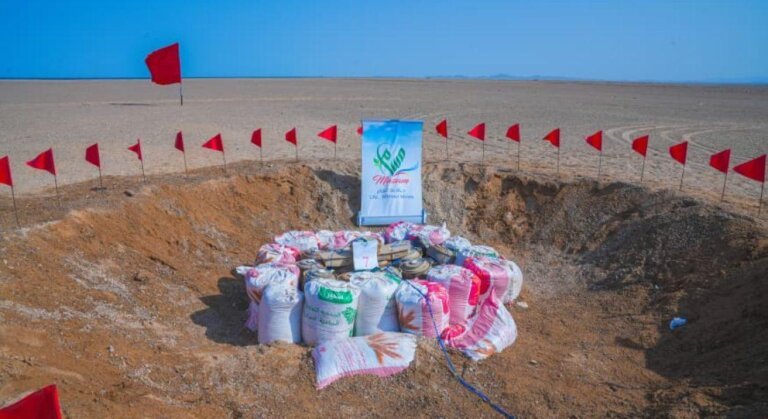
The agency is also providing psychosocial care and case management for unaccompanied children, and running awareness sessions on the dangers of unexploded ordnance.
It said it was working with Djibouti’s authorities to assist more than 2,000 Yemenis who have arrived there.
About the Author