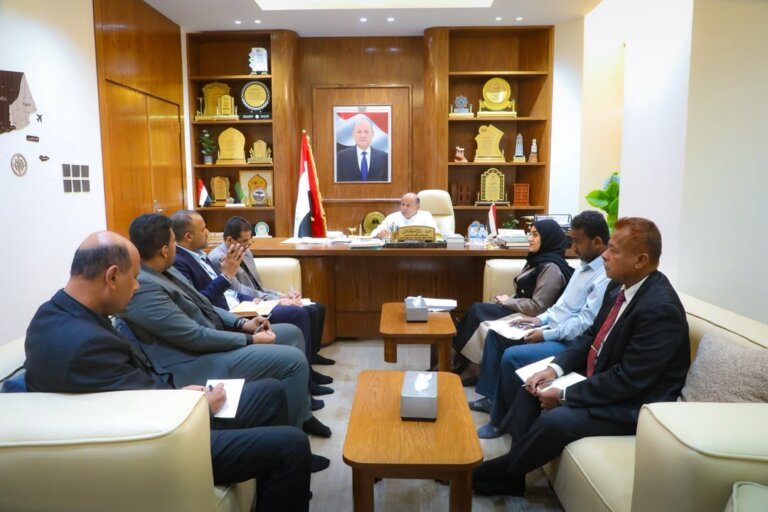
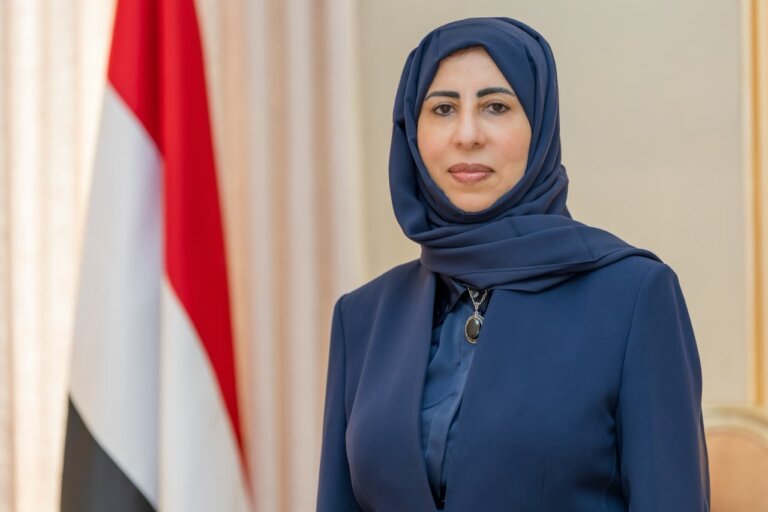
Planning Minister Mohammed al-Faqmi asks EU to anchor cooperation in Yemen’s 2027-2029 development plan
 Yemen Herald News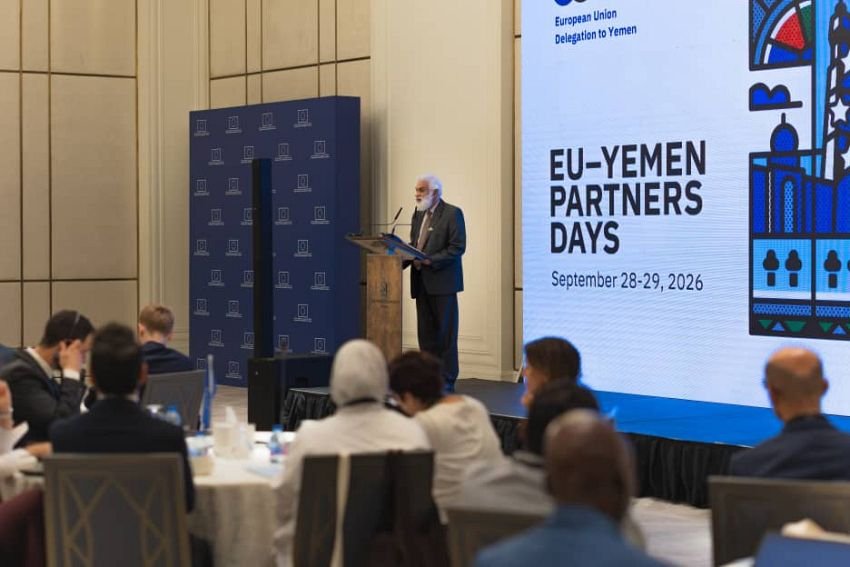
AMMAN, Jordan — Yemen’s planning minister asked the European Union on Monday to use his government’s 2027-2029 development plan as the reference for future cooperation programmes.
Mohammed al-Faqmi, minister of planning and international cooperation, spoke at the opening of the fourth Yemen-European Union Partnership Days in the Jordanian capital, the state news agency Saba reported.
Patrick Simonnet, the European Union ambassador to Yemen, attended. Ambassadors and representatives of EU member states, development partners and international organisations also took part, according to Saba.
Al-Faqmi set out the priorities of the government programme and what he described as its work on economic and institutional reform, the agency said.
He told the meeting his ministry is preparing an economic, social and reconstruction development plan covering 2027 to 2029.
He asked the European Union to adopt that plan as a reference for its coming cooperation programmes.
He also called for closer coordination through existing mechanisms, and for European partners to share project data with the ministry.
The programme runs two days. Saba said it covers sessions between Yemeni and European officials and development partners on areas of joint cooperation and on priorities for the next phase.
The account of the session rests on Saba, the news agency of the internationally recognised government. No independent account of the proceedings has been published.
Al-Faqmi chaired a first meeting on the same 2027-2029 plan on 24 September, Saba reported at the time.
He pressed the World Food Programme and other United Nations agencies on camp funding during the same week, according to the agency.
The European Union mission to Yemen said on 24 September it had signed three projects worth 24 million euros for the country’s farming and fisheries sectors.
Simonnet presented his credentials to Rashad al-Alimi, chairman of the Presidential Leadership Council, on taking up the post, the European External Action Service says. He marked Europe Day with a speech in Aden on 12 May.
The European Commission says the bloc has provided about 1 billion euros in humanitarian aid to Yemen since 2015, alongside roughly 500 million euros in development assistance. It put its humanitarian allocation for Yemen at 120 million euros in 2025.
The commission’s humanitarian allocations for Yemen were 125 million euros in 2024 and 145.12 million euros in 2023, according to its published figures.
The commission announced a humanitarian aid budget of 1.9 billion euros for 2026 across all its operations.
The plan al-Faqmi described would be drawn up against a contracting economy. The World Bank said in its Yemen Economic Monitor, published on 21 May, that the economy shrank by 1.5 per cent in 2025 and was projected to contract by a further 0.5 per cent in 2026.
The same report put government revenues at 5.6 per cent of gross domestic product and estimated that about 75 per cent of Yemenis live below the poverty line.
It said the United Nations response plan for the country was funded at 28 per cent of assessed needs, down from 56.5 per cent in 2024.
“Yemen’s economy continues to face profound challenges, with limited buffers to absorb new shocks,” said Dina Abu-Ghaida, the World Bank country manager for Yemen.
The report said the rial in areas held by the internationally recognised government appreciated in August 2025 and then steadied.
The European Community and Yemen signed a cooperation agreement in 1997.
The talks follow a month of new displacement inside Yemen. The International Organization for Migration said more than 145,000 people had been displaced across eight governorates since fighting escalated on the west coast in early September.
The agency put the figure at 145,308 people, or 24,218 families.
The United Nations said in mid-September that 93,864 people had been newly displaced, and that more than 2,400 crossed to Djibouti within four days of the escalation. It said more than 60 per cent of those arriving in Djibouti were women, children and elderly people.
Tom Fletcher, the United Nations emergency relief coordinator, released 9 million dollars from the Central Emergency Response Fund for the response, the organisation said.
The United Nations said the response included emergency shelter cash for 500 households and shelter repair kits for 1,000 households, and that humanitarian supplies in the country were running low.
The UN Office for the Coordination of Humanitarian Affairs said its Humanitarian Needs and Response Plan for 2026, issued in March, identified more than 22 million people in Yemen as needing assistance.
That plan recorded 18.3 million people as acutely food insecure and more than 2.2 million children under five as acutely malnourished, of whom 516,157 were severely malnourished.
It counted 5.2 million internally displaced people and sought 2.16 billion dollars to reach 12 million of those in need.
Yemen’s internationally recognised government is based in Aden. The Presidential Leadership Council, which al-Alimi chairs, has held executive authority since April 2022 under a power-transfer declaration.
The Houthi movement controls Sanaa and much of the north-west, including the Red Sea port of Hodeidah.
Yemen’s House of Representatives approved a general mobilisation the same day at al-Alimi’s request, Saba reported.
Asharq Al-Awsat reported fighting on fronts in Taiz, Lahj, Marib, al-Jawf and al-Bayda, and in northern areas.
The agency did not name the development partners or international organisations represented at the opening.
About the Author