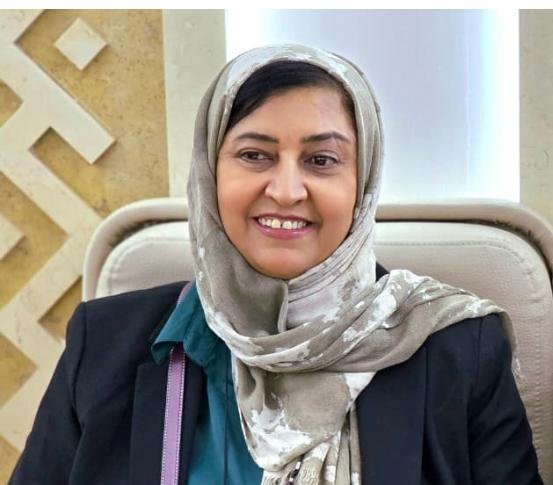
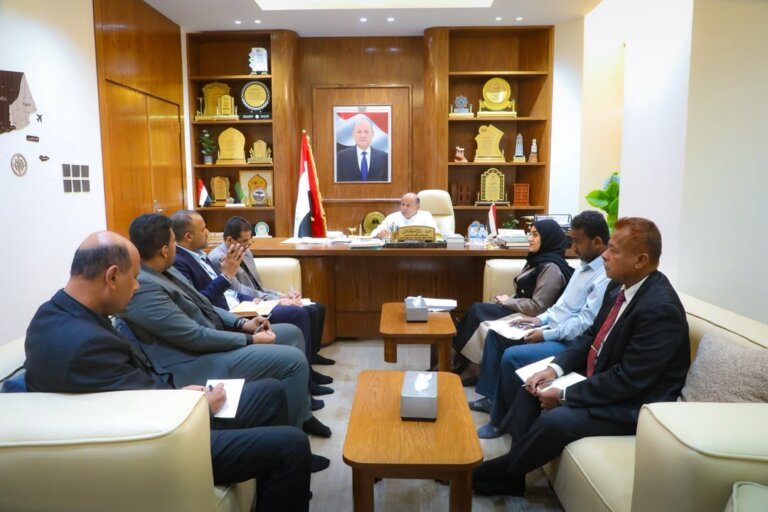
Foreign Minister Afrah al-Zouba says 1962 revolution set Yemen’s course of open foreign policy
 Yemen Herald News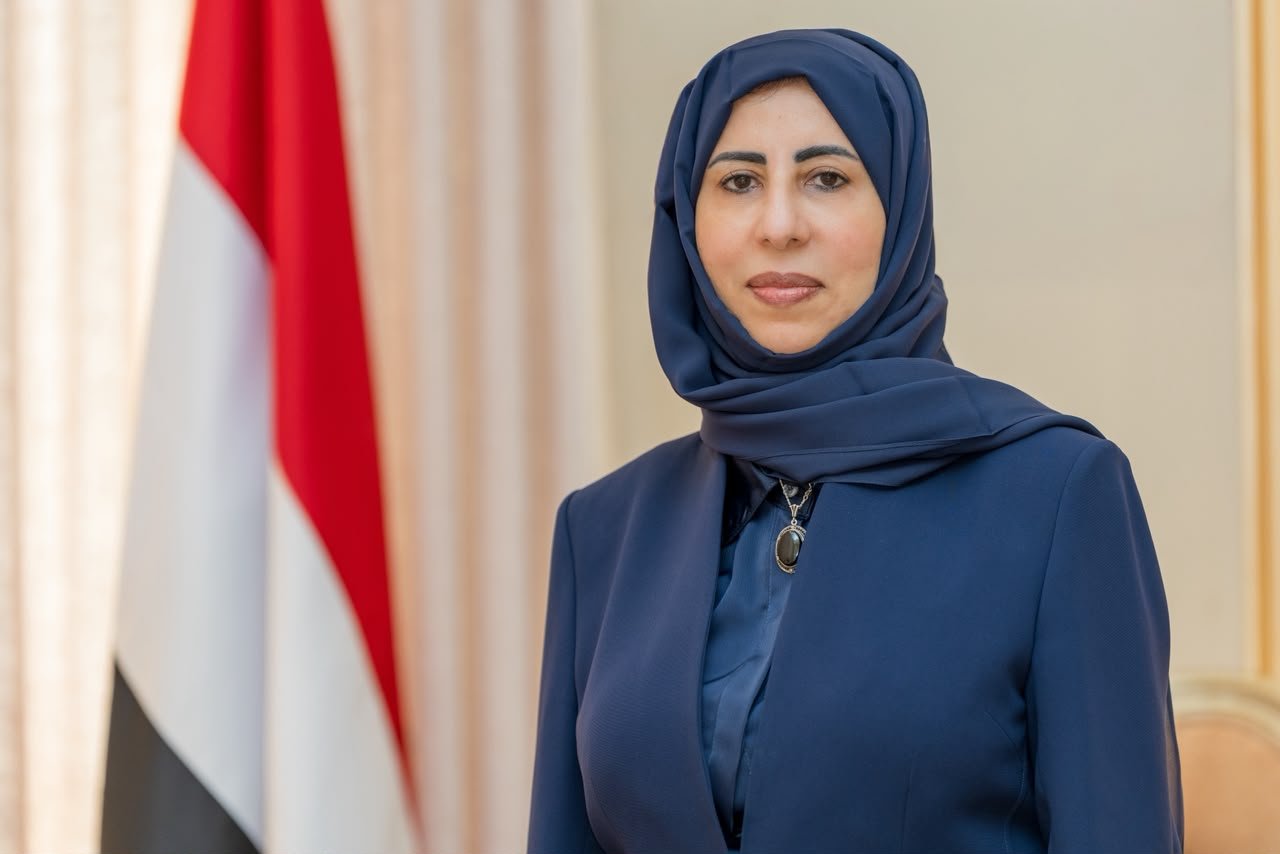
ADEN, Yemen — Yemen’s foreign minister said the 1962 revolution set the country on a foreign policy of openness and non-interference, in remarks marking its 64th anniversary.
Afrah al-Zouba made the comments in an interview with the state news agency Saba, which published them on 28 September.
She said the revolution established the right of Yemenis to a government based on popular will.
It ended decades of isolation and autocratic rule under the imamate, she said.
Al-Zouba said the revolution laid the foundations of a national state built on equal citizenship.
She said it turned Yemen into a sovereign republic with a constitutional system, a national army and administrative institutions.
The revolution widened access to education, health care and infrastructure and increased public participation, she said.
She said it strengthened the place of women in education, employment and public life.
Al-Zouba said the revolution produced a foreign policy resting on openness, good-neighbourly relations, respect for sovereignty and non-interference in the affairs of other states.
She said Yemen won international recognition after 1962 and built up its representation at the United Nations and the Arab League.
Al-Zouba accused the Houthis of trying to reproduce what she called the essence of the former imamate, by placing a single authority above state institutions.
She called for weapons and sovereign decision-making to be placed in the hands of the state.
The Houthi authorities, who hold Sanaa, reject that account of themselves and of the republic’s legacy.
The account of the interview rests on Saba, the news agency of the internationally recognised government, and no independent confirmation of it has been published.
Al-Zouba is the first woman to hold the foreign ministry, or any of Yemen’s most prominent cabinet posts.
She was appointed on 23 July 2026, according to Al Jazeera.
Al Jazeera reported that the appointment came as tensions between the government and the Houthis were rising.
She comes from al-Bayda in central Yemen and took a pharmacy degree at Sanaa University.
She later took a master’s degree in community health and health economics in Malaysia, and an MBA.
Al-Zouba spent more than 25 years in development and peacebuilding work before entering the cabinet.
Her early roles were with SOUL for Development and with USAID, on poverty reduction, access to health care and women’s employment.
She served as first deputy secretary-general of Yemen’s National Dialogue Conference between 2013 and 2015, working on draft constitutional frameworks.
The conference opened on 18 March 2013 and closed on 24 January 2014.
Its final document extended President Abd Rabbuh Mansur Hadi’s term by a year so he could carry out reforms and oversee the transition.
It called for parliament and the Shura Council to be restructured with equal numbers of northerners and southerners.
The document proposed turning Yemen into a federation of six regions: Azal, Saba, Janad and Tihama in the north, and Aden and Hadramawt in the south. Sanaa and Aden were to be given separate status.
Southern separatists and Houthi leaders rejected the federal plan.
The Houthis took Sanaa in September 2014. The government later moved its seat to Aden.
The United Nations invited her to take part in Yemeni peace consultations in Kuwait in 2016 and 2017.
She advised Prime Minister Maeen Abdulmalik on humanitarian relief in 2019.
She was appointed minister of planning and international cooperation in February 2026, five months before moving to the foreign ministry.
The anniversary she was asked about dates to a coup in Sanaa.
Imam Ahmad bin Yahya had died on 18 September 1962. His son Muhammad al-Badr was proclaimed imam and king the same day, and the ulama elected him on 19 September.
Al-Badr held the throne about eight days.
On 26 September 1962, army officers led by Colonel Abdullah al-Sallal deposed Imam Muhammad al-Badr and declared the Yemen Arab Republic.
Revolutionary forces shelled al-Badr’s palace during the night. He fled in soldiers’ clothing with family members and guards and reached Saudi Arabia.
Al-Sallal became the republic’s first president.
The war that followed ran from September 1962 to December 1970.
Egypt sent about 70,000 troops to fight for the republicans under President Gamal Abdel Nasser, and the Soviet Union supplied aircraft and equipment.
Saudi Arabia, Jordan and Israel supplied the royalists, and Britain gave covert help through mercenaries and airlifts.
Nasser pulled most Egyptian forces out after Egypt’s defeat in the 1967 war with Israel.
Al-Sallal was removed in November 1967, and a new republican government opened talks.
Saudi Arabia recognised the republic in 1970 and a ceasefire took hold, with royalists brought into republican institutions.
Al-Badr led the royalist side through the war. Royalists stripped him of authority in June 1968, leaving him a figurehead.
He left for England in 1970 and died in London in 1996.
The northern republic merged with the south in 1990 to form the Republic of Yemen.
The commemoration is contested inside the country today. Asharq Al-Awsat has reported that Houthi authorities mark the anniversary of their 2014 takeover of Sanaa and pass over 26 September.
Human Rights Watch has documented arrests in Houthi-held areas around the anniversary in previous years.
Saba published the interview two days after the anniversary fell.
About the Author