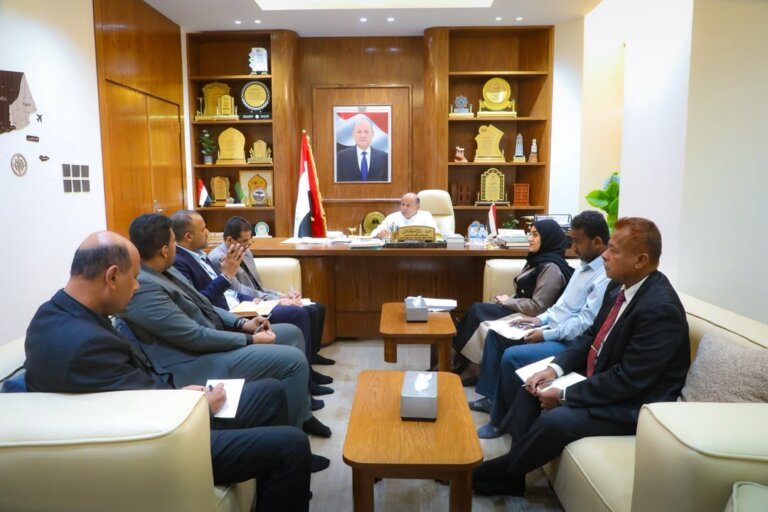
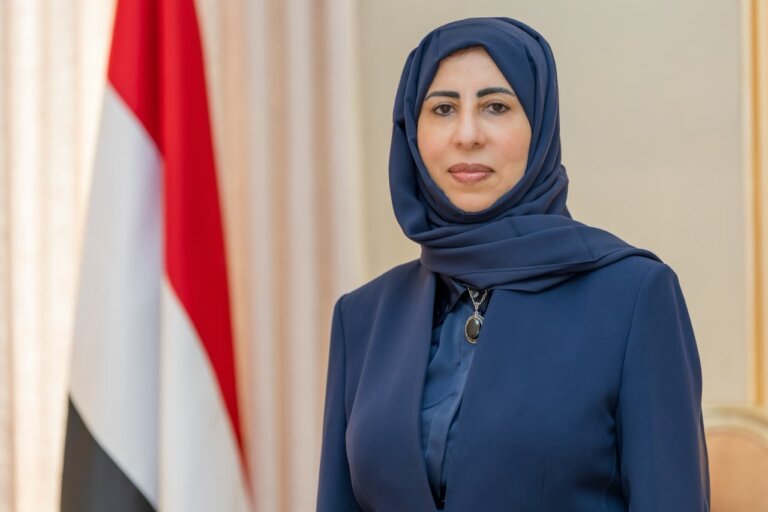
Shao Zheng restates China’s support for Yemen’s unity as relations reach 70 years
 Yemen Herald News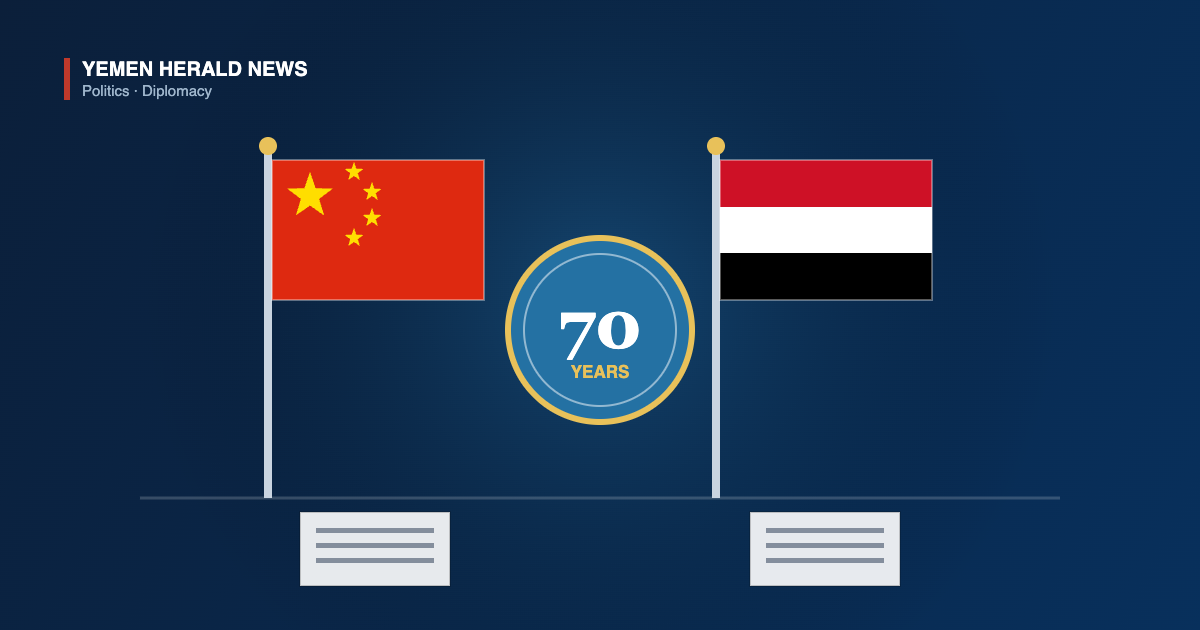
RIYADH, Saudi Arabia — China’s chargé d’affaires to Yemen restated Beijing’s support for Yemeni unity and the internationally recognised government on Tuesday, marking 70 years of relations between the two states.
Shao Zheng said China continues to support the Presidential Leadership Council and the Yemeni government in carrying out their duties, according to a statement carried by the state news agency Saba.
He said Beijing backs Yemen’s sovereignty, independence, unity and territorial integrity.
The statement marked the 70th anniversary of diplomatic relations between the two countries.
“The interactions and communication between the Chinese and Yemeni peoples go back thousands of years,” Shao said.
He said the basis of relations between states lies in the closeness of their peoples, and called that closeness the source of the friendship between the two countries.
Relations had passed through different stages across seven decades while that friendship held, he said.
Shao said Yemen has consistently adhered to the One China principle. He said the two countries had stood by each other on questions each treats as a core interest.
Saba reported no new agreement, funding commitment or project alongside the statement.
The account of the anniversary statement rests on Saba, the news agency of the internationally recognised government, and no independent confirmation of it has been published.
China and Yemen established relations at ministerial level on 24 September 1956, according to the Chinese foreign ministry.
The Yemeni party to that exchange was the Mutawakkilite Kingdom of Yemen, the Zaydi imamate that then ruled the north.
The ministry says the 1956 date was designated the official start of relations after Yemen’s unification in 1990.
Yemen was among the first Arab states to open ties with the People’s Republic of China, the news site Yemen Monitor reported this month.
Shao holds the rank of chargé d’affaires rather than ambassador.
The Chinese embassy to Yemen has operated from Riyadh since December 2015, the Chinese foreign ministry says. Its consulate general in Aden remains temporarily closed.
The move followed the Houthi takeover of Sanaa, after which most foreign missions to Yemen relocated to Riyadh or to Aden.
Trade between the two countries runs heavily in China’s favour.
Bilateral trade came to 2.49 billion dollars in 2024, according to the Chinese foreign ministry.
Chinese exports made up 2.47 billion dollars of that figure, mainly textiles and mechanical and electrical goods. Chinese imports from Yemen came to 20 million dollars.
China’s commercial weight in the region sits elsewhere. Chinese exports to Saudi Arabia reached 28 billion dollars in 2020, the centre says, against 2.47 billion dollars of trade with Yemen in 2024.
Trade between the two countries fell after the war began, according to the Stimson Center, a Washington research institute.
The two governments signed a memorandum on oil cooperation in 1996, the centre says.
China provided 11,700 metric tons of food aid to Yemen between 2017 and 2020, according to the same research.
Beijing has said it wants a negotiated end to the war. Shao said on 3 September that China would keep pressing for a political settlement of the Yemeni crisis through international forums, Yemen Monitor reported.
China backed Security Council Resolution 2014 in October 2011, which set out a political transition in Yemen, and Resolution 2216 in April 2015, which placed sanctions on Houthi leaders, the Stimson Center says.
A former Chinese ambassador to Yemen, Tian Qi, took part in UN-backed peace talks.
In an interview published in July 2024, Shao said China opposed attacks on commercial shipping and called for them to end.
He said Beijing was working to prevent disruption to global supply chains.
Shao said in that interview that China keeps contact with the Houthi leadership alongside other Yemeni parties, and coordinates with the United Nations special envoy, Hans Grundberg.
A Houthi delegation visited Beijing in December 2016. China’s foreign ministry condemned the group’s formation of a national salvation government a day after that visit ended, the Stimson Center says.
He also said he had attended a handover of Chinese medical supplies to Yemen of more than 1,000 items and 10 ambulances.
The anniversary of relations falls two days before Yemen’s 26 September commemoration.
On 26 September 1962, army officers led by Colonel Abdullah al-Sallal deposed Imam Muhammad al-Badr and declared the Yemen Arab Republic. Al-Sallal became its first president.
China had opened relations with the imamate those officers removed six years earlier.
The war that followed ran from September 1962 to December 1970.
Egypt sent about 70,000 troops to support the republicans under President Gamal Abdel Nasser, and the Soviet Union supplied aircraft and equipment.
Saudi Arabia, Jordan and Israel armed the royalists, and Britain provided covert help through mercenaries and airlifts.
Nasser withdrew most Egyptian forces after Egypt’s defeat in the 1967 war with Israel. Al-Sallal was removed in November 1967.
Saudi Arabia recognised the republic in 1970 and a ceasefire took effect, with royalists absorbed into republican institutions.
The date is contested in Yemen today. Asharq Al-Awsat has reported that Houthi authorities mark the anniversary of their own 2014 takeover of Sanaa and pass over the 26 September commemoration.
Human Rights Watch has documented arrests in Houthi-held areas around the anniversary in previous years.
Shao’s statement made no mention of the republic’s anniversary or of the war.
About the Author