Hadramout counts more than 5,100 displaced families as governor reviews relief effort
 Yemen Herald News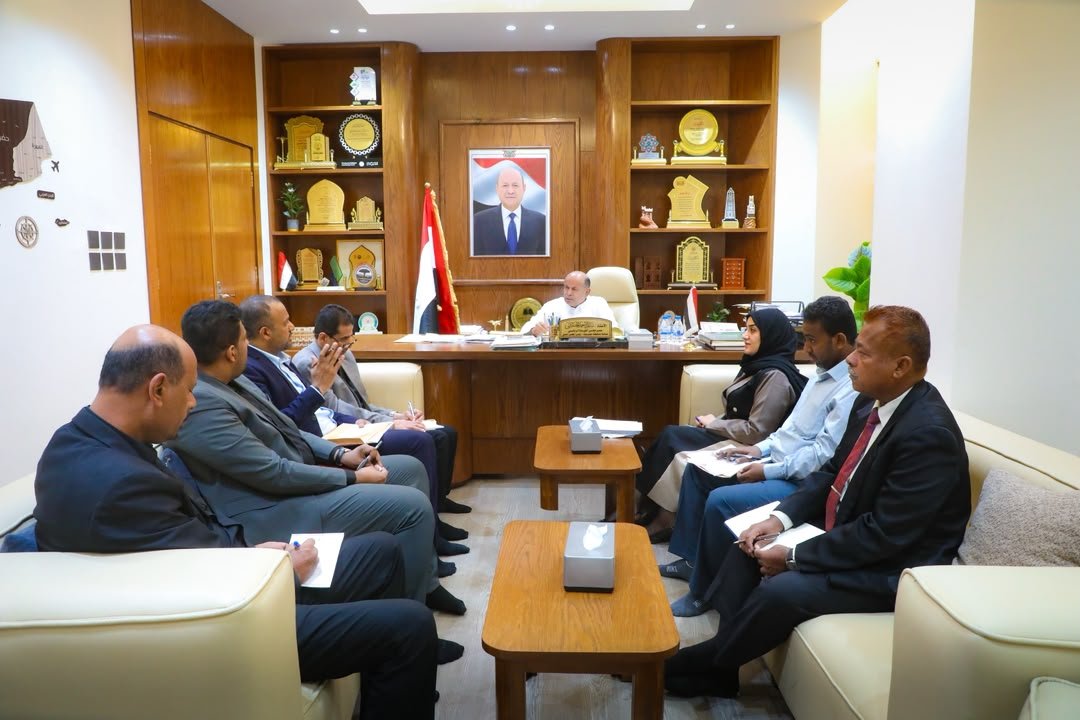
MUKALLA, Yemen — Hadramout’s governor has reviewed the governorate’s response to newly displaced families, as local officials counted more than 5,100 households sheltering there.
Salem al-Khunbashi, a member of the Presidential Leadership Council and governor of Hadramout, led the review. The state news agency Saba reported it on 29 September.
Murad Baalawi, assistant undersecretary of Hadramout for youth affairs, briefed him on the condition of the newly displaced, their numbers and their needs.
Baalawi said 214 displaced families were in the governorate’s coastal districts. He put the number in the valley and desert districts at 4,939.
The meeting called for closer coordination among government agencies, aid organisations and relief committees, Saba said.
It also called for more humanitarian and medical assistance, and for relief and medical convoys to be sent to affected areas.
Al-Khunbashi said the response should prioritise urgent needs, according to the agency. He asked that data on displaced families be updated regularly.
The account of the meeting rests on Saba, which is run by the internationally recognised government. No independent confirmation of the Hadramout figures has been published, and Yemen Herald could not verify them separately.
Saba attributed the displacement to a war waged by Houthi forces. The Houthi authorities reject that characterisation of the conflict.
The review follows a call for general mobilisation.
Rashad al-Alimi, chairman of the Presidential Leadership Council, made that call on 26 September. It was his first speech since government forces lost ground on the Red Sea coast, Al Jazeera reported.
He urged Yemenis to contribute in every way possible against the Houthis, according to the broadcaster. He offered an amnesty to Houthi fighters who defect.
Yemen’s parliament approved the general mobilisation at his request, Asharq Al-Awsat reported.
Parliament approved the request on 29 September at an expanded meeting held by videoconference, Asharq Al-Awsat reported. Speaker Sultan al-Barakani chaired it.
The newspaper said the approval rested on articles 37, 38 and 119 of the constitution, and cited the law establishing the National Defence Council, the General Reserve Law and the Civil Defence Law.
The measure takes effect immediately and stays in force until the reasons that prompted it have ended, according to the report.
It covers human, material and moral resources, and the strengthening of state institutions and the armed forces.
The National Defence Council will remain in continuous session to oversee it, the newspaper said.
Al-Alimi also proposed a safe return policy offering guarantees to residents of Houthi-controlled areas who leave the group and stop fighting, Asharq Al-Awsat reported.
The step followed the collapse of the 2022 ceasefire this month.
Houthi forces took the city of Mocha and Mayyun Island during the offensive, according to Al Jazeera. The island lies at the Bab al-Mandab strait, the entrance to the Red Sea.
Government forces briefly held Hays district in Hodeidah early in the month before losing it again within days, the broadcaster said.
A United Nations panel of experts estimated Houthi strength at about 350,000 fighters in 2024, Al Jazeera reported.
The fighting has moved large numbers of people.
Arab News said the movement of people followed Houthi advances on Yemen’s Red Sea coast, with fighting intensifying around the Bab al-Mandab strait. Mocha, which the Houthis took, is a Red Sea port.
Yemen’s Executive Unit for IDP Camps Management said nearly 147,000 people were displaced inside the country between 1 and 18 September. It released the figure on 20 September, Arab News reported.
The United Nations separately reported at least 112,000 people displaced within Yemen over a two-week period. It said nearly 3,000 others left by sea for Djibouti.
Taiz received the largest share, with 11,534 displaced families, according to figures carried by Arab News. Lahj took in 5,472 families and Aden 1,622.
Abyan, Hodeidah, Hadramout, al-Mahra, Shabwa and Marib also received displaced people, the newspaper said.
Hameed Mubarak, an aid worker in Mukalla, said most families had reached the city with little more than the clothes they were wearing.
Mohammed Radman, an aid worker in Taiz, described the crowding there. “Some have taken shelter in the homes of relatives; you might find four or five families living in a single house,” he said.
Camps in Yemen already held about 2 million displaced people before the September movement, according to the same report.
The United Nations set out the wider position earlier in the year.
The UN Office for the Coordination of Humanitarian Affairs said in its March 2026 plan that more than 22 million people in Yemen need assistance. It put the number who are acutely food insecure at 18.3 million.
More than 2.2 million children under five are acutely malnourished, the office said. It recorded 516,157 of them with severe acute malnutrition.
OCHA counted 5.2 million internally displaced people at that point. That figure predates the September movement.
The office appealed for 2.16 billion dollars to reach 12 million people this year.
Hadramout is Yemen’s largest governorate by area. Mukalla, on the Arabian Sea, is its capital and the main town of the coastal districts Baalawi referred to.
The governorate borders Saudi Arabia to the north and lies east of Marib and Shabwa.
Saba did not name the aid organisations represented at the meeting. It did not say when the convoys would be sent.
About the Author