Al-Zouba and Britain’s ambassador discuss Houthi escalation and Red Sea security in Riyadh
 Yemen Herald News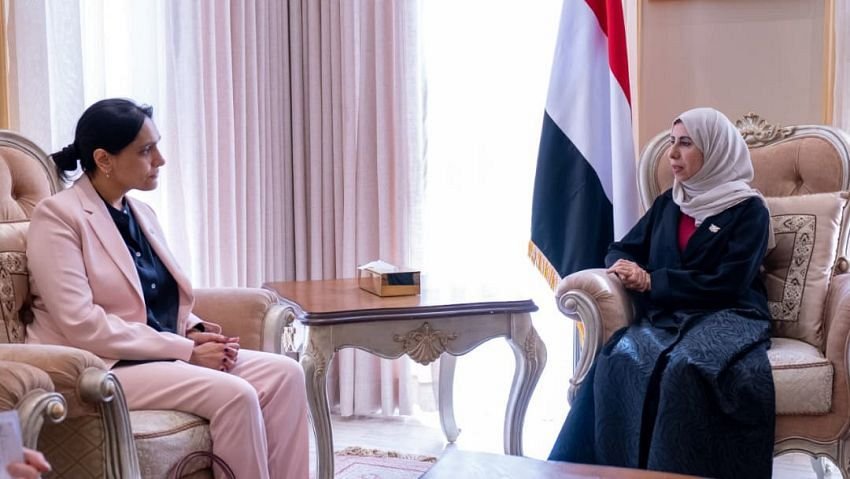
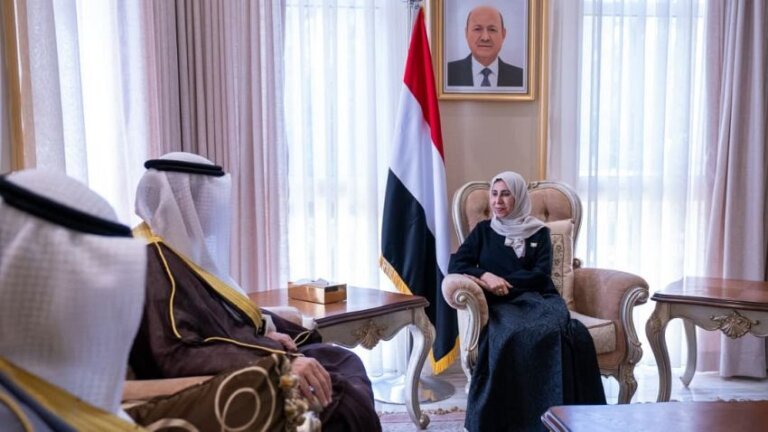
RIYADH, Saudi Arabia — Yemen’s foreign minister and Britain’s ambassador discussed the Houthi escalation and its effect on shipping in the Red Sea on Tuesday, the state news agency Saba reported.
Afrah al-Zouba, minister of foreign affairs and expatriates, met Abda Sharif, the United Kingdom’s ambassador to Yemen, in the Saudi capital.
The two went over the escalation by the Houthi forces and its bearing on regional security and maritime navigation, according to the agency.
They also discussed strengthening British and wider international support for the Yemeni government, Saba said.
Al-Zouba said protecting shipping routes is tied to the Yemeni state’s ability to secure its own coastline and territorial waters, the agency reported.
She raised cooperation on maritime security and support for Yemen’s coast guard.
The talks covered economic stability and essential services, with electricity and healthcare named as priorities, according to Saba.
The two also discussed the humanitarian response in food, healthcare and nutrition.
Sharif said Britain would use its seat on the United Nations Security Council and work with international partners on Yemen’s security, stability, development and humanitarian needs, the agency reported.
The account of the meeting rests on Saba, the news agency of the internationally recognised government. Yemen Herald could not independently confirm it, and no separate record of the talks has been published.
Britain’s embassy issued no readout of its own.
The meeting came during a run of Yemeni diplomatic contacts with London.
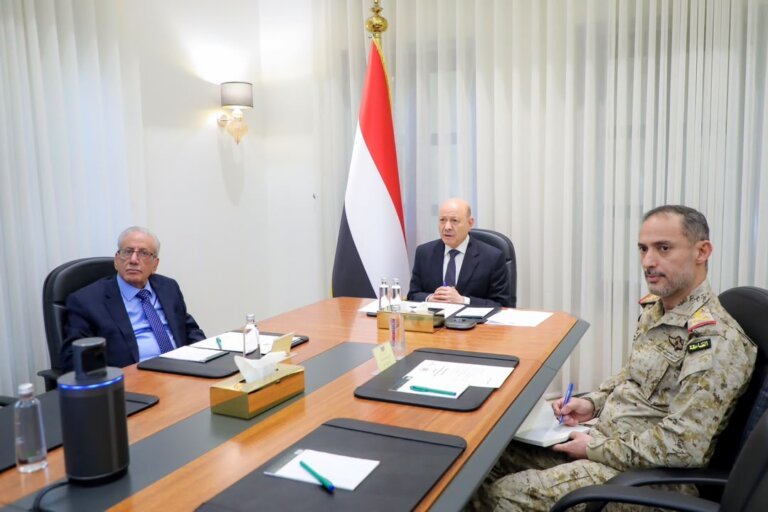
Rashad al-Alimi, chairman of the Presidential Leadership Council, met Sharif in Riyadh on 24 September and told her Yemeni forces can lead the fight against the Houthis.
Abdullah al-Alimi Bawazir, a member of the council, asked Britain to help upgrade Yemen’s coast guard and armed forces in talks with Stephen Doughty, Britain’s minister of state for the Middle East and North Africa, in New York on 25 September.
Britain announced 10 million pounds in emergency humanitarian aid for Yemen on 26 September, its foreign office said at the time, citing displacement from the escalation.
The money was earmarked for food, nutrition, healthcare and vaccines for displaced people, Asharq Al-Awsat reported.
Doughty said the Houthi escalation had caused devastating consequences and had undermined regional stability, according to the same report.
Al-Zouba held a series of meetings at the 81st United Nations General Assembly in New York in late September, the outlet reported.
She met UNICEF officials on health services and vaccines, Carl Skau, the acting head of the World Food Programme, on food security, and Mirjana Spoljaric Egger, president of the International Committee of the Red Cross, according to the report.
She also met Jorge Moreira da Silva, who heads the United Nations Office for Project Services.
Al-Zouba said thousands of civilians had been forced from their homes and that some families had been displaced for a third or fourth time, Asharq Al-Awsat reported.
She said the Houthis had obstructed vaccine deliveries and detained health workers. The Houthis reject such accounts and blame the government and its backers for the humanitarian situation.
The government lost control of Yemen’s Red Sea coast earlier in September, Al Jazeera reported on 23 September.
Fighting since then has displaced about 132,000 people, 75,000 of them in Taiz governorate, according to the same report.
Government forces seized Mount Qarafan in Taiz on 23 September and reported five Houthi fighters killed and 20 wounded, Al Jazeera said. Those figures come from the government and have not been independently confirmed.
Government forces also took Mount Zalat near Kahboub, which overlooks the Bab al-Mandab strait, according to the report.
Traffic through the Suez Canal has not recovered to pre-crisis levels.
Transits in the first week of 2026 ran 60 per cent below the corresponding week of 2023, according to BIMCO, the shipping association.
Niels Rasmussen, the group’s chief shipping analyst, gave the figure.
Quarterly deadweight tonnage through the canal has run between 51 and 64 per cent below 2023 levels since January 2024, according to BIMCO.
Container ship transits in the final quarter of 2025 were down 86 per cent against 2023, the association said.
Product tanker transits fell 19 per cent over the same quarter, against a 45 per cent drop in 2024.
War-risk cover for hulls stood at about 0.2 per cent of hull value in early December 2025, down from 0.5 per cent before the ceasefire.
Analysts told Al Jazeera the counterattacks remain local rather than a broad campaign to retake the coast.
Al-Zouba called for the disarmament of non-state armed groups at the General Assembly, the outlet reported.
The Houthis say Saudi aircraft struck several provinces in the same period. Riyadh has not confirmed those strikes, according to Al Jazeera.
Abdullah al-Alimi Bawazir led Yemen’s delegation to the General Assembly.
Yemen’s foreign ministry has operated from Riyadh since the government left Sanaa, and most foreign missions to Yemen are based in the Saudi capital or in Aden.
More than 22 million Yemenis need humanitarian assistance, according to the United Nations humanitarian needs and response plan published in March 2026.
The plan seeks 2.16 billion dollars to reach 12 million people.
It reports 18.3 million people acutely food insecure and 5.2 million internally displaced.
It counts more than 2.2 million children under five acutely malnourished, 516,157 of them severely.
About the Author