Al-Alimi says armed forces will end the war as he reviews Taiz front with commanders
 Yemen Herald News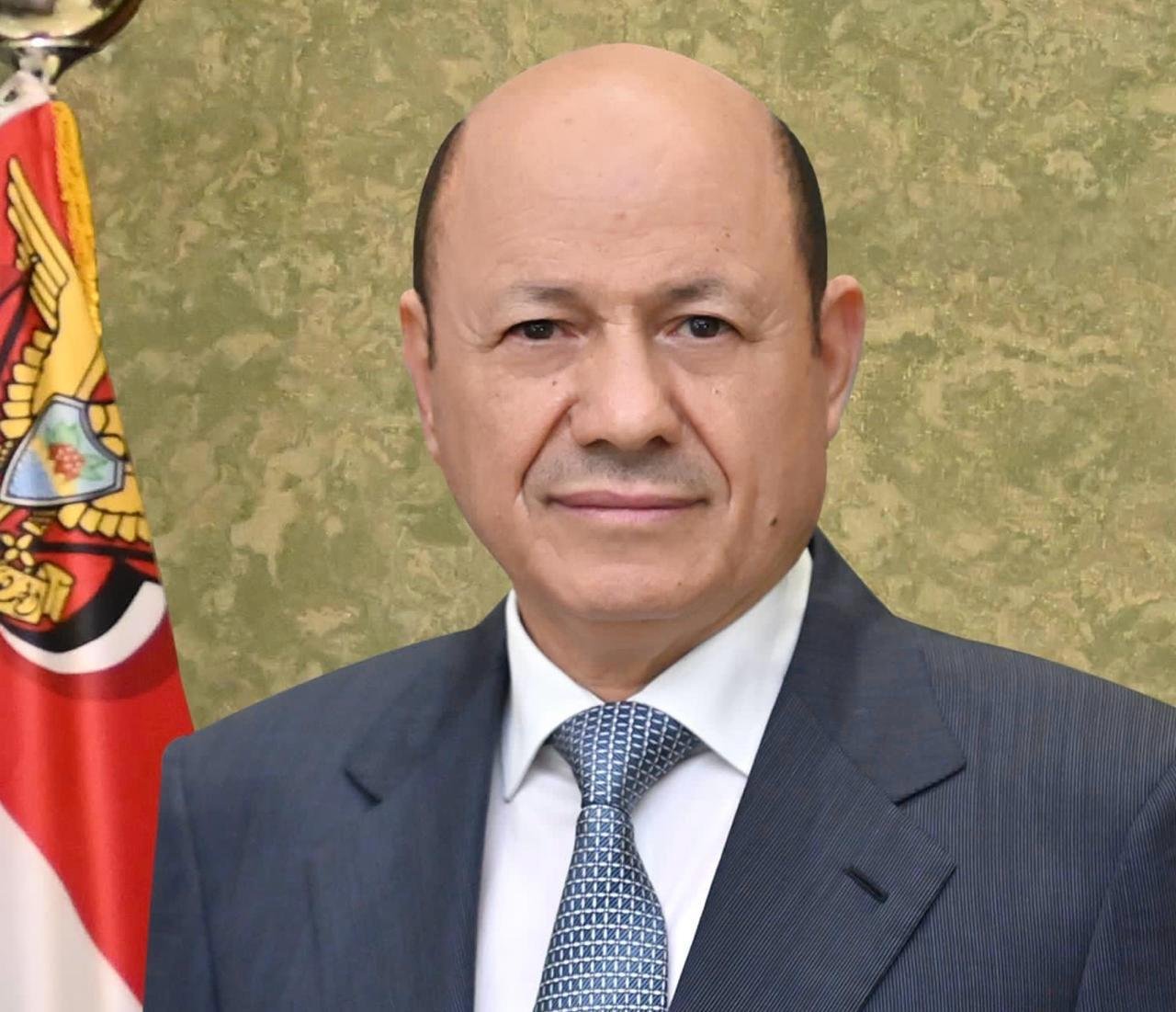
ADEN, Yemen — Yemen’s president said his armed forces would end the war with the Houthis, after reviewing the Taiz front with his military commanders on Thursday.
Rashad al-Alimi, chairman of the Presidential Leadership Council, said the Houthis had started the war and chosen escalation, according to the state news agency Saba.
He said the armed forces, with the will of the people and the support of what he called Yemen’s brothers, would end it in a way that fulfilled Yemenis’ aspirations to restore their state, security, freedom and dignity.
Al-Alimi said operations would proceed “with steadiness and responsibility”.
He said they aimed to restore state institutions and the capital, Sanaa, end what he called the coup, and stop the cycle of war and suffering.
That language is the government’s. The Houthis reject it, and describe the fighting in different terms.
Saba said the remarks came during contacts on Thursday with members of the Presidential Leadership Council, the defence minister, the chief of staff and senior commanders leading operations.
Al-Alimi, who is also commander-in-chief of the armed forces, held consultations on battlefield developments in Taiz governorate, the agency said.
He was briefed by two council members, Lt. Gen. Abdulrahman al-Mahrami and Gen. Mahmoud al-Subaihi, Saba reported.
The defence minister, the chief of staff, the commander of the Fourth Military Region and senior military and security commanders in the governorate also briefed him, according to the agency.
They reported on measures taken against attacks and infiltration attempts that the government attributes to the Houthis over the preceding hours.
This account rests on Saba, Yemen’s state news agency. No independent confirmation of the meeting or of the president’s remarks has been published.
The Presidential Leadership Council was formed in April 2022. Al-Alimi has chaired it since.
Al-Mahrami, also known as Abu Zara’a, and al-Subaihi, a former defence minister, both sit on the council.
The Houthis give a different account of the fighting.
They said Saudi forces had carried out 52 air strikes and missile attacks across several governorates, causing deaths and injuries including women and children, Al Jazeera reported last week.
They put the total at 988 attacks since the escalation began, without giving casualty figures, according to the same report.
Hazem al-Assad, a member of the Houthi politburo, has said navigation in the Red Sea remains “safe and orderly”.
Government forces have given their own account of recent engagements in Taiz.
Col. Majid al-Nuzaili, a spokesman for government forces, said on Sept. 24 that the Houthis had launched coordinated attacks on positions along the road linking Aden, Lahj and Taiz.
He said government forces repelled them in the Wadi al-Maqatirah area, Al Jazeera reported.
Fighting on the west coast and around Taiz has continued since early August. Each side disputes the other’s account of territorial gains.
Houthi forces took Mocha port and Mayyun Island, also known as Perim, in September, Al Jazeera reported.
Their units were positioned about 20 kilometres from the African coast after those advances, according to the same report.
Bab al-Mandab handles roughly 12 percent of global trade, including 11 percent of seaborne oil and 8 percent of liquefied natural gas.
Shipping volume and tonnage through the Red Sea fell by between 50 and 55 percent from 2023 to 2025, Al Jazeera reported, citing IMF PortWatch data.
Vessels routed around the Cape of Good Hope add more than 20 days to a voyage.
Egypt lost about 7 billion dollars between 2023 and 2024, around 60 percent of Suez Canal revenues, according to official figures cited in the report.
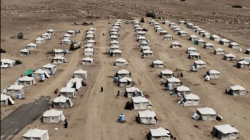
The fighting has displaced people in large numbers. The International Organization for Migration counted 145,308 people displaced since insecurity escalated in June, about 24,218 households across eight governorates.
The agency recorded 15,870 of those movements between Sept. 21 and Sept. 28, a rise of 12 percent in a week.
IOM said three districts of Taiz had emptied: Maqbanah, Jabal Habashi and Al Ma’afer.
Displaced families moved into Lahj and Aden, and northward into Ibb, according to the agency.
The World Health Organization put the toll since Aug. 6 at 674 killed and close to 3,000 wounded by late September.
The UN Office for the Coordination of Humanitarian Affairs recorded at least 14 civilians killed or wounded in the first days of September, among them two children.
The United Nations said 60 percent of Yemen’s health facilities were fully operational.
Marib General Hospital suspended maternity services to take trauma cases, according to the same UN account.
Tom Fletcher, the UN emergency relief coordinator, released 9 million dollars from the Central Emergency Response Fund for the response in Yemen.
Stephane Dujarric, the UN spokesman, said humanitarian supplies were running low and called on the parties to allow aid access.
More than 2,400 people crossed into Djibouti over four days in September, the UN refugee agency said.
It said more than 60 percent of those arriving were women, children and elderly people.
The United Nations humanitarian plan for 2026 counted 5.2 million people already displaced inside Yemen before the current escalation.
The plan put the number needing aid at more than 22 million, with 18.3 million acutely food insecure.
It recorded more than 2.2 million children under five as acutely malnourished, 516,157 of them severely.
The plan sought 2.16 billion dollars to reach 12 million people.
Sanaa has been under Houthi control since 2014.
About the Author