Yemen’s armed forces say air defences downed Houthi drones over Aden
 Yemen Herald News

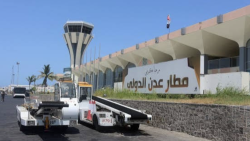
ADEN, Yemen — Yemen’s armed forces said their air defences shot down Houthi explosive-laden drones over Aden on Friday before the aircraft reached residential districts.
Armed forces spokesman Majid al-Nuzaili said air-defence units destroyed the drones over the interim capital “before they could strike civilian areas”.
The account rests on the armed forces’ own statement. No independent confirmation of the interception has been published, and Yemen Herald could not verify it.
No deaths or injuries were reported. Yemen Herald found no Houthi response to the statement.
It was the first reported drone interception over Aden since 24 August, Anadolu Agency said.
On that date government forces said they were engaging Houthi drones west of Aden at dawn and intercepting them before they reached their target, Yemen Monitor reported. The forces gave no further detail at the time.
The Houthis made no immediate response to the August interception, Yemen Monitor said at the time.
Aden has served as Yemen’s temporary capital since 2015, when Houthi forces took Sanaa. It is the seat of the internationally recognised government and of the Presidential Leadership Council.
The council was formed in April 2022, when President Abed Rabbo Mansour Hadi transferred his powers to it.
The council took the city from the Southern Transitional Council on 7 January, capturing the international airport and the presidential palace.
Saudi Arabia said Southern Transitional Council leader Aidarus al-Zubaidi left Aden for the United Arab Emirates. The council disputed that account and said he had remained in the city. The group’s secretary general announced its dissolution two days later, a statement other figures in the group disputed.
In the same announcement on Friday, the armed forces said they had struck targets in Sanaa and 11 targets in Saada province.
The air force carried out 20 strikes on Houthi positions in Taiz province over three hours, the statement said. The Taiz Military Axis reported clashes on the city’s northern front.
The armed forces said the strikes scored direct hits on their targets. They gave no independent evidence.
Those claims also rest on the armed forces’ account. Yemen Herald found no independent confirmation of them.
Fighting around Taiz has intensified since late September. Government forces reported clashes on more than a dozen fronts on 1 October, among them Jabal Habashi, al-Wazi’iyah and Salo, Arab News reported.
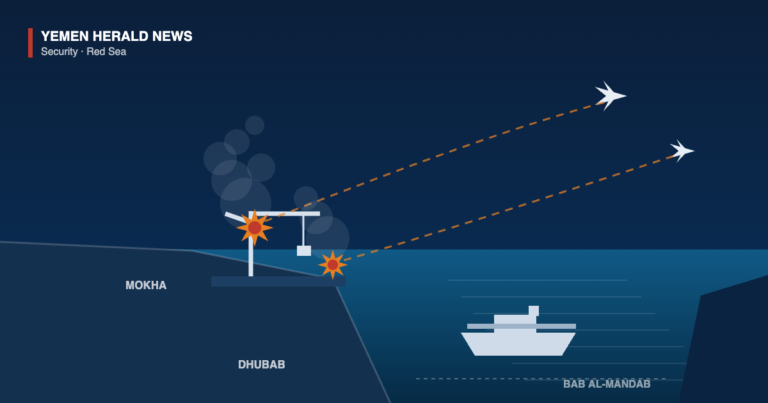
That report said weapons depots in eastern Saada were targeted and a mobile air-defence system was struck near Mokha on the Red Sea coast. The Houthis took Mokha in September.
The Media Center for Field Developments of the Taiz military axis said the strikes destroyed artillery, ammunition depots and a 120mm cannon, Arab News reported. It said Iranian-developed air-defence systems were among the equipment hit.
Government warplanes carried out dozens of strikes on Houthi positions on the outskirts of Taiz, The National reported on 2 October. Fighting reached residential neighbourhoods east of the city.
Taiz lies about 100 kilometres from Mokha, The National said.
Al-Nuzaili told the newspaper the strikes “killed dozens of Houthi fighters and reinforcements, and destroyed equipment and vehicles belonging to the group”. He gave no figures, and the Houthis dispute government accounts of their losses.
Taiz city has been held by government forces and ringed by Houthi positions for most of the war. The province links the Houthi-held north, the government-held south and the Red Sea coast.
UN Special Envoy for Yemen Hans Grundberg said on 1 October he was alarmed by the fighting in Taiz governorate.
Operations by Ansar Allah, the Houthi movement’s formal name, “pose grave risks to the civilian population”, Grundberg said. He repeated a call on the group to halt its offensive.
He cited casualties, damage to infrastructure and road closures that prevented civilians leaving. Taiz hosts most of the Yemenis newly displaced by the recent fighting, he said.
“Civilians and civilian infrastructure must be protected,” Grundberg said. He called for safe and unhindered access to people in need and said he remained in contact with the government and Ansar Allah.
The International Organisation for Migration has recorded more than 149,000 people displaced, most of them from Taiz and Lahj, The National reported. It expects the figure to rise.
Matthew Hollingworth, assistant executive director of the World Food Programme, said the effect of the flare-up on the food situation “threatens to be absolutely devastating”.
Seventy-four per cent of households in government-controlled areas cannot meet their basic food needs, according to figures cited in the same report.
Aden came under attack again on Saturday. Ground-based air defences opened fire over al-Buraiqah district after ballistic missile and drone attacks on military positions in the city, Yemen Monitor reported.
Presidential Leadership Council member Abdulrahman al-Muharrami chaired a meeting in Aden the same day with officers of the Joint Operations Command and commanders of the Seventh Brigade of the Southern Armed Forces.
He directed units to raise their readiness and combat preparedness and to strengthen vigilance along the front lines, the report said.
Neither the government nor the Saudi-led coalition had published a damage assessment from Saturday’s attacks.
The coalition intercepted a ballistic missile headed toward Khamis Mushait in southern Saudi Arabia, The National reported on 2 October.
Saada, where the armed forces said 11 targets were hit, is the Houthi movement’s home province in Yemen’s far north.
About the Author