Saudi Arabia plans offensive to retake Yemen’s Red Sea coast, Axios and Reuters report
 Yemen Herald News
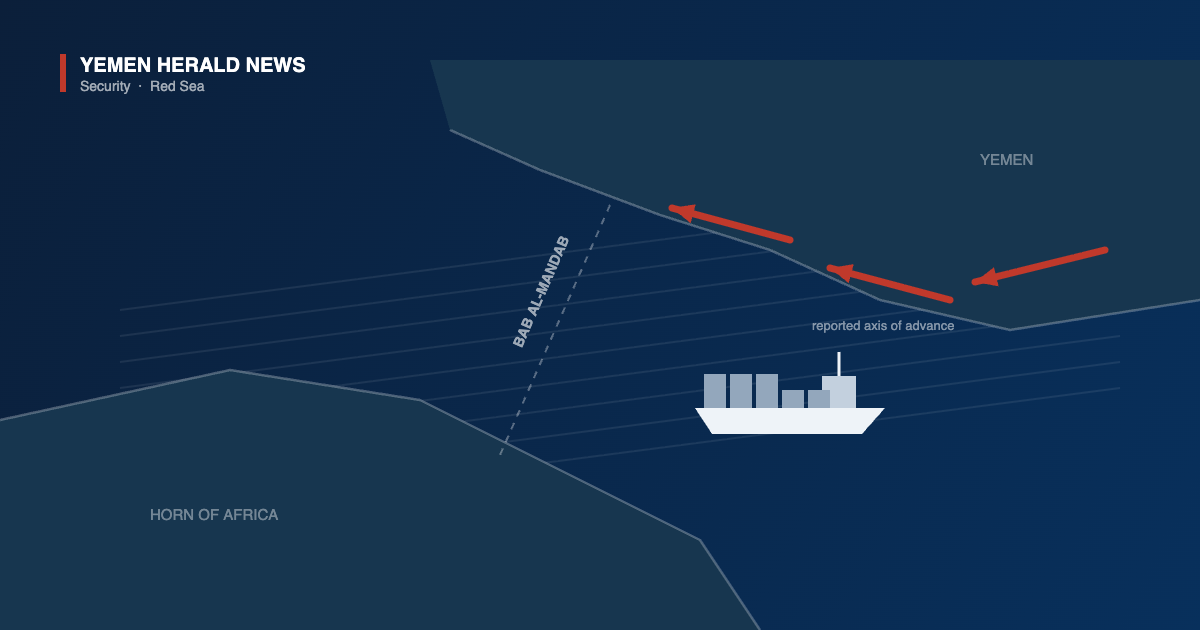
ADEN, Yemen — Saudi Arabia and Yemeni government forces are preparing an offensive to retake Red Sea coastline controlling the Bab al-Mandab Strait, Axios and Reuters reported.
Both outlets published their accounts on Oct. 2. Neither Saudi, Yemeni, Houthi nor US military spokespeople commented on the reports.
Axios said ground forces loyal to Yemen’s internationally recognised government would carry out the operation. It said Saudi air power would support them.
The report was written by Barak Ravid and cited two US officials. Further unnamed officials provided background.
Reuters reported the same plan from its own sources. Its account cited six people with knowledge of Saudi preparations, along with regional, Western, Gulf and Yemeni officials.
The Reuters report carried the bylines of Timour Azhari and Mubasher Bukhari.
Reuters said Riyadh was weighing two options. One is a narrow assault along the coast at Bab al-Mandab.
The second is a broader campaign across several fronts, Reuters said. It named Al-Bayda, Marib, Taiz and Al-Jawf governorates.
More than 100,000 Yemeni troops could be mobilised depending on the scale chosen, according to Reuters. It said the operation would be led by Yemeni forces on the ground, overseen by Riyadh.
Axios said the operation was planned for the coming days. Reuters put the timing at within weeks, and as late as early November.
Saudi approval came several days before the reports were published, according to Axios.
The Trump administration has declined to join the operation with direct strikes, both outlets reported.
A US official told Axios the United States “is not going to take kinetic action for now.” Officials indicated to Axios that the position could change if the offensive ran into difficulty.
Axios said the administration wanted to avoid opening a second front in the Middle East. It said US Central Command had reservations, viewing a Yemen operation as a distraction from Iran.
Axios reported that the United States had turned down a Saudi request to take part for the second time in recent weeks.
Reuters reported that President Donald Trump rebuffed requests from Crown Prince Mohammed bin Salman for direct military support such as air strikes.
The United States is providing intelligence and targeting information for Saudi air operations, according to Reuters.
Axios said the US military had supplied more than 200 Houthi targets to strike within two weeks.
Axios named Saudi Defence Minister Prince Khalid bin Salman and US Defense Secretary Pete Hegseth among those involved in the exchanges.
Reuters reported that Pakistan had deployed military equipment and between 30,000 and 40,000 troops to Saudi Arabia for defensive purposes. It cited Pakistani government officials.
Turkish drones are deployed over Yemen, according to Reuters. It said France was sending defensive systems to protect Yanbu.
Analysts quoted by Reuters questioned how far the operation could go.
“Many anti-Houthi forces are still not organized or prepared for the kind of sustained offensive required,” said Mohammed Albasha, a Yemen analyst.
Michael Ratney, a former US ambassador to Saudi Arabia, told Reuters the operation would likely be narrowly focused rather than an attempt to rout the Houthis.
“Success greatly depends on the quality of the performance of the local forces,” said Ali Shihabi, a Saudi political analyst.
Both accounts rest on unnamed officials. The parties named in them have not confirmed the plan, and the Houthis have not responded to it publicly.
Yemen Herald could not independently establish that an operation has been ordered. The two reports draw on separate sourcing networks and were published the same day.
Bab al-Mandab links the Red Sea to the Gulf of Aden. Shipping bound for the Suez Canal passes through it.
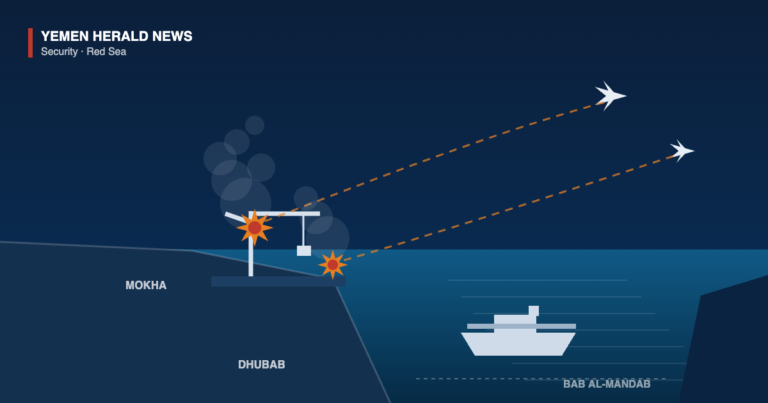
Houthi forces took the Red Sea port of Mokha on Sept. 10. Tareq Saleh, vice chairman of the Presidential Leadership Council, and a Houthi commander both confirmed the loss of the town.
“With the fall of Mokha, Bab Al Mandeb can be considered under the administration of our forces,” the Houthi commander said.
Pro-government forces pulled back to Dhubab, 46 kilometres south of Mokha.
Transits through the strait fell in the days around the seizure, according to preliminary data from the analytics firm Kpler. It recorded 29 crossings on the Monday and 26 on the Tuesday.
Kpler counted 30 crossings on the Wednesday, 17 of them entering the Red Sea. By 6 p.m. on the Thursday the count was 12 crossings, with one vessel entering.
Fighting in southwest Yemen has displaced more than 145,000 people since early September, according to a UN inter-agency flash update covering Sept. 15 to Sept. 28.
The update said displacement was concentrated on the western coast and the southern Taiz frontlines. It said the figure had doubled in two weeks.
Volker Türk, the UN high commissioner for human rights, said on Sept. 24 that his office had documented the killings of 32 civilians since the start of August. He said about 125 civilians had been killed or wounded over that period.
Those counts are the rights office’s own, and Yemen Herald could not independently verify them.
The UN Security Council is due to hold a briefing on Yemen this month. Hans Grundberg, the UN special envoy, is among the expected briefers.
The Yemen sanctions regime set out in Security Council resolutions 2140 and 2216 expires on Nov. 14.
About the Author