France pledges 3 million euros more for Yemen as UN agency reports 184,000 displaced
 Yemen Herald News
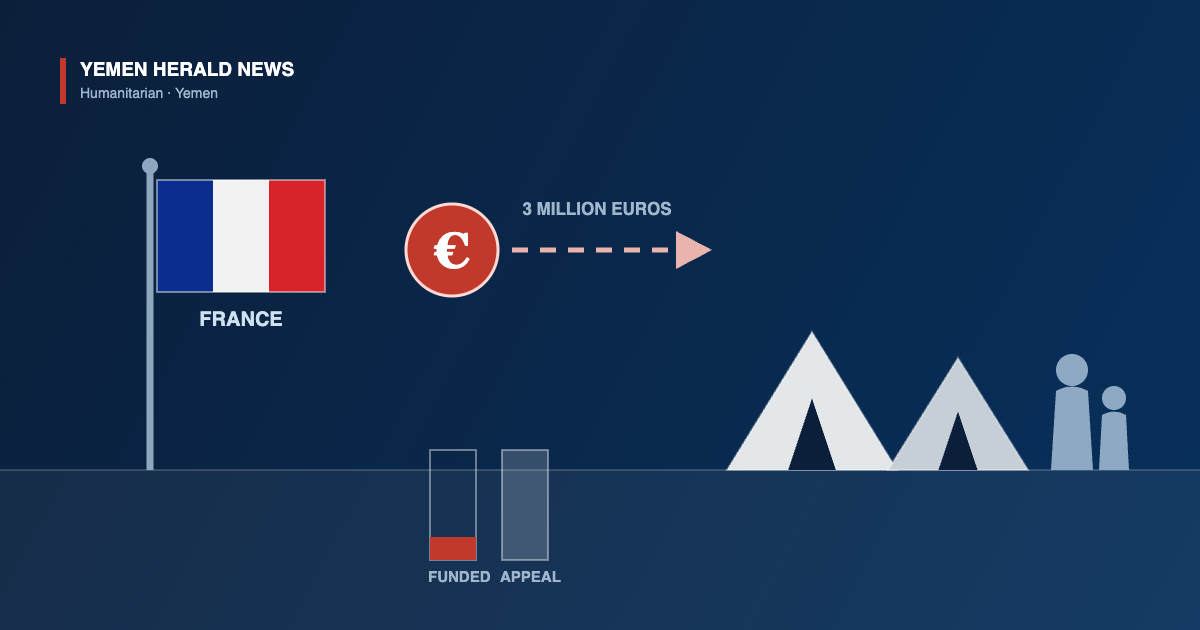
PARIS, France — France pledged an additional 3 million euros in humanitarian aid for Yemen on Tuesday, Foreign Minister Jean-Noël Barrot said, citing a new shock from fighting at Bab al-Mandab.
The sum is worth about 3.36 million dollars.
It raises France’s humanitarian assistance to Yemen for 2026 to more than 7 million euros, Barrot said.
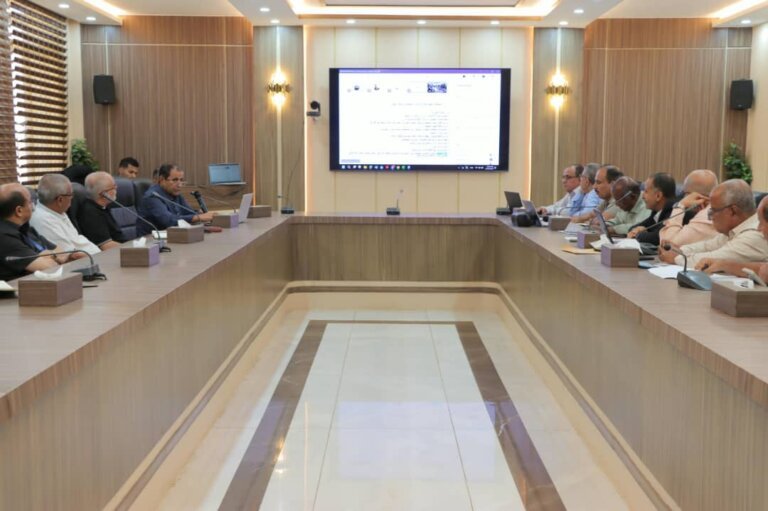
He spoke to representatives of humanitarian organisations in Paris.
“The Houthi offensive in the Bab al-Mandeb Strait has triggered a new humanitarian shock,” Barrot said.
The French foreign ministry described the money as support for the Yemeni people.
It did not name the agencies that will receive it.
Barrot used the same appearance to announce 7 million euros for the response to Ebola in the Democratic Republic of Congo.
France is one of several donors to have directed money to Yemen in the past week.
The UN Central Emergency Response Fund released 18 million dollars for Yemen on 2 October.
The money came from a 160 million dollar allocation covering 12 underfunded crises.
Tom Fletcher, the UN emergency relief coordinator, said the organisation needs to reach 87 million people in the most severe crises this year.
He said delays in access risk leaving vulnerable communities without help.
The pledges follow a steep rise in displacement inside Yemen.
The International Organization for Migration said on 5 October that 184,000 people had been displaced between 1 August and 4 October.
Most of them moved after 1 September, the agency said.
Its Displacement Tracking Matrix recorded 21,798 people, or 3,633 households, displaced in the week to 3 October.
That was a 26 percent increase on the previous week.
A further 6,474 people were displaced on 4 October alone, IOM said.
About 45 percent of the households it assessed had been displaced at least once before.
“As the conflict intensifies, more and more people are thrown into an appalling cycle of displacement, living in fear of their lives and with their futures uncertain,” IOM Director General Amy Pope said.
The agency carried out rapid protection assessments at three displacement sites in Marib.
It found a lack of safe shelter and a shortage of suitable latrines.
People with disabilities, female-headed households, children and older people faced overlapping risks, IOM said.
The agency said those displaced need food, shelter and basic humanitarian assistance.
Earlier counts were lower.
The Security Council Report, an independent group that tracks the UN Security Council’s agenda, put displacement since early August at 125,000 in a report covering the period to 24 September.
OCHA had counted 5.2 million people displaced inside Yemen before this year’s escalation.
The wider appeal for the country remains largely unmet.
OCHA’s humanitarian needs and response plan for Yemen, issued in March, sought 2.16 billion dollars to reach 12 million people.
The plan was drawn up before the Houthi advance on the Red Sea coast in September.
UN data cited this week put the plan at 20.6 percent funded.
The plan recorded more than 22 million people in need of assistance and 18.3 million facing acute food shortages.
It counted more than 2.2 million acutely malnourished children under five, including more than 500,000 with severe acute malnutrition.
About 1.3 million pregnant and breastfeeding women were also malnourished.
Yemen’s health ministry recorded 11,982 severe malnutrition cases in Taiz between January and July, alongside 24,529 moderate cases.
It recorded 7,339 severe cases in Aden and 6,710 in Dhale over the same period.
The ministry said severe malnutrition rose in 2026 compared with the previous year.
It also counted 269 acutely malnourished children in Dhale between January and August.
In Abs district it documented more than 200 cases over three years.
A government nutrition clinic operates in the al-Sumayya displacement camp in Marib, directed by Dr. Muajiba al-Mansouri.
Earlier appeals also fell short.
In 2024 donors provided 1.51 billion dollars of the 2.71 billion sought.
In 2022 they provided 2.27 billion dollars of the 4.27 billion sought.
The fighting Barrot referred to reshaped control of Yemen’s Red Sea coast last month.
The Security Council Report said Houthi forces took the port city of Mokha from government-aligned units on 10 September.
The group said the Houthis captured Perim Island in the Bab al-Mandab Strait the following day and took control of Yemen’s west coast.
It said the shift posed risks to maritime security, regional stability and civilians.
Yemen’s internationally recognised government disputes the extent of those gains and has announced operations to retake the coast.
The Security Council Report also said about 3,000 people crossed the strait to seek refuge in Djibouti.
The strait links the Red Sea to the Gulf of Aden.
Japan announced a separate emergency grant on the same day as the French pledge, its foreign ministry said.
It allocated 8 million dollars to Yemen and 2 million dollars to Djibouti, a package of 10 million dollars.
The Yemen money goes to the World Food Programme, the International Committee of the Red Cross and the International Organization for Migration.
The Djibouti money goes to the UN refugee agency for protection, shelter and non-food items.
Japan said it acted because the deterioration in Yemen was reaching neighbouring states.
The ministry said peace and stability around the Bab el-Mandeb Strait was of utmost importance to the international community, including Japan, from the perspective of energy security.
About the Author