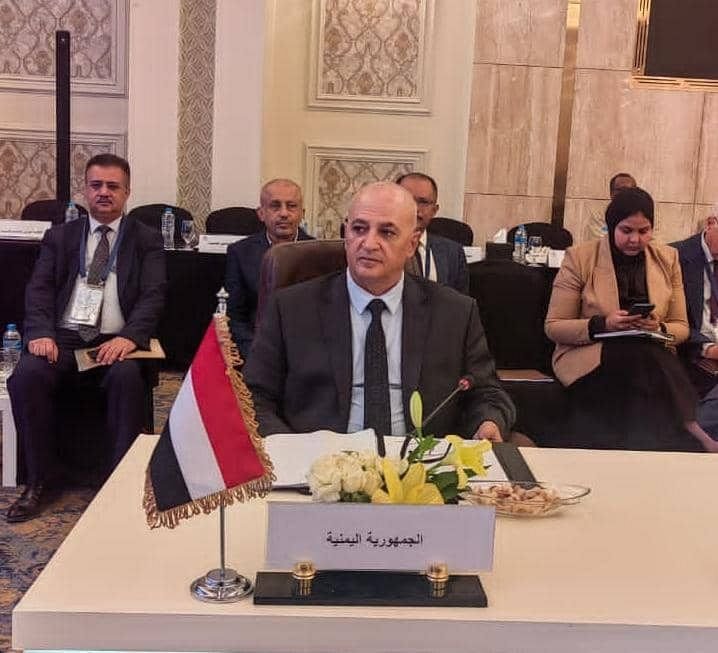
Ahmed Naji briefs Hungarian foreign ministry official on Yemen’s war and bilateral ties
 Yemen Herald News
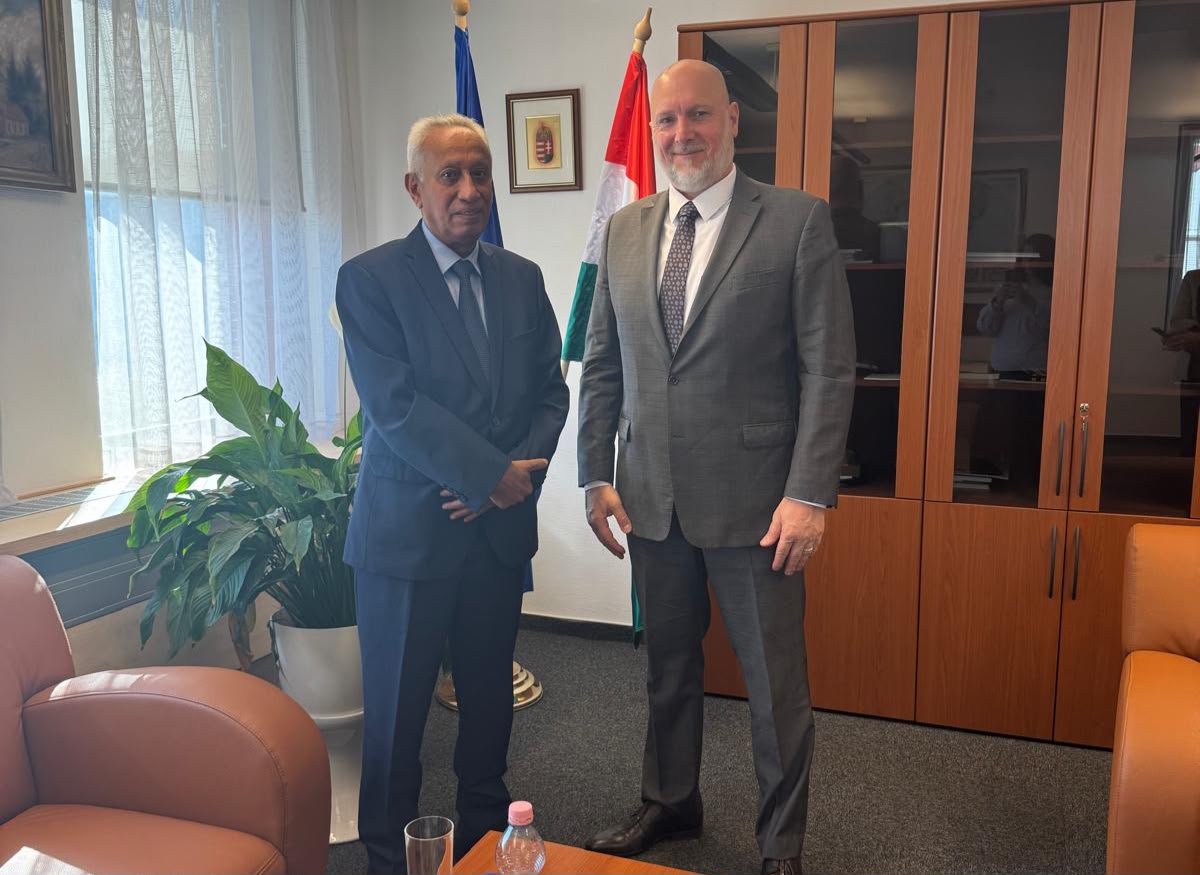
BUDAPEST, Hungary — Yemen’s chargé d’affaires in Budapest briefed a senior Hungarian foreign ministry official on the war in Yemen on Tuesday, the state news agency Saba reported.
Ahmed Naji, chargé d’affaires at Yemen’s embassy in Hungary, met Iván Medveczky, Hungary’s deputy state secretary for bilateral relations with southern countries, the agency said.
The two discussed cooperation between the two countries, according to the agency.
Saba said the talks covered developments in Yemen and what it described as a government military operation to end the Houthi takeover and restore state institutions. The Houthi side rejects that account of the war.
Medveczky reaffirmed his government’s support for the Yemeni government, Saba said.
The account of the meeting rests on that Saba report. No independent confirmation has been published, and Hungary’s foreign ministry has not issued a readout.
Saba rendered the Yemeni diplomat’s surname as Nagy and the Hungarian official’s as Medvesky. Yemen’s foreign ministry gives the diplomat’s name as Ahmed Naji. Hungarian records give the official’s name as Iván Medveczky.
The meeting was Naji’s second with Hungarian officials in a week. He met Ölvek Zsófia, who heads the programme department of Hungary Helps, on 2 October, Saba reported at the time.
At that meeting Naji raised displacement and medical supply needs. He said displacement had been recorded in several governorates as residents moved to areas they considered safer, and that host areas were under pressure as needs outpaced resources.
He handed the Hungarian official documents on war displacement, on what he described as Houthi violations against civilians, and on attacks on service and humanitarian facilities, the agency reported.
Hungary Helps is the Hungarian government’s programme for funding humanitarian and reconstruction work abroad.
Naji has met Hungarian officials before. Yemen’s foreign ministry recorded him meeting János Lashtovka, head of the ministry’s Middle East and North Africa department, on 10 January 2025.
That discussion covered bilateral relations and Houthi activity in the Red Sea. Lashtovka reaffirmed Hungary’s support for the Yemeni government and described the militias’ operations as “a threat to maritime navigation, regional and international peace and security,” the ministry said.
The two met again on 13 March 2025. That discussion covered cooperation in higher education, participation by Hungarian companies in Yemen’s development projects, and the United States designation of the Houthis as a foreign terrorist organisation, according to the ministry.
Yemen’s foreign ministry also recorded a meeting between its Budapest mission and Lashtovka on 29 February 2024, on developments in the Red Sea.
At that meeting the Hungarian official referred to his foreign minister’s appeal to the European Union to strengthen the capacities of Yemen’s official coast guard, the ministry said.
Naji has also written for the Hungarian press. Yemen’s foreign ministry recorded an article he published in Daily News Hungary on 24 July 2026, arguing that Bab al-Mandab should not be allowed to become “another Hormuz.”
Fighting in Yemen escalated through September and early October. Al Jazeera reported on 27 September that government forces had widened their attacks against the Houthis.
CNN reported on 4 October that Saudi-backed Yemeni forces were attacking Houthi positions near the shipping route through Bab al-Mandab. Yemen’s government said on 5 October that its forces had taken the strait and the port of Mocha. The Houthis dispute government accounts of territorial control.
The Houthis accused Saudi Arabia of launching 26 attacks in 24 hours, Al Jazeera reported on 18 September. The network reported on 25 September that Saudi Arabia’s allies were lining up support as Houthi attacks mounted.
More than 149,000 people have been displaced inside Yemen since the escalation began, the World Food Programme said. More than 3,700 had crossed to Djibouti by late September.
Seventy-four percent of households in accessible government-held areas cannot meet basic food needs, the agency said on 2 October. About 10 million people live in those areas.
The International Committee of the Red Cross sent 22 tonnes of medical supplies to Sanaa on 18 September for distribution to priority hospitals and health facilities.
A mobile surgical team has worked at Marib General Hospital since 23 August, and more than 50 Yemeni Red Crescent ambulances operate on both front lines, the committee said.
Christine Cipolla, who heads the committee’s delegation in Yemen, said the escalation had overwhelmed hospitals facing shortages of medical supplies and an influx of war-wounded patients.
Across Yemen, 18.3 million people face severe food insecurity, it said. The agency needs $109 million for its Yemen operation.
Matthew Hollingworth, the agency’s assistant executive director, said the escalation “threatens to be absolutely devastating” for food security.
The UN humanitarian response plan for Yemen, published in March, puts more than 22 million people in need of assistance and seeks $2.16 billion.
Traffic through Bab al-Mandab has fallen. An average of 31 vessels a day crossed in late July, down 50 percent in tonnage terms from the second-quarter average, according to Clarksons Research.
Very large crude carriers averaged one a day that week, down from three a day in the second quarter, the firm’s global head of research, Steve Gordon, said.
Yemen’s foreign ministry refers to Naji as an ambassador serving as chargé d’affaires at the Budapest mission.
About the Author