Al-Khanbashi discusses Dawn of Yemen offensive with German ambassador in video talks
 Yemen Herald News
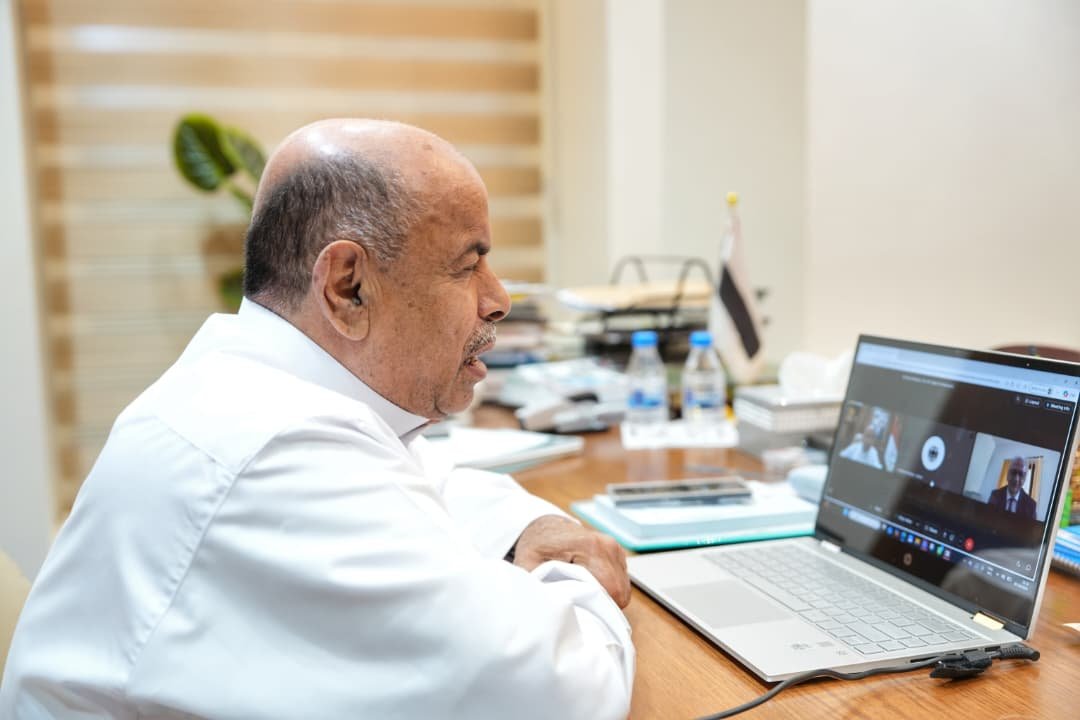
MUKALLA, Yemen — A member of Yemen’s Presidential Leadership Council discussed the government’s new military campaign with Germany’s ambassador in video talks on Wednesday.
Salem Ahmed Saeed al-Khanbashi, who also serves as governor of Hadramout, spoke with Ambassador Thomas Friedrich Schneider about efforts to restore state institutions, Saba, Yemen’s state news agency, reported.
The talks covered Operation Dawn of Yemen, the offensive the internationally recognised government announced on Oct. 4, according to the agency.
Al-Khanbashi said the campaign was intended to stop Houthi attacks on civilians and to reduce threats to shipping in the Red Sea, Saba reported.
The agency said the two men also discussed what it called South-South dialogue and its role in supporting the peace process and national consensus.
Saudi Arabia’s political and security backing for the council and for the government was also raised, according to the report.
Al-Khanbashi thanked Germany for its role in supporting peace efforts in Yemen, Saba said. He also praised the European Union’s support for the government.
Schneider reaffirmed EU backing for the internationally recognised government and for efforts to restore state institutions, the agency reported.
The ambassador also restated Germany’s support for the peace process, Saba said.
The account of the meeting rests on Saba, the news agency of the government al-Khanbashi serves. No independent confirmation of what was said has been published, and Yemen Herald could not verify the exchange with either side.
Germany’s embassy to Yemen keeps its official seat in Sanaa but operates from Riyadh, according to the German Federal Foreign Office. The ministry lists Schneider as ambassador.
Saba rendered his name as Thomas Friedrich.
Schneider was appointed in August 2025 and presented his credentials to Foreign Minister Shaya al-Zindani that month, Asharq Al-Awsat reported.
In an interview with that newspaper in October 2025, Schneider called Houthi attacks on Red Sea shipping “categorically unacceptable.”
He urged the group to “reassess their choices and decide whether they want peace or if they want to prolong the conflict.”
Schneider said Berlin approached Yemen from what he called a comprehensive perspective, and that German development agencies remained active in the country, according to the same interview.
He said resolving Yemen’s crisis required Saudi Arabia’s involvement.
Al-Khanbashi was appointed to the council in January by Decree No. 4 of 2026, issued by its chairman, Rashad al-Alimi, Yemen Monitor reported.
The same decree appointed Lt. Gen. Mahmoud Ahmed Salem al-Subaihi, the outlet said. It reported that al-Khanbashi kept his post as governor of Hadramout.
The two appointments filled seats left by Aidarous al-Zoubaidi and Faraj al-Bahsani, both affiliated with the Southern Transitional Council.
The council was formed on April 7, 2022, by then-president Abdrabbuh Mansur Hadi, who delegated presidential powers to it. It has eight members.
Hadramout lies in eastern Yemen, away from the western front lines.
Operation Dawn of Yemen has centred on the southern Red Sea coast, the town of Dhubab and al-Waziyah district in Taiz governorate, Al Jazeera reported on Oct. 6.
The broadcaster said government forces had claimed a limited advance near the Bab al-Mandab Strait. Houthi forces deny the government has taken the area.
Fighting has also been reported in Marib and al-Jawf, east of Sanaa, according to the same report.
Government forces said they had taken Mocha and Dhubab, and the mountains of al-Manzara, al-Ashari and Dhiban in Haifan, south of Taiz, according to the broadcaster. The Houthis dispute those claims.
Al Jazeera reported that government troops reached the outskirts of Mocha on Monday.
The Saudi-led coalition said it struck Houthi military targets in Hodeidah, among them weapons depots and sites used to store explosive-laden boats and naval mines, the broadcaster reported.
Saudi authorities reported three minor injuries from attacks on the airports at Jazan and Najran on Monday, according to the same report.
The International Organization for Migration said on Oct. 6 that more than 184,000 people had been displaced since the fighting resumed.
The World Health Organization has recorded at least 959 people killed and more than 4,200 wounded in the latest fighting, Al Jazeera reported.
Al Jazeera said the Saudi-led coalition deployed 100 fighter jets in support of the campaign. It described that as the coalition’s first acknowledgement in four years that it had resumed air attacks.
The broadcaster reported that 200 U.S. advisers are stationed in Saudi Arabia in connection with the campaign.
The Giants Brigades are leading the fighting on the Red Sea coast and in Taiz, according to the same report. The force was trained by the United Arab Emirates and is now backed by Saudi Arabia.
The United Nations Office for the Coordination of Humanitarian Affairs said in its plan published in March that more than 22 million people in Yemen need assistance.
The plan put the number of acutely food insecure people at 18.3 million. It said more than 2.2 million children under five are acutely malnourished, 516,157 of them severely.
The office recorded 5.2 million internally displaced people. Its appeal sought $2.16 billion to reach 12 million people.
Saba said Wednesday’s meeting was held by video conference.
The German embassy’s offices in Riyadh are on Abdullah Al Sahmi Street, according to the Federal Foreign Office.
About the Author