Yemen’s agriculture minister discusses new fisheries project phase with World Bank and UNDP
 Yemen Herald News
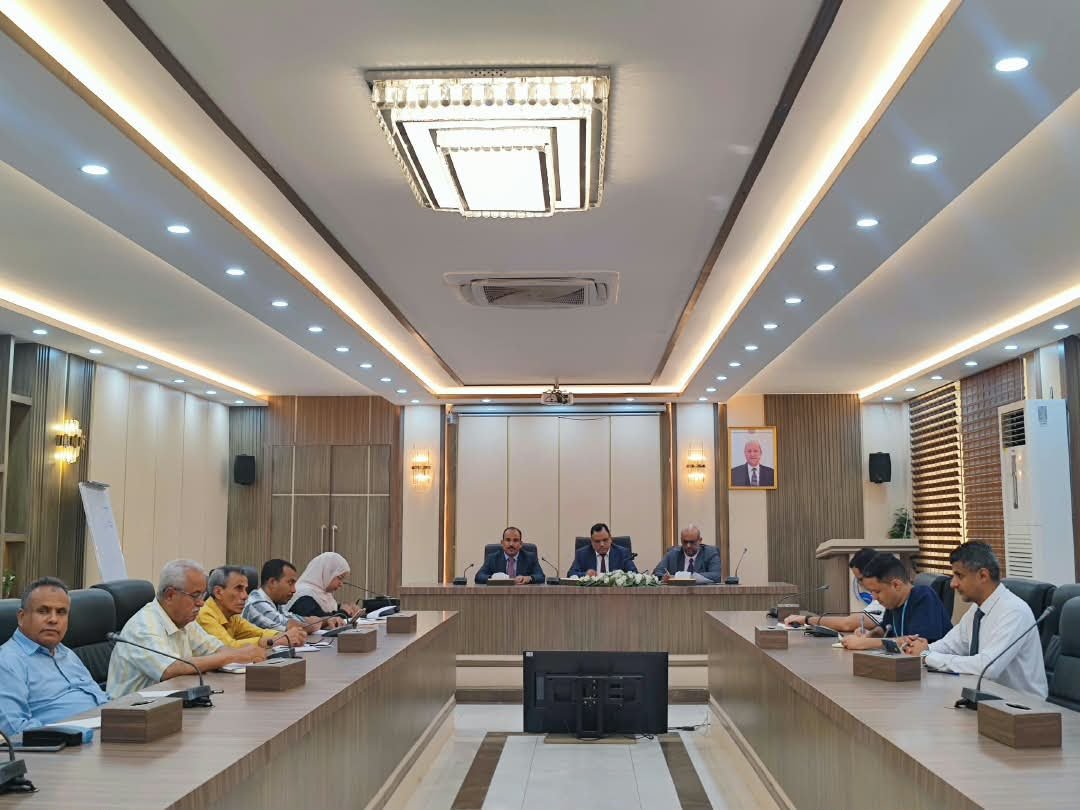
ADEN, Yemen — Yemen’s agriculture minister discussed preparations for a new phase of a World Bank-backed fisheries programme with Bank and U.N. officials by video link, the state news agency said.
Salem al-Soqtari, minister of agriculture, irrigation and fisheries, held the talks in the interim capital Aden, Saba reported on Wednesday.
A World Bank team joined, along with representatives of the United Nations Development Programme and Yemeni authorities, according to the agency.
The account of the meeting rests on that Saba report. No independent confirmation of the talks has been published.
Saba said the discussions covered the new phase of the fisheries development project, which it identified as SFish2. The agency put the total budget at $50 million.
Al-Soqtari said fish farming should receive particular attention, Saba reported. He called for feasibility studies, work to identify suitable sites and species, and regulatory and technical frameworks.
He said the sector should draw on regional and international expertise.
The minister also pressed for support to fish landing centres and to cooling, storage, transport, processing and marketing chains, according to the agency.
He called for stronger quality systems, monitoring, data and fishery research.
The World Bank team said the project would address fish farming, investment opportunities, the role of the private sector, and institutional and regulatory capacity, Saba reported.
The team said the Bank would work with the International Finance Corporation and the ministry on a preliminary study of investment opportunities in fish farming and value chains, according to the agency.
The Food and Agriculture Organization gives the minister’s name as Salem Abdullah Issa al-Soqtari and his title as minister for agriculture, irrigation and fisheries.
The first phase is listed by UNDP as the Sustainable Fishery Development in the Red Sea and Gulf of Aden project, shortened to SFISH. UNDP’s project page records it as running from October 2022 to March 2027 and describes it as ongoing.
UNDP lists total contributions to that phase at about $36.1 million, with the World Bank’s International Development Association and UNDP as donors.
The World Bank describes the wider regional programme as worth $45 million.
UNDP’s page does not refer to a second phase or to SFish2.
UNDP implements the project with the World Bank’s IDA, the Public Works Project and the Small and Micro Enterprise Promotion Service, according to its project page.
The stated development objective is to promote regional cooperation on sustainable fishery management across the Red Sea and Gulf of Aden and to strengthen fishery value chains in the region, UNDP said.
Its listed activities include grants, vouchers and microgrants for fishers, enterprises, young people and cooperatives.
Others cover rehabilitating fishery infrastructure, including cold chain, and setting up sub-national fishery governance committees and management plans.
The project also funds training on value chains, responsible fishing and fish nutrition, a study on diversifying the sector, and a national fishery platform, according to UNDP.
The World Bank said in November 2025 that nearly 4,000 fishers and entrepreneurs had received support under the project.
It said more than 7,300 jobs had been created or improved, and that more than 800 women entrepreneurs had received funding.
Nine landing sites were being rehabilitated, each serving up to 1,500 fishers, the Bank said.
Three have been handed over. UNDP said the Al-Hami site in Hadramout governorate was handed over in September 2025 and serves more than 1,560 fisherfolk and 382 boats.
The Bab al-Mandab site, also called Al-Ordhi, in Taiz governorate followed in October 2025, serving more than 1,080 fisherfolk and 542 boats, UNDP said.
The Dockyard site in Aden governorate was handed over in November 2025 and serves more than 300 fisherfolk and 243 boats, according to the agency.
UNDP announced the three handovers on Nov. 21, 2025, which it marked as World Fisheries Day.
Yaslam Saeed Babelghom, chairman of the General Authority for Fisheries for the Arabian Sea region, attended, alongside Zena Ali Ahmad, UNDP’s resident representative in Yemen, and Dina Abu-Ghaida, the World Bank Group’s country manager for Yemen.
Before the conflict that erupted in 2014, fisheries were Yemen’s second-largest export sector, the World Bank said. It put the sector’s share of gross domestic product at 3% and said it supported 1.7 million people.
Exports have since fallen by a quarter, according to the Bank. It said catches could drop a further 23% by the middle of the century.
The number of fishing boats in the Gulf of Aden rose from 8,000 to 13,000 over the past two decades, the Bank said.
Maria Sarraf, a regional manager at the World Bank, said in the November 2025 account that the project “has transformed livelihoods across Yemen.”
Djibouti, Jordan, Saudi Arabia, Sudan and Yemen have signed a regional protocol to strengthen data on fish stocks, according to the Bank.
The talks come as aid agencies describe continuing shortfalls across the country. The U.N. Office for the Coordination of Humanitarian Affairs said in its March 2026 plan that more than 22 million people in Yemen need assistance and that 18.3 million are acutely food insecure.
OCHA said more than 2.2 million children under five are acutely malnourished, 516,157 of them severely, and put the number of internally displaced people at 5.2 million.
The plan sought $2.16 billion to reach 12 million people.
Saba did not say when the new phase would begin.
About the Author