Yemen’s cabinet approves draft law designating Houthis a terrorist organization
 Yemen Herald News
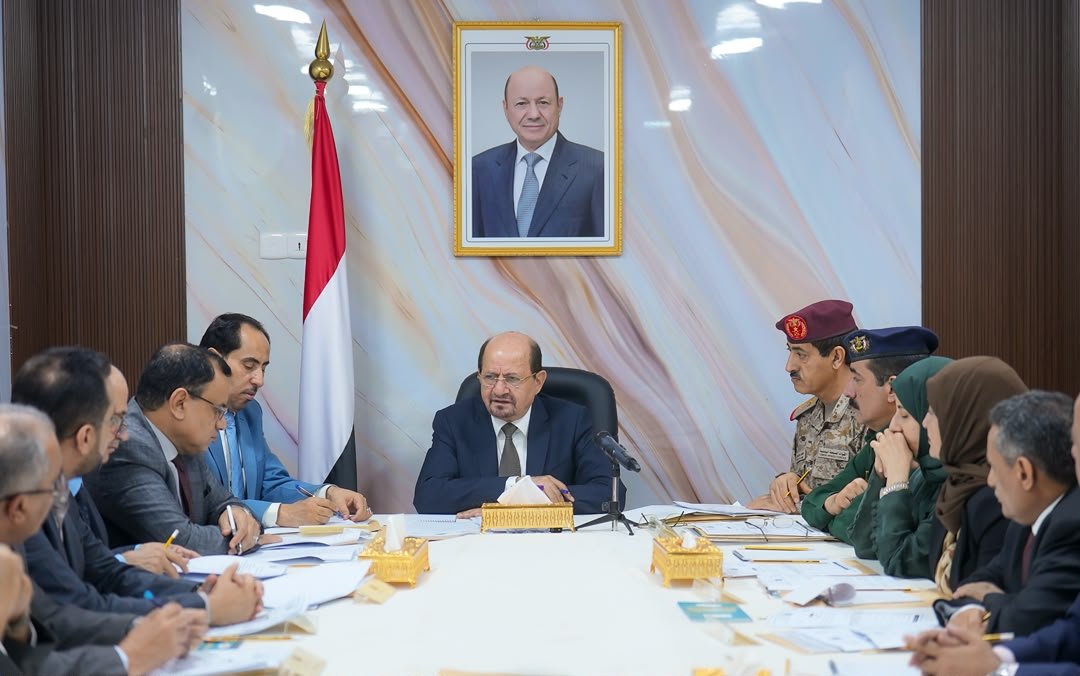
ADEN, Yemen — Yemen’s cabinet approved a draft law on Sunday designating the Houthi group a terrorist organization and criminalizing its activities and financing, the government said.
The Council of Ministers directed officials to complete the constitutional and legal procedures needed to ratify the measure, the state news agency Saba reported.
The session was held in Aden. Prime Minister Shaya al-Zindani chaired it.
Saba said the cabinet gave the session over to government plans for backing the armed forces in their fighting against the Houthis.
The account of the session rests on the Yemeni government’s own announcement, relayed by Saba and carried by regional outlets. Yemen Herald found no independent record of the cabinet’s deliberations.
Neither the cabinet statement nor the agency report set out the draft law’s provisions, its penalties or the definition it would apply. The government said only that the text would criminalize the group’s activities and its funding.
Al-Zindani said the government was not running a temporary defensive phase, nor waiting on events, but directing state institutions in what he called a national battle to regain the state’s authority.
He told executive bodies to step up efforts and supply the armed forces, military formations, security units and what the government calls the popular resistance.
The prime minister also directed those bodies to protect civilians and facilities and to keep public services running, according to Saba.
He described the fighting as a battle to restore the state’s authority and sovereignty and to secure international navigation in the Red Sea and the Bab al-Mandab Strait.
The cabinet praised the al-Amaliqa Brigades, also known as the Giants Brigades, and the Homeland Shield Forces for their part in the fighting around Bab al-Mandab.
It said government-aligned forces had taken positions near Dhubab and cut the road between Dhubab and al-Mokha. The Houthis routinely dispute government accounts of territorial gains.
The Giants Brigades are led by Abd al-Rahman Abu Zaraa al-Muharrami, who joined the Presidential Leadership Council in April 2022.
The force was formed largely from Salafi fighters during the 2015 fighting against the Houthis in Aden, and is widely reported to be armed, trained and funded by the United Arab Emirates.
Rashad al-Alimi, chairman of the Presidential Leadership Council, announced the offensive. Government troops and allied southern groups launched it near Bab al-Mandab on October 5.
The Houthis took al-Mokha in September. By Monday afternoon the pro-government force said it had cut the main road linking al-Mokha to Bab al-Mandab.
Reuters reported that it could not independently verify the date of footage showing an advance near Dhubab.
The Saudi-led coalition that backs Yemen’s internationally recognized government has been trying to retake the coastline the Houthis seized in September.
Bab al-Mandab is one of the few alternatives to the Strait of Hormuz for Gulf energy shipments. Analysts have said a wider war could push the Houthis to close it to traffic.
The cabinet condemned a missile and drone attack on Aden International Airport, saying it put passengers, airport workers and flight crews at risk.
Yemen’s transport ministry said the Houthis struck that airport with ballistic missiles and drones on October 7. The group claimed the attack.
A Yemenia Airways flight from Cairo was diverted to Jeddah, the government said. Aircraft and staff were moved away from the areas affected.
The cabinet also condemned Houthi attacks on Saudi Arabia, including the strike on King Khalid International Airport in Riyadh.
It asked the international community and the UN Security Council to hold those responsible, and their weapons suppliers, to account.
Saudi authorities said a Houthi missile strike on the Riyadh airport on Saturday killed 12 people and wounded more than 300. The Houthis claimed that attack.
Those killed included four Saudis, two Bangladeshis and one person each from the United States, Jordan, Palestine, Syria, Sudan and Egypt, according to Saudi figures.
India’s embassy said an Indian citizen died on Sunday of injuries from Saturday’s strike, taking that toll to 13.
Mohammed al-Bukhaiti, a Houthi official, said the attack was retaliation for Saudi strikes on civilian sites in Yemen. He said airports, seaports, hospitals and markets in Yemen were civilian facilities.
Turki al-Maliki, spokesman for the Saudi-led coalition, called the strike a “full-fledged war crime” and said the coalition would respond.
A further strike on the same airport on Sunday killed one person and injured 11, Saudi Arabia’s General Authority of Civil Aviation said. It identified the person killed as a Pakistani resident.
The authority said attacks on the airport on Thursday killed at least three Saudi citizens, among them a pilot. The airport has been struck four times in five days and has been closed since Saturday.
Qatar, Jordan, Oman, Kuwait and Japan condemned Saturday’s attack. US Secretary of State Marco Rubio also condemned it.
US President Donald Trump said he was weighing whether to join the fighting against the Houthis, and that he planned to speak to Saudi Crown Prince Mohammed bin Salman.
Iran’s foreign minister urged Saudi Arabia to pursue diplomacy.
Al-Zindani was named prime minister by the Presidential Leadership Council on January 15 and took office on February 6, when his cabinet was announced.
He held the foreign affairs portfolio from March 2024 until July, when Afrah al-Zouba replaced him.
About the Author