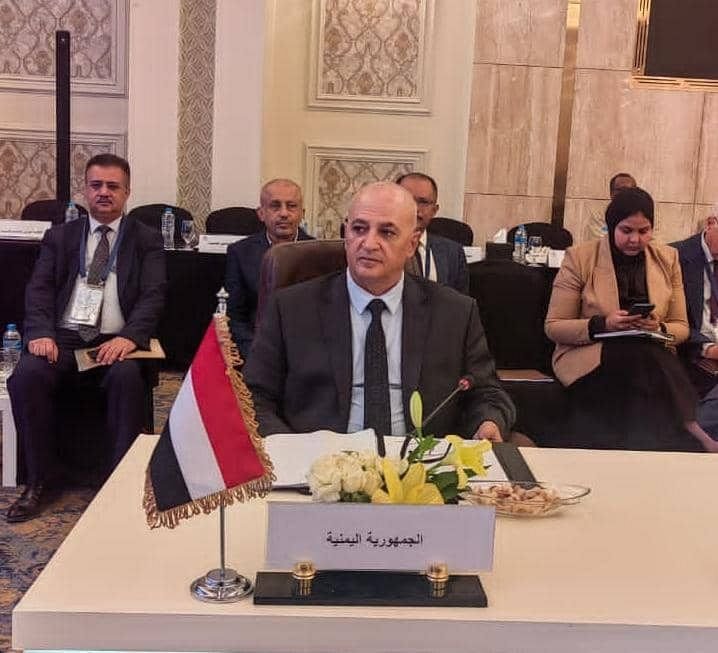
Taiz governor appeals for action to lift Houthi siege of the governorate
 Yemen Herald News
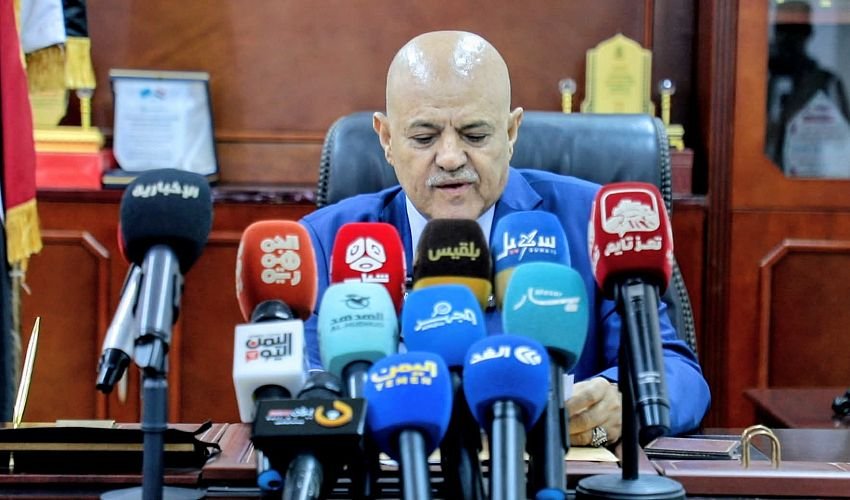
TAIZ, Yemen — Taiz governor Nabil Shamsan appealed on Sunday for national and international action to lift the Houthi siege of the governorate and bring in food, medicine and fuel.
Shamsan spoke to reporters. He said the siege had lasted 12 years.
He called on the state leadership and the government to take exceptional measures for Taiz, meet its urgent needs and help hospitals and vital facilities.
The account of the appeal rests on the governor’s own statement, relayed by the state news agency Saba. Yemen Herald found no independent record of the news conference, though international reporting has described the shortages he cited.
Shamsan asked local authorities in other governorates, business leaders, chambers of commerce and civil society groups to start a nationwide solidarity campaign and send emergency relief convoys.
He appealed to Saudi Arabia and the Gulf Cooperation Council states for urgent assistance.
He asked the United Nations, the UN Security Council and international humanitarian and human rights organizations to stop attacks on civilians, lift the siege and open safe humanitarian corridors.
He also asked them to guarantee aid deliveries and to allow critically ill patients to be moved out of the governorate.
Shortages of food, medicine and fuel threatened more than six million people, Shamsan said, according to his statement.
Yemen Herald could not confirm that figure. Al Jazeera has reported that about 2.8 million people live in government-held areas of Taiz governorate, with about 200,000 displaced recently by fighting on the coast and in rural districts.
Shamsan called on political, social, youth and women’s groups in Taiz to hold peaceful marches to show unity and press for action.
He said Taiz had endured years of shelling, sniper fire, landmines, displacement and movement restrictions, and that the governorate would not give in to the siege or to political pressure.
The governor praised the armed forces and security personnel. He said the local authority would keep working with state institutions to reopen roads and access routes.
The Houthis have not responded publicly to the appeal.
The group launched an offensive along the Red Sea coast of Taiz governorate in early September and took the port city of al-Mokha and Dhubab district.
By October 4 the Houthis had captured al-Turbah, cutting the last main road between Taiz city and other government-held areas. That road ran to Aden.
A crossing to the east, reopened under a 2024 agreement, has since closed after attempted Houthi incursions, according to security sources cited by Al Jazeera.
Nabil Jamil, director-general of the planning and development office in Taiz governorate, said the current siege was more comprehensive than the one imposed in 2015.
Jamil said the local authority had written to the United Nations and was still waiting for a response or for intervention on the ground.
The black-market price of a 20-litre container of petrol has risen from 30,000 Yemeni riyals, about $19, to 90,000 riyals, about $58.
Vegetable and fruit prices have roughly doubled, according to Wafiq Saleh, an economic journalist. He said wheat and flour prices had also risen.
Saleh said traders held food stocks that would last several months, but that some had raised prices once fighting reached the city’s outskirts.
Yemen’s Ministry of Public Health and Population said on Saturday that medicines, intravenous fluids, supplies and fuel at health facilities in Taiz were nearing depletion.
The ministry said emergency care, surgery, intensive care, dialysis and neonatal services could be forced to stop.
It said fuel shortages threatened generators, ambulances and the cold chain for medicines and vaccines, and warned of preventable deaths.
The ministry demanded that the siege be lifted, supply routes reopened and safe passage given to patients, ambulances, health workers and aid.
Adam Baron, a fellow at the Future Security Program at New America, said about one million people were trapped in the city.
Nabil Sharyan, a lawyer who heads the Justice for Rights and Development Organization, criticized the use of civilians as leverage in the conflict.
Government forces, backed by Saudi Arabia, began a counteroffensive in early October and have regained some of the ground lost in September.
The International Organization for Migration said more than 200,000 people had been displaced by the escalation, with Taiz accounting for about 57 per cent of them.
Salman al-Maqrami, a journalist who follows Houthi affairs, said the siege was intended to weaken opposition to the group in Taiz.
The Houthis hold al-Mokha, Dhubab district and Bab al-Mandab, according to Al Jazeera’s correspondent in Sanaa.
Nationwide, the UN humanitarian plan published in March said more than 22 million Yemenis needed assistance and 18.3 million were acutely food insecure.
That plan also recorded more than 2.2 million children under five as acutely malnourished, including 516,157 severely, and 5.2 million people displaced across the country.
It sought $2.16 billion to reach 12 million people.
The UN refugee agency and the World Health Organization have warned that the fighting threatens Yemen’s health system.
Iskandar Abdullah, a 37-year-old resident of Taiz, said he hoped the city would not return to the conditions of the siege imposed in 2015.
The earlier siege of Taiz, imposed in 2015, was broken in 2016 when pro-government forces retook land south of the city. A partial blockade remained at other access points.
About the Author