Yemen’s planning minister and central bank governor discuss support with World Bank in Bangkok
 Yemen Herald News
BANGKOK, Thailand — Yemen’s planning minister and central bank governor held talks with World Bank officials on Tuesday on support for economic stability, the state news agency said.
Mohammed al-Faqmi and Ahmed al-Maabqi met the officials on the sidelines of the annual meetings of the World Bank Group and the International Monetary Fund, the agency, Saba, reported.
Al-Faqmi is the minister of planning and international cooperation and Yemen’s governor to the World Bank Group.
Al-Maabqi is the governor of the Central Bank of Yemen.
Saba said the talks covered cooperation to increase international support for government efforts to maintain economic and financial stability.
The two sides also discussed improving public financial management and the banking sector, according to the agency.
Support for electricity projects and for the Hassan Dam in Abyan governorate was raised, Saba said.
The account of the meetings rests on the state news agency. No independent confirmation of them has been published.
Al-Faqmi and al-Maabqi also met Sandeep Mahajan, whom Saba identified as the World Bank’s regional director for the prosperity sector.
They sought backing for economic and financial stability, public financial management reform and the development of payment systems and the banking sector.
In a separate meeting, al-Faqmi discussed the progress of projects financed in Yemen by the Arab Fund for Economic and Social Development.
The two sides also discussed Yemen’s debt, Saba said.
They agreed to form a joint technical team to follow up on the matter.
Thailand is hosting this year’s annual meetings of the two institutions in Bangkok.
Al-Faqmi discussed arrangements for Yemen’s participation in the meetings with the World Bank in September, Yemen’s state broadcaster reported at the time.
He met Dina Abu Ghaida, the World Bank’s country director for Yemen, in that session.
The two sides also prepared for a meeting of the Yemen Partners Group, the broadcaster said.
A Yemeni delegation attended the institutions’ spring meetings in Washington in April, Yemen Monitor reported.
That delegation included al-Maabqi, finance minister Marwan bin Ghanem and Afrah al-Zouba, who held the planning portfolio at the time.
The delegation discussed priority projects for the 2026 financial year, the outlet said.
They included a programme to make water services more resilient to climate change, to be carried out in three phases.
Other projects covered health, nutrition, water and sanitation, along with cash-for-nutrition and livelihoods programmes.
The delegation also discussed road infrastructure, customs modernisation and seaport facilities.
The International Finance Corporation described its investments in Yemen’s private sector, including Sharia-compliant financial products for small and medium-sized enterprises.
The World Bank’s country director said at the time that a new Country Partnership Framework would go to the bank’s board of directors at the end of May.
Al-Zouba said then that the projects should be aligned with Yemen’s national development plan.
She pointed to sustainable energy and the gradual empowerment of national institutions, according to Yemen Monitor.
The Central Bank of Yemen operates from Aden, the temporary seat of the internationally recognised government.
The Presidential Leadership Council has governed that side of the conflict since it replaced former president Abd Rabbu Mansour Hadi in 2022, according to a House of Commons Library briefing.
The briefing describes the council as an eight-member body that analysts regard as fractured.
The Houthis declared a naval blockade of Saudi Arabia on July 20 and later an air blockade, the briefing said.
They have taken several areas along the Red Sea coast, and control of the Bab al-Mandab Strait is disputed.
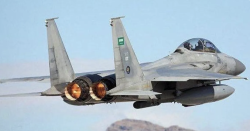
Houthi drone and missile attacks on Saudi territory this year were the first since 2023, the briefing said, and Saudi air strikes on Yemen the first since 2022.
The Saudi-led coalition struck energy sites in Sanaa on Tuesday after warning residents to leave the area.
The Associated Press, citing witnesses, reported several explosions in the capital.
The April delegation also discussed strengthening national institutions and public systems, Yemen Monitor reported.
The Houthis announced a new phase in their campaign against Saudi Arabia in June, centred on the blockade of their air and sea ports.
A planned prisoner exchange stalled in July as tensions rose, the briefing said.
The United Arab Emirates announced in January that it would withdraw its remaining forces from Yemen, according to the briefing.
Britain announced defensive support for Saudi Arabia in September, including one Royal Air Force Voyager refuelling aircraft.
The United Nations moved its main Yemen offices to Aden in September 2025.
Saudi authorities said a strike on Riyadh’s King Khalid International Airport on Saturday killed 13 people.
The coalition said it intercepted at least three missiles and two drones over Riyadh on Tuesday.
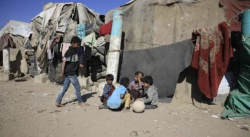
The United Nations humanitarian response plan for Yemen, issued in March, said more than 22 million people needed assistance.
The plan said 18.3 million people were acutely food insecure.
It recorded more than 2.2 million children under five as acutely malnourished, including 516,157 with severe acute malnutrition.
The plan counted 5.2 million internally displaced people and sought 2.16 billion dollars to reach 12 million of them.
Saba did not say which World Bank officials attended the first meeting.
It did not give a timetable for the joint technical team’s work.
About the Author