Transport Minister Mohsen al-Omari chairs meeting on smuggling points at four southern ports
 Yemen Herald News
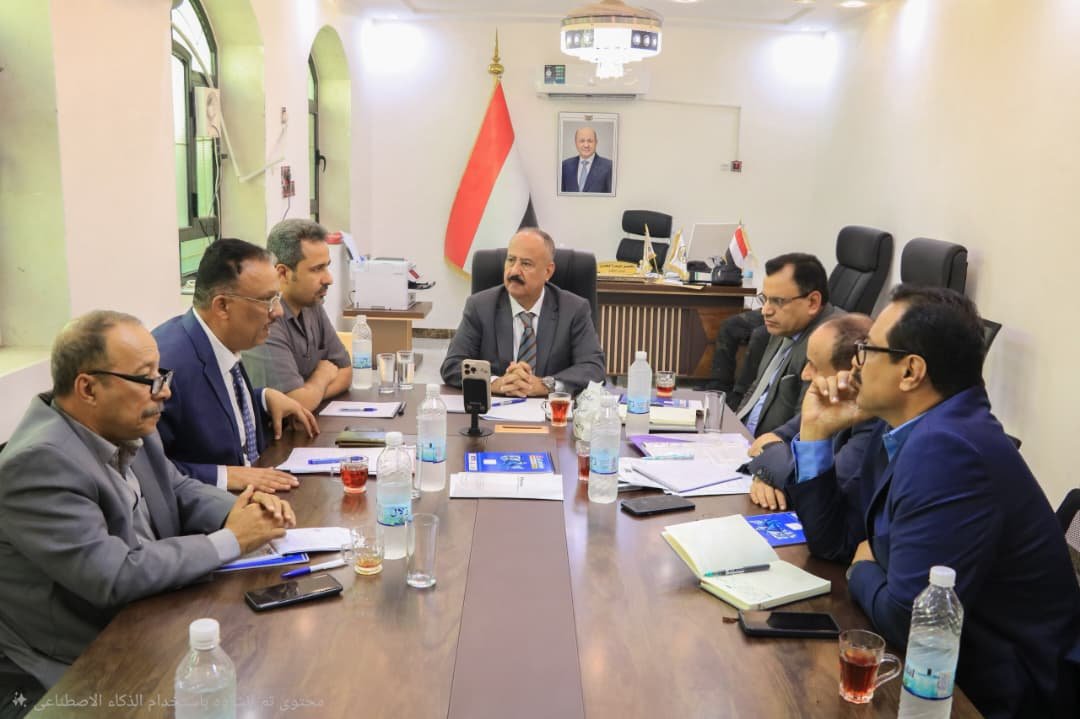
ADEN, Yemen — Yemen’s transport minister chaired a meeting on Tuesday on closing smuggling points and regulating seaports in four southern governorates, the state news agency said.
Mohsen al-Omari led the session in Aden, the agency, Saba, reported.
The committee was formed under the prime minister’s directives.
It reviewed compliance with Presidential Leadership Council Resolution No. 11 of 2025, which concerns closing smuggling points.
The meeting assessed the condition of seaports in Lahj, Shabwa, Hadramout and Al-Mahra governorates.
The committee reviewed the results of field inspection and monitoring, Saba said.
It discussed measures to combat smuggling and to regulate the movement of goods and petroleum products.
The agency said the measures were meant to meet local needs and support legitimate trade and fishing.
The account of the meeting rests on the state news agency. No independent confirmation of its decisions has been published.
Salem al-Soqatri, the minister of agriculture, irrigation and fisheries, attended.
Lahj Governor Murad al-Halimi also took part.
Shabwa Governor Awad bin al-Wazir joined by video conference.
Hadramout Deputy Governor Riyadh al-Jawhari and Al-Mahra Deputy Governor Mukhtar bin Owaid also joined remotely.
The committee approved regulating operations at Ras al-Ara port in Lahj.
It called for a feasibility study for establishing a port there and for the infrastructure it would need.
The committee also sought an assessment of a customs centre at the site, along with inspection and health services.
It decided to form a body of transport ministry, local authority and customs representatives.
That body is to draw up rules for landing and exporting approved goods, Saba said.
On Qena port in Shabwa, the committee called for technical procedures and studies to be completed.
It asked for funding sources to be identified for the first phase.
That phase includes a wharf 100 metres long and a breakwater.
The committee discussed regulating petroleum imports through the existing anchorage at Qena.
Those imports are to follow approved rules and meet the governorate’s needs.
The committee decided to restrict Al-Shihr port in Hadramout to fishing and to services for fishermen.
Commercial cargo will be barred there.
The step is intended to strengthen Mukalla port’s role in handling commercial shipments.
That includes cargo carried to and from the Socotra Archipelago.
The committee said Nishtun port in Al-Mahra should be limited to imports of consumer goods, petroleum products and other essential supplies.
Those imports must follow approved quantities and permits issued by the competent authorities, according to Saba.
Nishtun will continue to receive fishing vessels and boats.
The meeting called for coordination among government agencies, local authorities and security and oversight bodies.
Saba said the aim was to enforce port rules, curb smuggling and keep import and export operations within the law.
The four governorates lie along Yemen’s southern coast, outside the areas held by the Houthis.
The Presidential Leadership Council has governed the internationally recognised side of the conflict since it replaced former president Abd Rabbu Mansour Hadi in 2022, according to a House of Commons Library briefing.
The briefing describes the council as an eight-member body that analysts regard as fractured.
The Houthis declared a naval blockade of Saudi Arabia on July 20 and later an air blockade, the briefing said.
They have taken several areas along the Red Sea coast, and control of the Bab al-Mandab Strait is disputed.
Gunmen seized a tanker off Yemen in August as Somali piracy resurfaced, Al Jazeera reported.
Al-Omari pledged in February to extend state sovereignty and the rule of law across all border crossings and ports, and to address existing imbalances, Yemen Monitor reported.
He made the remarks at an expanded ministry meeting in Aden, the temporary capital, the outlet said.
He said the ministry’s work should follow the government programme, which covers stability, economic and financial recovery, essential services, institutional governance and digital transformation.
The Houthis announced a new phase in their campaign against Saudi Arabia in June, centred on the blockade of their own air and sea ports, the briefing said.
It said Houthi drone and missile attacks on Saudi territory this year were the first since 2023, and Saudi air strikes on Yemen the first since 2022.
The United Arab Emirates announced in January that it would withdraw its remaining forces from Yemen, according to the briefing.
A planned prisoner exchange stalled in July as tensions rose.
Britain announced defensive support for Saudi Arabia in September, including one Royal Air Force Voyager refuelling aircraft.
The United Nations moved its main Yemen offices to Aden in September 2025.
The Saudi-led coalition struck energy sites in Sanaa on Tuesday after warning residents to leave the area.
The Associated Press, citing witnesses, reported several explosions in the capital.
Saudi authorities said a strike on Riyadh’s King Khalid International Airport on Saturday killed 13 people.
The United Nations humanitarian response plan for Yemen, issued in March, said more than 22 million people needed assistance.
The plan said 18.3 million people were acutely food insecure.
It recorded more than 2.2 million children under five as acutely malnourished, including 516,157 with severe acute malnutrition.
The plan counted 5.2 million internally displaced people and sought 2.16 billion dollars to reach 12 million of them.
Saba did not say when the committee would next meet.
It did not give a timetable for the feasibility studies.
About the Author