Prime Minister Shaya al-Zindani urges traders to keep food and fuel flowing during offensive
 Yemen Herald News

ADEN, Yemen — Yemen’s prime minister urged private sector representatives on Tuesday to help keep food, medicine and fuel moving as the government’s offensive against the Houthis widened.
Shaya al-Zindani said the pace of what the government calls the Yemen Dawn Operation required unified national efforts to hold economic stability in place, the state news agency Saba reported.
The agency said the meeting was held in Aden, the government’s temporary capital. It did not name the business representatives who attended.
The account rests on Saba, which the internationally recognised government runs. No independent confirmation of the meeting has been published.
Al-Zindani tied the fight to restore state authority and end what the government calls the Houthi coup to protecting livelihoods and market stability, according to the agency.
The government was working to restore institutions and to meet its economic, service and livelihood obligations without interruption, he said.
The meeting dealt with shared responsibility between the state and traders for supplying food, medicine and fuel at fair prices, Saba said.
It also covered keeping the fighting from being used to hoard goods or raise prices. The agency gave no figures and reported no new measures.
The Presidential Leadership Council named al-Zindani prime minister in January. The cabinet was announced on 6 February.
He served as foreign minister from March 2024 until July, when Afrah al-Zouba took that office.
On 28 June he approved the finance ministry’s short-term strategic plan for 2026 and 2027, Yemen Monitor reported. It covers revenue collection, tax and customs evasion, and regular payment of public-sector salaries.
The offensive began in early October. Rashad al-Alimi, chairman of the Presidential Leadership Council, said it was intended to restore state institutions and retake Sanaa.
Government forces have claimed the Bab al-Mandab strait, the Dhubab area and the Red Sea port of Mokha. Those claims have not been independently verified, and the Houthis have not confirmed them.
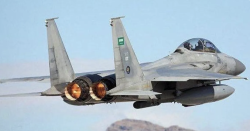
Maj. Gen. Turki al-Malki, spokesman for the Saudi-led coalition, said 100 fighter jets took part and that 324 Houthi targets were destroyed. No independent count has been published.
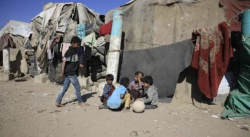
Aid agencies have documented the pressure on supplies that al-Zindani described. The World Food Programme said on 2 October that 74 percent of households in accessible government-held areas could not meet their basic food needs, the highest share it had recorded this year.
Wheat flour prices rose 10 percent in two weeks in parts of Taiz, the agency said. Traders estimated that wheat stocks covered about two months of demand.
Yemen imports roughly 90 percent of its food, according to the World Food Programme. Fighting had cut access in parts of Taiz and Hodeidah, affecting about 350,000 people.
The International Organization for Migration counted more than 149,000 people displaced by the renewed fighting. More than 3,700 had crossed into Djibouti by late September.
A government employee in Aden earns about 78,000 rials a month, roughly 50 dollars at the parallel exchange rate, Al Jazeera reported on 9 October.
Houthi authorities have banned circulation of newer banknotes printed by the government and hold the exchange rate in their areas close to fixed, Al Jazeera reported.
The Yemen Economic Tracking Initiative put a typical household’s monthly food costs in government-held areas at about 130,366 rials, or 83 dollars.
Income per person has fallen about 58 percent since 2015, according to the World Bank.
Ayman al-Maqtari, who works in a shop in Aden’s Mansoura district, told Al Jazeera that customers now buy five-kilogram bags of rice rather than 40-kilogram sacks.
The government approved a 20 percent cost-of-living allowance for public-sector staff in May. It is calculated on base salary, so the rise is small for many workers.
The World Food Programme assists about 2.4 million people facing severe hunger in government-held areas. It had reached more than 70,000 people in Taiz and Lahj since the fighting resumed.
The agency has sought 109 million dollars for emergency food and nutrition aid for up to 1.5 million people, and 158 million dollars for its regular operations through March 2027.
In September the agency reached more people with ready-to-eat rations than in any other month of 2026.
It has moved resources away from November distributions and expects gaps in assistance within a month without new funding.
Houthi authorities are holding 73 United Nations personnel, 38 of them World Food Programme staff, the agency said.
The World Health Organization recorded more than 5,000 casualties, including 959 deaths, between 6 August and early October, The National reported.
Suspected cholera cases tripled over three weeks to 647 in the first week of October, from 217 three weeks earlier.
Yemen’s health ministry said health facilities in coastal, western and southern Taiz had closed or were barely functioning, Euronews reported.
About 12 percent of global trade passes through the Bab al-Mandab strait, according to Euronews.
The United Nations humanitarian plan for 2026 counted more than 22 million people in need and 18.3 million facing acute food insecurity. It recorded 2.2 million children under five acutely malnourished, 516,157 of them severely, and 5.2 million internally displaced people, and sought 2.16 billion dollars to reach 12 million of them.
Saba did not say how long the meeting lasted. It did not report any commitment from the traders who attended.
About the Author