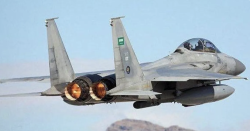
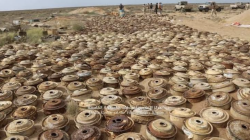
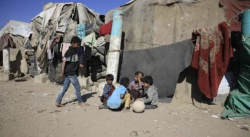
Saudi-led coalition strikes Sanaa fuel depot as source says missile hit Aramco headquarters
 Yemen Herald News
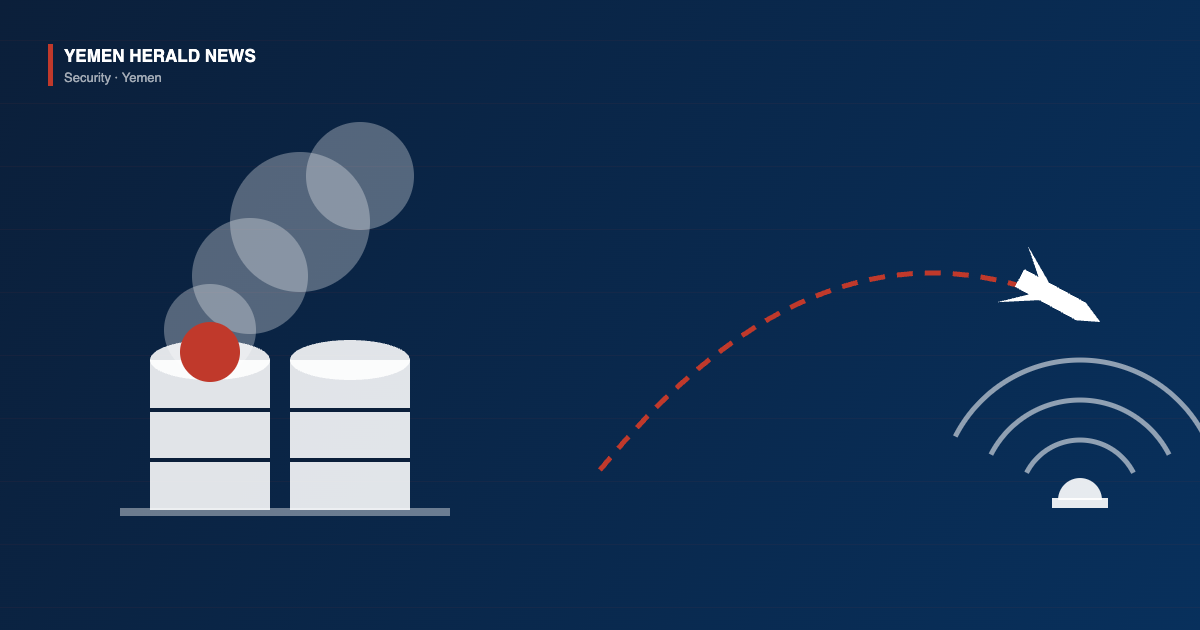
SANAA, Yemen — The Saudi-led coalition struck a fuel depot on the outskirts of Sanaa on Tuesday, the coalition said.
It said in an evening statement that it had attacked the station and other sites.
The coalition said the operation was aimed at neutralising the capabilities of the Houthis to threaten Saudi Arabia, Yemen and international waterways.
The target was the al-Sabaha central station, a Yemen Petroleum Company fuel depot, according to the Houthi-run broadcaster Al-Masirah.
The Associated Press, citing witnesses, reported several explosions across Sanaa after the station was hit.
A coalition spokesman had told civilians to leave the depot before the attack.
It was the coalition’s first evacuation order in Sanaa since the war flared in July, Middle East Eye reported.
The outlet said a video showing a large fire cloud in Sanaa was attributed to the strikes. It said it could not immediately confirm the footage.
Hours later, a ballistic missile hit the headquarters complex of Saudi Aramco in Dhahran, a company source told Reuters.
The source said an office tower was struck on Tuesday night and that its top three floors were damaged.
The source and two other people with knowledge of the matter said the building was on fire.
Six sources told Reuters they heard loud booms near the complex.
Saudi Aramco made no official comment.
No casualties from the strike on the complex were reported.
The coalition said fragments of a missile it intercepted and destroyed over Dhahran fell on a residential area. It gave no further details.
Explosions were reported in Riyadh, Dammam and Dhahran on Tuesday night, according to Middle East Eye.
The coalition said it intercepted at least three missiles and two drones over Riyadh.
Saudi authorities said drones and missiles were intercepted and destroyed in Riyadh and in the south of the country.
Houthi military spokesman Yahya Saree threatened a response to the strikes on Sanaa.
“Any targets in the capital Sanaa will be met with a harsh and painful response in the Saudi enemy’s capital, Riyadh,” Saree said.
He said the targets could include the Aramco headquarters in Dhahran and an oil refinery in Riyadh.
The Houthis described Aramco oil sites as a legitimate target.
They warned employees and civilians near those sites to stay away from them.
The Houthis said two people were killed when an oil company in Hodeidah province was attacked.
That account has not been independently confirmed.
The Saudi cabinet, chaired by Crown Prince Mohammed bin Salman, said before the Dhahran strike that the Houthis would face consequences for their repeated attacks.
Riyadh’s international airport has been struck four times, according to Al-Monitor.
Saudi authorities said the attack on Saturday killed 13 people.
Further attacks grounded flights across the country.
Middle East Eye said the coalition strikes followed Houthi attacks on Saudi airports and energy sites in recent days.
US President Donald Trump said the Houthis were trying to push energy prices higher.
“The Houthis are behaving very badly,” Trump said.
He accused the group of trying to influence the Nov. 3 midterm elections, according to Middle East Eye.
The outlet said the strikes on energy infrastructure could signal a new phase of the war and push energy prices up.
The Houthis warned oil workers in Saudi Arabia to stay away from sites that could be targeted, Al-Monitor reported.
The Houthis announced a new phase in their campaign against Saudi Arabia in June, centred on the blockade of their air and sea ports, according to a House of Commons Library briefing.
They declared a naval blockade of the kingdom on July 20 and later an air blockade.
The briefing said Houthi drone and missile attacks on Saudi territory this year were the first since 2023, and Saudi air strikes on Yemen the first since 2022.
The Houthis have taken several areas along the Red Sea coast, and control of the Bab al-Mandab Strait is disputed.
A planned prisoner exchange stalled in July as tensions rose, the briefing said.
Britain announced defensive support for Saudi Arabia in September, including one Royal Air Force Voyager refuelling aircraft.
The United Arab Emirates announced in January that it would withdraw its remaining forces from Yemen.
The Presidential Leadership Council has governed the internationally recognised side of the conflict since it replaced former president Abd Rabbu Mansour Hadi in 2022.
Saudi Arabia formed a coalition backing Yemen’s government in 2015, the briefing said.
It said the kingdom has reduced its military role in recent years while continuing to support the Presidential Leadership Council.
Analysts describe that council as fractured, according to the briefing.
The United Nations moved its main Yemen offices to Aden in September 2025.
The United Nations humanitarian response plan for Yemen, issued in March, said more than 22 million people needed assistance.
The plan said 18.3 million people were acutely food insecure.
It recorded more than 2.2 million children under five as acutely malnourished, including 516,157 with severe acute malnutrition.
The plan counted 5.2 million internally displaced people and sought 2.16 billion dollars to reach 12 million of them.
The coalition did not say how many sites it struck in Sanaa.
It did not say whether the depot held fuel at the time.
About the Author