Aden Governor and French, German Ambassadors Discuss Development Cooperation
 Yemen Herald News
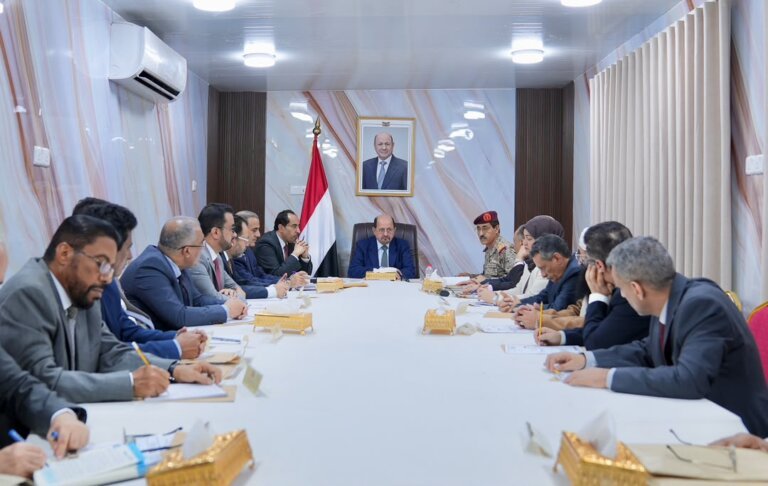
Aden’s governor has held development talks with the French and German ambassadors, focusing on ways to expand cooperation in sectors vital to the local population. Abdulrahman Sheikh, the Minister of State and Governor of Aden, met the French Ambassador to Yemen, Catherine Corm-Kammoun, and the German Ambassador, Thomas Friedrich Schneider, on Thursday to review existing areas of cooperation and to explore opportunities for deepening them.
A central topic of the discussions was the implementation of a priority needs matrix for Aden, a framework designed to strengthen the capacity of local authorities to address the governorate’s most pressing challenges. By identifying and ranking needs, such a matrix aims to facilitate a more effective and targeted response to the developmental demands of the region.
Vocational education emerged as a key focus of the talks, with the officials emphasising the importance of modernising curricula to align them with the demands of the labour market. Equipping young people with skills relevant to available employment is widely regarded as essential to improving their prospects and to supporting economic recovery.
The engagement of two prominent European partners reflects the interest of the international community in supporting development in Aden. As the interim capital and a hub of the government’s activity, the city faces substantial needs across multiple sectors, and cooperation with partners such as France and Germany can help address these challenges and support recovery.
The priority needs matrix represents a structured approach to development planning. In a context of limited resources and extensive needs, prioritising interventions helps ensure that support is directed where it can have the greatest impact, and building the capacity of local authorities to use such tools is itself an important contribution to effective governance.
The focus on vocational education addresses a critical dimension of Yemen’s economic and social challenges. With unemployment widespread, particularly among the young, providing practical skills training can help individuals find work and contribute to the economy, while aligning training with labour-market needs enhances its relevance and effectiveness.
Modernising curricula, as emphasised in the discussions, is central to ensuring that vocational education serves its purpose. Training that is outdated or disconnected from the realities of the labour market risks leaving graduates without the skills employers require, and updating curricula helps bridge the gap between education and the needs of the economy.
Aden’s importance in Yemen’s current landscape lends such cooperation particular significance. The city’s role as the seat of the internationally recognised government and a centre of commerce and administration means that its development carries implications beyond its boundaries, contributing to the broader effort of national recovery.
France and Germany have both been among the more active European partners engaged with Yemen, contributing to humanitarian and development efforts over the course of the conflict. Their involvement in supporting development in Aden reflects a broader European interest in strengthening the country’s institutions and services and in supporting its recovery.
The review of existing areas of cooperation reflects the ongoing nature of the partnership between the governorate and its European counterparts. Assessing current initiatives helps identify what is working and where improvements or expansion might be pursued, informing decisions about how best to direct future cooperation and support.
Strengthening the capacity of local authorities, a goal of the priority needs matrix, is central to improving governance and service delivery. Capable local institutions are better able to plan and implement development projects and to respond to the needs of citizens, and building this capacity is an important element of the broader effort to strengthen the state.
The emphasis on service sectors reflects the tangible concerns of the population. Services such as water, electricity, health and education are among the most immediate measures of governance for citizens, and improving them is central to relieving hardship and to demonstrating the capacity of local authorities to serve their communities.
Development cooperation of this kind forms part of the broader web of international engagement on which Yemen’s recovery depends. With domestic resources severely constrained, the government and local authorities rely on the support of partners to advance development, making the cultivation of these relationships an important priority.
Realising the goals discussed will depend on follow-through, resources and the evolving situation in Aden. Development initiatives require sustained commitment and effective implementation to deliver results, and the challenges of the current environment add to the difficulty. The engagement of the governor and the ambassadors, however, signalled a shared intent to advance cooperation.
The prominence of vocational training in the discussions also reflected a wider recognition that Aden’s recovery will depend on more than the repair of infrastructure. A generation of young people has come of age amid conflict, with schooling disrupted and opportunities scarce, and equipping them with marketable skills is seen as essential both to their own prospects and to the revival of the local economy. By tying curricula to the actual needs of employers, the initiative aims to ensure that training leads to work rather than adding to the ranks of the qualified but unemployed, a mismatch that has frustrated development efforts in many settings across the region.
For now, the meeting reaffirmed the commitment of Aden’s authorities and their European partners to advancing development in the governorate, from the priority needs matrix to the modernisation of vocational education. As the city works to address its extensive needs, cooperation of this kind remains an important element of efforts to support its recovery and the wellbeing of its people.
About the Author