Foreign Minister Afrah al-Zouba rejects Iran’s offer to mediate in Yemen
 Yemen Herald News
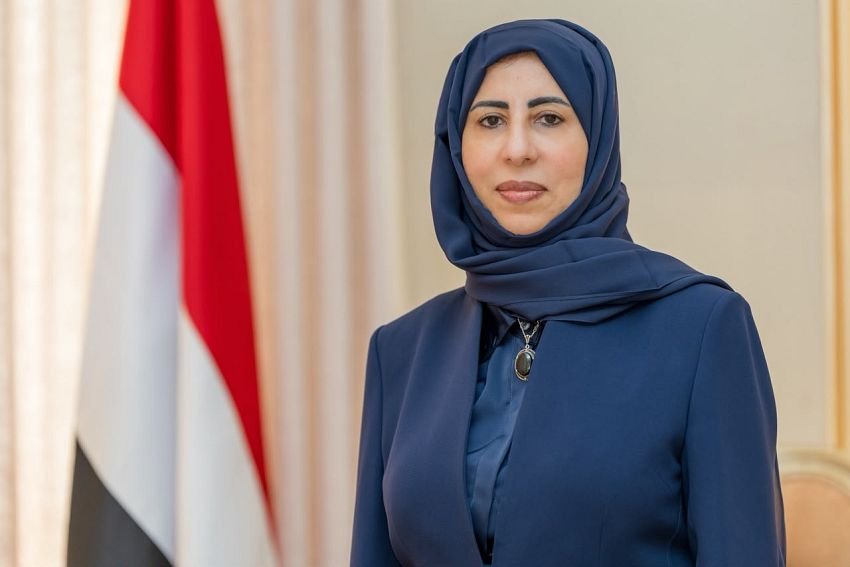
ADEN, Yemen — Yemen’s foreign minister rejected an Iranian offer to mediate between Saudi Arabia and the Houthis, saying Tehran is a party to the war, state media reported.
Afrah al-Zouba condemned recent remarks by Iran’s foreign minister and officials at his ministry about mediation in Yemen, the state news agency Saba said.
“Tehran has made itself a party in the war against Yemenis by arming and funding the Houthi terrorist militia,” she said in a statement to the agency.
“Instead of offering to mediate, its government should stop interfering in Yemen, respect the sovereignty of countries and adhere to international law and the principles of good neighborliness.”
Saba published the remarks on 17 October. The agency is run by the internationally recognised government, and the account of the statement rests on it. Yemen Herald found no account of the remarks independent of Saba’s report.
Al-Zouba said the Iranian statements did not cover what she called Tehran’s responsibility for supporting the Houthi takeover that began the war.
She said Iran had prolonged the conflict by arming, financing and training the group, and by supplying it with missiles, drones and specialists.
The minister rejected what she described as attempts by Tehran to treat the Houthis as the representatives of Yemen.
She objected to the group being referred to as the Yemeni Armed Forces.
She also rejected a framing of the war as a conflict between Yemen and Saudi Arabia. Yemenis were fighting to end a coup and restore their state, she said.
Tehran’s dealings with the group did not confer legitimacy or the right to represent Yemen, she said, and gave Iran no authority over Yemeni decisions.
Claims that the Houthis acted on their own assessments did not absolve Iran of the consequences of arming them, according to the minister.
She said the group had used periods of ceasefire to reorganise its ranks and build up its arsenal.
Tehran was treating Yemen as a bargaining chip, she said, and the cost was borne by the region’s people, by trade and by global markets.
Al-Zouba called on the international community to designate the Houthis a terrorist organisation and to enforce the arms embargo on the group.
She said the security of Yemen and its neighbours would not be left to a group armed by Iran’s Revolutionary Guard.
Al-Zouba rejected the use of the phrase “lifting the blockade” as grounds for obstructing enforcement of the arms embargo.
She restated Yemen’s solidarity with Saudi Arabia’s leadership, government and people, and said the kingdom had a right under international law to defend its security and protect its citizens and residents.
The security of the two countries was interconnected, she said, and Saudi Arabia had supported Yemen with economic, humanitarian and development aid.
Iran has put the mediation offer forward repeatedly this month, and has denied the charge al-Zouba levelled at it.
Esmaeil Baqaei, the Iranian foreign ministry spokesman, said in a written statement on 16 October that Tehran had no part in the attacks.
“The Islamic Republic of Iran rejects any claim that Iran has played a role in Yemeni (Houthi) operations,” he said.
Baqaei said Tehran had always been ready to use its good offices to help end the hostilities, and would use all its capacities if both sides asked it to.
Abbas Araghchi, Iran’s foreign minister, repeated the offer at a meeting of the Organisation of Islamic Cooperation in Baghdad on 17 October.
“We support an inclusive and comprehensive political process as the only practical and sustainable way to resolve the issue,” Araghchi said.
He said the region would either build security together or endure insecurity together.
Saeed Khatibzadeh, Iran’s deputy foreign minister, said Riyadh had not responded to the overture.
Iran first set out the offer around 12 October, as attacks on Saudi territory intensified.
The exchange follows several weeks of escalation between the Houthis and Saudi Arabia.
The Houthis attacked Saudi airports in the second week of October. CNN and Al Jazeera reported the attacks as a widening of the war beyond Yemen’s borders.
The group struck facilities belonging to Saudi Aramco on 13 October, hours after the Saudi-led coalition hit an oil site in Sanaa, Al Jazeera reported.
The oil company’s headquarters was among the sites hit, according to CNN. Saudi forces struck a Houthi fuel depot in the same exchange, the broadcaster reported.
Saudi Arabia has accused Iran of involvement in the attacks. Iran denies it.
The Houthis took the Yemeni capital in 2014. The internationally recognised government has operated from Aden since.
Al-Zouba holds the foreign affairs portfolio in that government. Shaya al-Zindani, who held the post before her, is prime minister.
Yemen has pressed the designation case in several forums this month, including at the Organisation of Islamic Cooperation.
The United Nations has not listed the group as a terrorist organisation.
A targeted UN arms embargo on Houthi leaders has been in force since 2015. The Security Council has renewed it each year.
The measure applies to individuals and entities named by a Security Council committee.
Hans Grundberg, the UN special envoy for Yemen, continues to seek a negotiated settlement between the parties.
About the Author