Yemen’s Vice Foreign Minister Convenes Gulf, Jordan and Iraq Envoys on Expatriate Affairs
 Yemen Herald News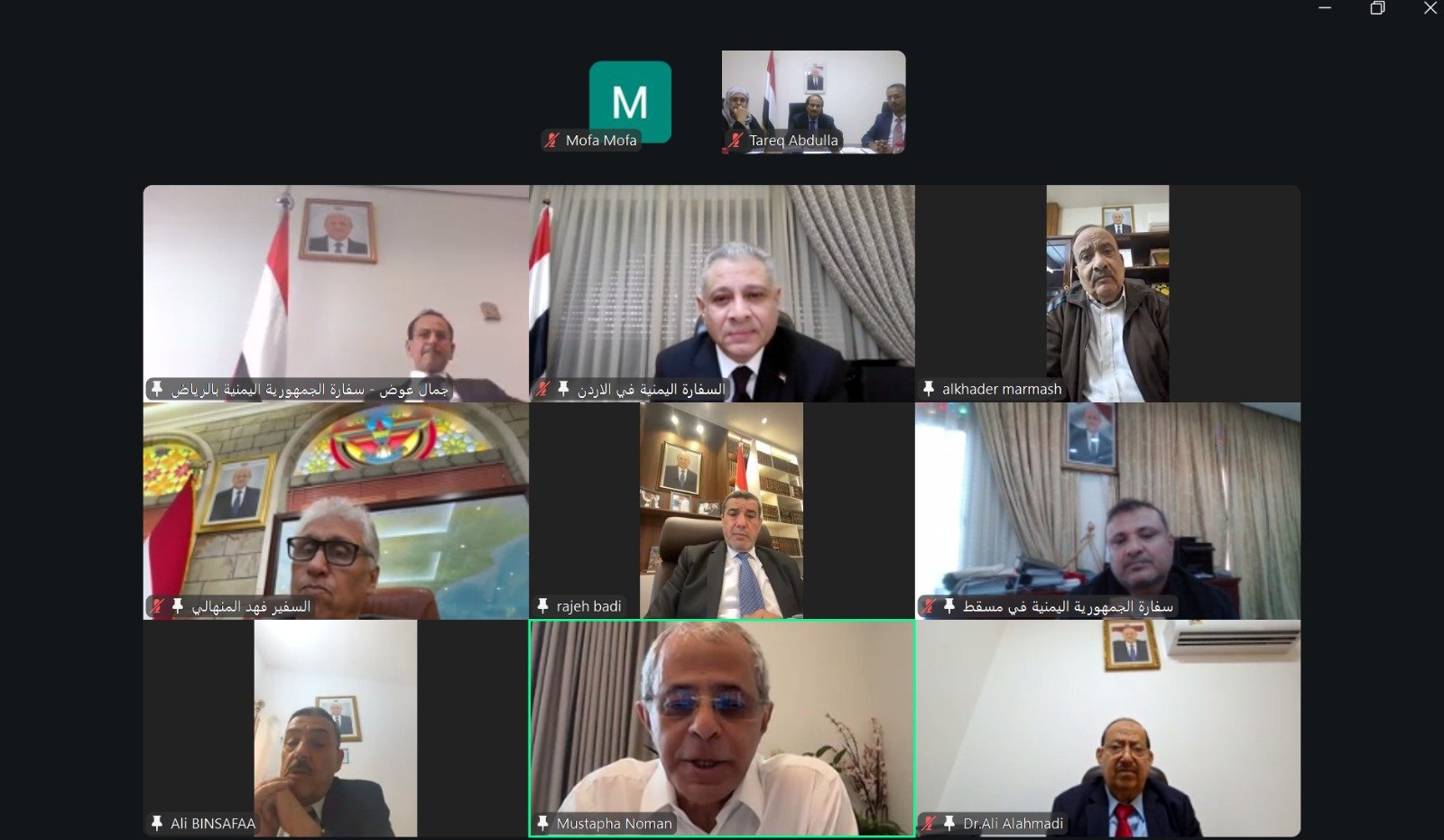
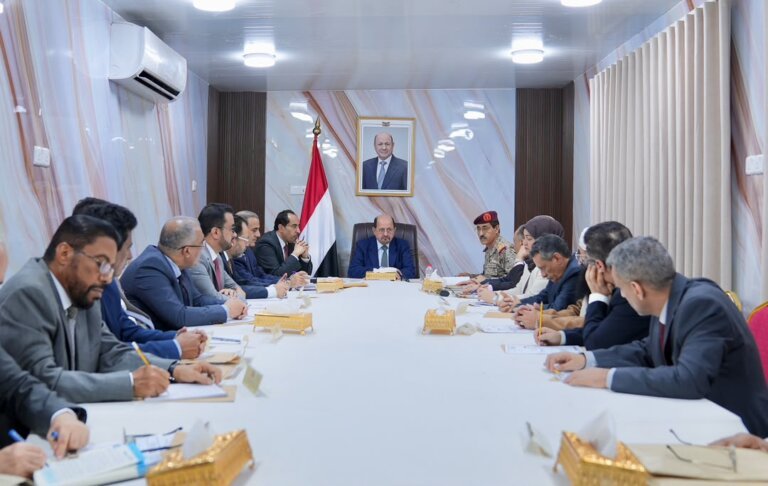
In late March 2026, Yemen’s Vice Minister of Foreign Affairs and Expatriates, Mustafa Noman, chaired an expanded video conference with the heads of Yemen’s diplomatic missions across the Gulf, Jordan and Iraq, the official Saba news agency reported at the time. The meeting was convened to review the situation of Yemeni communities living in those countries and to agree a common approach to the problems those communities were reporting.
According to that report, the session brought together the ambassadors to Bahrain, Kuwait, the United Arab Emirates, Oman, Qatar, Jordan and Iraq, together with the charge d’affaires at Yemen’s embassy in Saudi Arabia and the head of the Gulf and Arabian Peninsula Department at the ministry.
The agenda centred on Yemenis stranded abroad. Missions were asked to report on residency and documentation problems, on nationals unable to return home, and on the practical difficulties facing families whose circumstances had been complicated by the regional escalation then under way.
Noman serves as vice minister of foreign affairs and expatriates in the internationally recognised Yemeni government, a portfolio that covers both diplomatic representation and the welfare of Yemenis living outside the country. Consular work has become a far larger share of the ministry’s workload since the war began.
That is a function of scale. Estimates place the wider Yemeni diaspora at several million people spread across dozens of countries, with more than two million in Saudi Arabia alone and substantial communities in the United Arab Emirates, Kuwait, Qatar, Oman and Bahrain.
The economic stakes are considerable. The World Bank has estimated Yemeni remittance inflows at roughly 3.77 billion dollars a year, of which about 61 percent originates in Saudi Arabia and a further 29 percent in the other Gulf states. Remittances were equivalent to around 20 percent of Yemen’s gross domestic product in 2023.
Those transfers are Yemen’s single largest source of foreign currency. They finance imports, support the balance of payments and, in many households, cover food and medicine directly. Analysts studying Yemen’s economy have consistently found that remittance flows have prevented food insecurity from deteriorating further than it already has.
That makes the working conditions of Yemenis abroad a matter of national economic policy rather than a purely consular concern. Around 80 percent of Yemeni workers in Saudi Arabia are employed in physically demanding jobs under the kafala sponsorship system, which ties a worker’s legal status to a single employer and restricts movement between jobs.
Labour nationalisation policies have added further pressure. Saudi Arabia’s Saudization programme, which reserves categories of employment for citizens, has led to contract non-renewals and layoffs affecting Yemeni workers, with knock-on effects for the households at home that depend on what they send back.
Against that background, the heads of mission delivered oral briefings on developments affecting their communities and put forward a set of observations and recommendations, Saba reported. They also thanked host governments for the cooperation and facilitation extended to Yemeni nationals in their countries.
Noman acknowledged the missions’ monitoring work and said the recommendations would be passed to the prime minister and to the minister of foreign affairs and expatriates for consideration, according to the same account. The specific content of those recommendations was not published.
The meeting closed with an agreement to hold regular consultations in the same format, intended to improve coordination between the ministry and its posts abroad. Officials framed the arrangement as a way of shortening the time between a problem emerging in a host country and a response from headquarters.
Coordination of this kind has been difficult for the Yemeni government throughout the conflict. Ministries have operated in part from Aden and in part from abroad, budgets have been constrained by the collapse of state revenue, and embassies have often had to manage rising caseloads without a matching increase in staff or funding.
The Gulf states, Jordan and Iraq are the destinations that matter most for that caseload. They host the largest concentrations of Yemenis outside the country, they are the origin of the overwhelming majority of remittance flows, and they are where changes to residency and labour regulation have the most immediate effect on Yemeni families.
Documentation is a recurring difficulty. Yemenis abroad need valid passports, residency permits and civil records to keep their jobs and their children in school, and the disruption of records offices inside Yemen has made routine renewals harder to complete. Embassies have absorbed much of that administrative burden themselves.
Return travel presents a separate problem. Air links between Yemen and the region have been intermittent throughout the war, and the reduced number of routes has left travellers dependent on a small set of connections. Yemenis who lose their residency status abroad can find that the route home is neither quick nor cheap.
The ministry has also had to manage relations with host governments that are themselves parties to, or closely involved in, the wider regional situation. Yemeni missions in the Gulf handle consular business while their governments coordinate on security and reconstruction files, and the two tracks are not always easy to keep separate.
The March 2026 meeting was described at the time as part of a continuing process rather than a response to a single incident. The original report set out the participants, the agenda and the undertakings given at the session, but did not detail what followed, and no independent account of the meeting was published elsewhere.
About the Author