GCC Ministerial Council affirms Yemen’s unity and urges Houthi terrorist designation
 Yemen Herald News
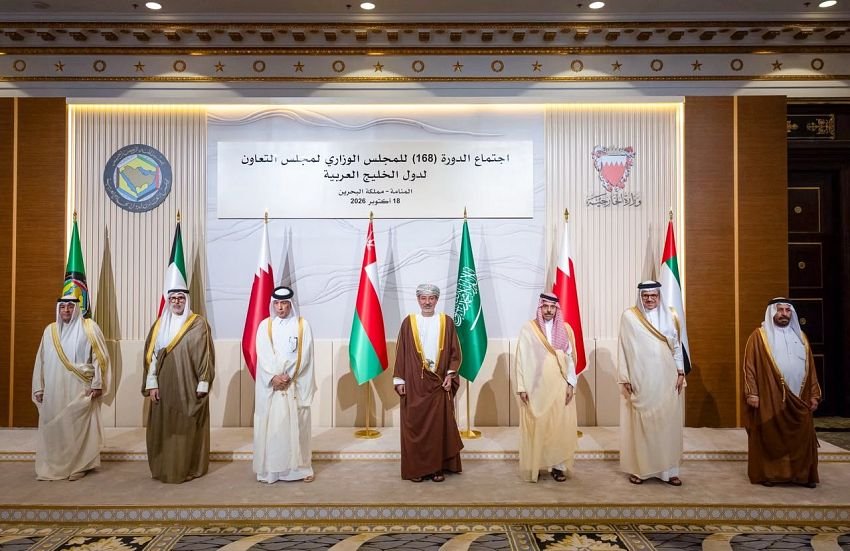
MANAMA, Bahrain — Gulf foreign ministers affirmed Yemen’s sovereignty and called for the Houthis to be designated a terrorist group at a session in Bahrain on Sunday.
The Gulf Cooperation Council’s Ministerial Council held its 168th session in Manama, chaired by Bahrain’s Foreign Minister Abdullatif bin Rashid al-Zayani, Yemen’s state news agency Saba reported.
The council’s closing statement affirmed the sovereignty of the Republic of Yemen and the unity of its territory, according to the agency.
It called for designating what it described as the Houthi militias a terrorist group, and for dealing with them as the international system deals with groups that threaten security, peace and development, Saba said.
The statement also called for an end to all support that allows the Houthis to obtain missiles and drones.
Al Jazeera reported the same demands from the meeting. The broadcaster said the ministers urged states to formally designate the Houthis a terrorist organisation and pressed for tighter enforcement of the United Nations arms embargo on the group.
The council asked the Security Council, and its permanent members in particular, to carry out its responsibilities on Yemen, Saba said.
It named two resolutions. One was Resolution 2216, adopted in 2015 under Chapter VII of the UN Charter, which imposed an arms embargo on the Houthis and demanded they pull back from territory they had seized.
The other was Resolution 2722, adopted in 2024 after attacks on merchant shipping in the Red Sea.
The ministers backed a political settlement reached through dialogue and resting on three references, the agency said. Those are the outcomes of Yemen’s National Dialogue Conference, the Gulf Initiative and relevant Security Council resolutions.
The statement described freedom of maritime and air navigation as a shared international interest that cannot be applied selectively.
It listed the Strait of Hormuz, Bab al-Mandab and the Red Sea as waterways whose security is a shared international responsibility.
Al-Zayani used his opening remarks to condemn attacks on Saudi Arabia, including strikes on civilians and civilian infrastructure, Al Arabiya English reported.
“Any attack on a GCC member state is an attack on all GCC states,” he said, according to the broadcaster.
He expressed Bahrain’s solidarity with Saudi Arabia and its backing for measures Riyadh takes to defend itself.
Al-Zayani also voiced support for Omani and Qatari mediation between the United States and Iran, Al Arabiya said.
The council’s secretary-general, Jasem Mohamed AlBudaiwi, condemned the continued attacks on Saudi Arabia as “deliberate criminal behavior” and called for a firm international response, the broadcaster reported.
Al Jazeera said the ministers invoked the bloc’s joint defence agreement. The statement held that an attack on any member affects all six, the broadcaster said.
The council groups Saudi Arabia, Bahrain, Kuwait, Oman, Qatar and the United Arab Emirates.
A GCC meeting with Russia was held in Manama the same day. Saudi Foreign Minister Prince Faisal bin Farhan met Russian Foreign Minister Sergei Lavrov on its sidelines, and the two discussed the escalation in Yemen and threats to navigation in the Strait of Hormuz and Bab al-Mandab, Asharq Al-Awsat reported.
The statement welcomed a Security Council statement issued on Oct. 15 condemning Houthi strikes on Saudi Arabia and threats to Red Sea shipping, Al Jazeera reported.
No Houthi response to the communique had been reported by Sunday evening.
The Houthi military has claimed responsibility for recent strikes on Saudi Arabia and said it would continue them. The group rejects the terrorist label and casts its attacks as part of the war with the Saudi-led coalition.
The Yemeni government has pressed the same case separately. It cited an attack on the presidential palace in Aden in letters to UN Secretary-General Antonio Guterres and Aglaia Balta, the Security Council’s president for October, Al Jazeera said.
That attack, on Oct. 15, killed five security personnel and wounded 16 others, Al Jazeera reported.
Yemen’s foreign minister, Afrah al-Zouba, asked member states of the Organization of Islamic Cooperation to take the same step at a session in Baghdad last week.
Fighting inside Yemen went on as the ministers met. The Saudi-led coalition said it shot down two drones near Riyadh and in the kingdom’s Eastern Province early on Sunday, according to Al Jazeera.
The Yemeni military said the Houthis fired missiles toward Marib the same day.
Government-aligned commanders said eight soldiers were killed in fighting in Lahj province on Saturday.
The International Organization for Migration says more than 233,000 people have been displaced by the current round of fighting, about 121,000 of them in Taiz province.
In Taiz, the World Health Organization warned that the city’s 12 hospitals had four days of fuel left and had run out of surgical supplies.
A local office in the city said food prices had risen fivefold, and Taiz is also dealing with a cholera outbreak, Al Jazeera said.
Resolution 2216 remains the text most often cited by Yemen’s government and its Gulf backers in arguing for outside action against the Houthis. Its arms embargo names the group directly.
Resolution 2216 also imposed targeted sanctions on named Houthi figures.
Bahrain holds the rotating chair of the Ministerial Council for the current session.
Saba did not say whether the council set any timetable for the measures it urged.
About the Author