Yemen and Ethiopia Seek to Revive Joint Trade Committee at WTO Talks
 Yemen Herald News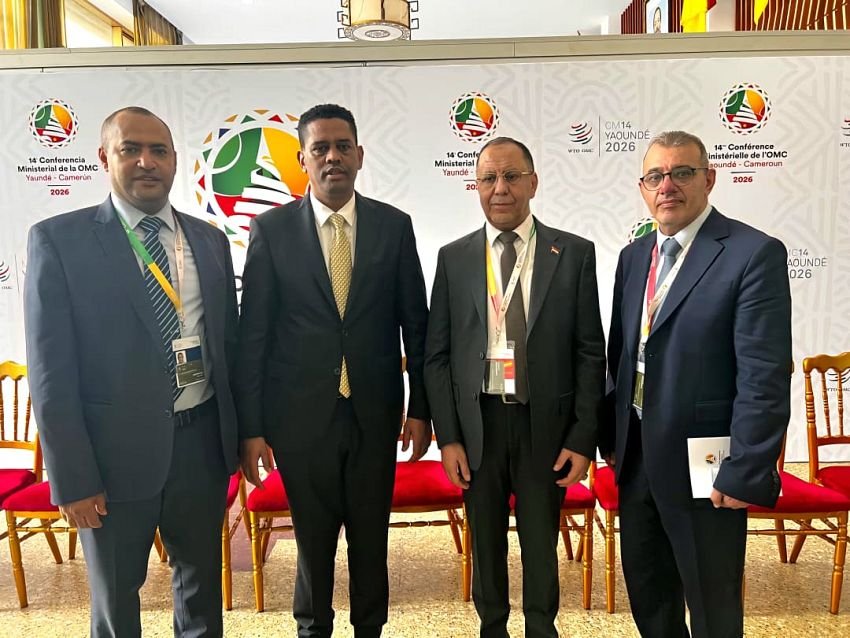
On the sidelines of the World Trade Organization’s 14th Ministerial Conference in Yaoundé, Cameroon, Yemen’s Minister of Industry and Trade, Dr. Mohamed al-Ashwal, held talks with Ethiopia’s Minister of Trade, Dr. Kassahun Gofo, aimed at strengthening economic and commercial ties between their two countries. The meeting brought together officials from neighbouring regions of the Red Sea and the Horn of Africa, an area whose shared waters and overlapping markets give the two economies a natural interest in closer cooperation.
Both ministers underlined the need to develop practical mechanisms for joint collaboration that would serve the mutual interests of their nations. They spoke of the untapped potential for partnership between Yemen and Ethiopia and stressed the importance of translating goodwill into concrete arrangements capable of expanding trade and investment across the two markets.
A central theme of the discussion was the proposed revival of the Yemen-Ethiopia Joint Committee, a bilateral body intended to coordinate economic and trade matters between the governments. The ministers agreed that reactivating the committee could play a pivotal role in facilitating commerce, resolving practical obstacles and providing a structured forum through which the two sides could pursue shared objectives over the longer term.
The two officials also highlighted the value of intensified regional and international coordination as a means of increasing trade volume. In an era of shifting global supply chains and heightened economic uncertainty, they argued, closer alignment between neighbouring economies could help both countries weather external shocks and build more resilient commercial relationships less exposed to distant disruptions.
The setting for the meeting lent it added significance. The WTO’s Ministerial Conference is the organisation’s highest decision-making body, convening trade ministers from member and acceding economies to shape the rules governing global commerce. For a country such as Yemen, whose economy has been battered by years of war, participation in such forums offers a rare opportunity to advocate for its interests and to cultivate bilateral relationships on the margins of the wider negotiations.
Yemen joined the World Trade Organization in 2014, shortly before the escalation of the conflict that has since dominated its national life. Membership was intended to help integrate the country more fully into the global trading system and to attract investment, but the war has severely constrained those ambitions, disrupting production, damaging infrastructure and complicating the movement of goods through the country’s ports and border crossings.
Ethiopia, one of Africa’s most populous nations and among its faster-growing economies, has long pursued deeper integration into international trade structures. Its geographic position, close to Yemen across the Red Sea and the Gulf of Aden, makes it a logical partner, and the two countries share interests in the stability of the maritime routes that connect the Horn of Africa to the Arabian Peninsula and onward to global markets.
Trade between the two sides has historically been modest relative to its potential. Yemen relies heavily on imports to feed its population, while Ethiopia produces agricultural goods and other commodities that could help meet that demand. A more structured commercial relationship, supported by a functioning joint committee, could in principle open channels for the exchange of food, raw materials and manufactured products to the benefit of both economies.
The strategic waters that separate and connect the two nations add a further dimension. The Bab al-Mandab strait, at the southern entrance to the Red Sea, is one of the world’s most important shipping corridors, and instability there carries consequences for regional trade and global commerce alike. Cooperation on commercial matters is bound up with the broader stability of these sea lanes, giving economic diplomacy a significance that extends beyond bilateral balance sheets.
For Yemen’s internationally recognised government, engagements of this kind form part of a wider effort to rebuild the country’s external economic relationships and to signal that it remains an active participant in regional and international affairs despite the war. Ministerial meetings on the margins of global conferences allow Yemeni officials to keep the country’s commercial interests visible and to lay the groundwork for partnerships that could support eventual recovery.
Realising the potential discussed in Yaoundé will depend on follow-through. Bilateral committees can languish without political will and sustained administrative attention, and the practical barriers to trade, from logistics and financing to security and regulation, are considerable in the current environment. The ministers’ emphasis on mechanisms and coordination suggested an awareness that intentions must be matched by institutional structures if they are to yield results.
Geography sharpens the logic of cooperation. Ethiopia is landlocked and has long sought reliable access to the sea for its foreign trade, relying heavily on neighbouring ports to move goods to and from global markets. Yemen, for its part, possesses a long coastline and several ports along the Red Sea and the Gulf of Aden. While the war has diminished the capacity of much of that infrastructure, a stabilised and rebuilt Yemeni port sector could in the long term offer additional routes for regional commerce, giving both countries a further incentive to nurture their commercial relationship now.
Still, the meeting reflected a constructive impulse at a difficult time. By using the WTO gathering to renew a bilateral conversation, Yemen and Ethiopia signalled that even amid conflict and economic strain, both see value in strengthening the ties that bind two neighbouring regions. Whether those intentions mature into meaningful commerce will become clearer only as the proposed committee is revived and tested against the realities of a challenging global economy.
About the Author