Yemen’s water minister asks EU to align future funding with national priorities
 Yemen Herald News
AMMAN, Jordan — Yemen’s water minister asked the European Union on Wednesday to align future funding with national priorities and bring state institutions into project planning earlier.
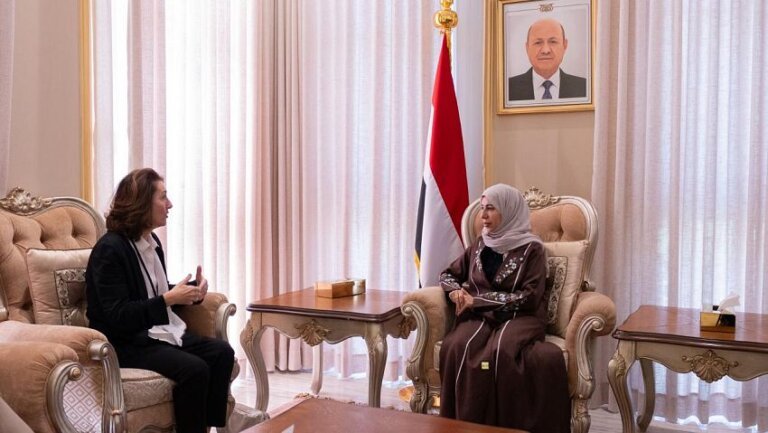
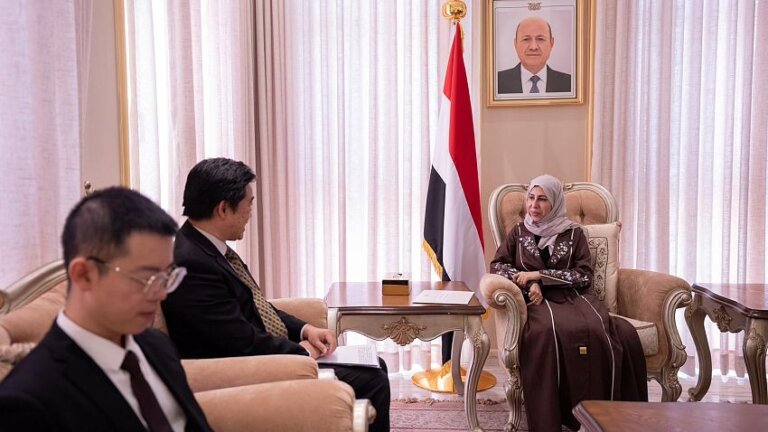
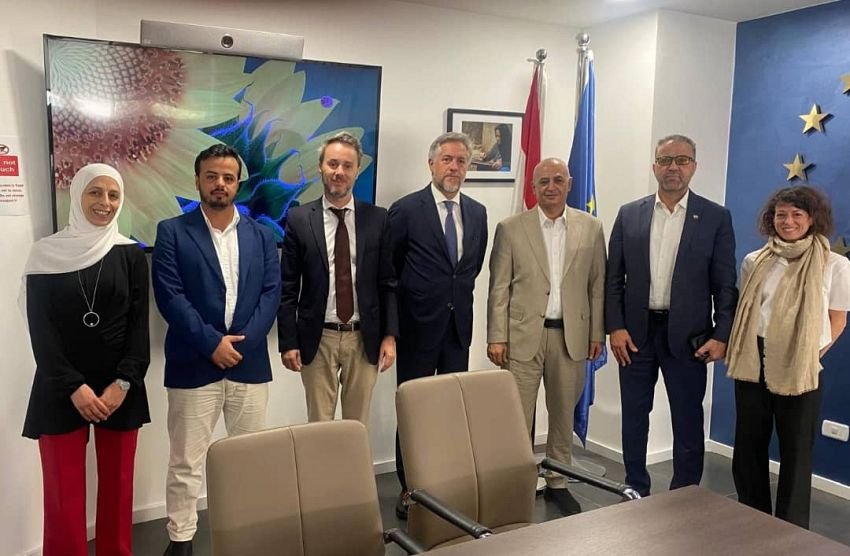
Tawfiq al-Sharjabi, the minister of water and environment, met Patrick Simonnet, the European Union’s ambassador to Yemen, in the Jordanian capital, the state news agency Saba reported.
The account of the meeting rests on Saba. No independent confirmation of it has been published.
The two discussed cooperation on water, environmental protection and climate change, according to the agency.
They reviewed projects funded by the European Union and carried out by the Food and Agriculture Organization, the UN Development Programme and UNESCO, Saba said.
One of those is an integrated water resources management component that the ministry coordinates.
Al-Sharjabi set out five areas he wants the funding to cover, the agency reported. They are water security, water and sanitation services, climate information and early warning systems, biodiversity protection and the restoration of degraded ecosystems.
He asked that national institutions take part in planning “from the outset,” according to Saba.
He tied the request to Yemen’s updated Nationally Determined Contributions, the climate plan each country files under the Paris Agreement. Yemen’s third version is known as NDC 3.0.
That document sets no new quantified target for cutting emissions. It refers back to a 2015 pledge to cut emissions 14 percent below a business-as-usual path by 2030.
It sets a renewable energy goal of at least 35 percent by 2035. Its adaptation chapter lists integrated water resources management, climate-resilient water and sanitation infrastructure, desalination and wastewater reuse, efficient irrigation, small dams and watershed management.
The plan runs from 2026 to 2035. Submission to the UN climate secretariat is scheduled for this year.
Al-Sharjabi said development projects already under way have not been disrupted by the current Houthi escalation, Saba reported. Yemen Herald could not independently verify that assessment.
The meeting came during a longer ministerial visit to Amman. Al-Sharjabi and Agriculture, Irrigation and Fisheries Minister Salem al-Soqatari opened a five-day technical mission in the city on Sunday to begin work on a $150 million irrigation and water supply programme.
That programme is called Improved Water Management and Irrigation for Sustainability and Efficiency, or I-WISE. It is financed by the World Bank Group’s International Development Association and by the Netherlands, according to the UN Development Programme.
The UN Office for Project Services is also involved in delivering the irrigation programme, according to the development agency.
The European Union held its fourth EU-Yemen Partners’ Days in Amman on Sept. 28 and 29. Planning and International Cooperation Minister Mohammed al-Faqmi co-opened that event, the EU delegation said.
The delegation listed water management and climate pressures among the subjects covered at that meeting, alongside agriculture and food systems, investment, livelihoods, gender and donor coordination.
Simonnet said then that the bloc’s commitment “goes beyond responding to immediate needs.”
Yemen is among the most water-scarce countries measured. Renewable water availability stood at 65 cubic metres a person a year in 2020 and is projected to fall to about 54 by 2050, the World Bank said in a water security diagnostic.
Availability has dropped roughly 60 percent since 1990, according to the same report.
Demand outruns supply by a wide margin. The bank put total demand above 5.1 billion cubic metres against a supply of about 2.5 billion, a yearly gap of roughly 2.6 billion cubic metres.
That gap is closed largely by unregulated pumping that is draining fossil aquifers, the report said.
Qat accounted for about 36 percent of the country’s renewable water and 32 percent of groundwater withdrawals before the war, according to the bank. The area planted with the crop grew by more than 40 percent in some regions between 2016 and 2021.
Piped services reached barely half the population before the conflict and fell below a quarter during it, the report said.
About 15.3 million people, roughly half the population, needed emergency support for clean water and basic sanitation, the report said, citing UN figures from 2022.
The UN Office for the Coordination of Humanitarian Affairs put more than 22 million people in need of assistance in its March plan for the year. It listed 18.3 million as acutely food insecure and 5.2 million as internally displaced.
More than 2.2 million children under five were acutely malnourished, with 516,157 of those cases severe, according to the same plan. The appeal sought $2.16 billion to reach 12 million people.
The UN refugee agency said this week that more than 250,000 people have been displaced inside Yemen since August.
Yemen’s climate plan puts the health cost of climate impacts above $5.3 billion by 2040, citing World Bank modelling.
The World Health Organization recorded 8,034 suspected cholera cases and 27 deaths in Yemen this year, in a release dated Oct. 13. About a quarter of the suspected cases came in the preceding four weeks.
Weekly suspected cases rose from 217 in the week beginning Sept. 6 to 647 in the week beginning Sept. 27, the agency said.
Annette Heinzelmann, the agency’s emergency director for the region, linked the outbreak to access to safe water, vaccination and essential health services. She said the agency had secured $3.78 million of the $31 million it sought for a 90-day emergency response.
The technical mission al-Sharjabi opened on Sunday runs until Thursday.
About the Author